
games / Reviews
skate. Early Access Review (Xbox Series X)
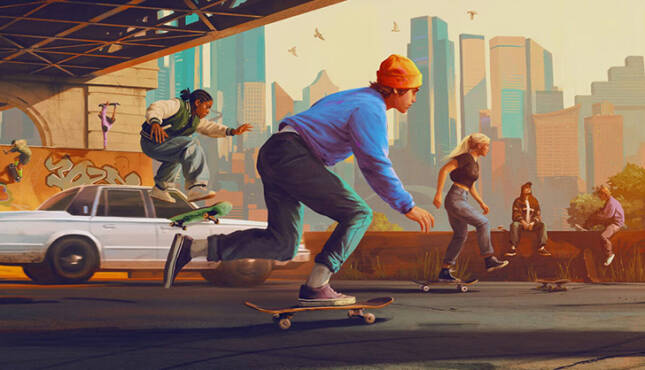 Image Credit: EA


 Loading...
Having spent months with the new Skate. build under embargo, I’m relieved to finally be able to talk about it openly. It’s been a strange experience, quietly dipping into the game for so long without being able to share thoughts, clips, or even basic impressions. Now that the curtain’s lifted, I’ve come away with mixed but cautiously hopeful feelings. For long-time fans of the franchise, there is a lot to like here; for those who loved the grit and character of earlier entries, however, there will almost certainly be disappointments.
One of the first things that struck me positively is just how good some of the core mechanics are. Full Circle seems committed to rebuilding that Flick-It control system with tweaks, polish, and a sense of fluidity. Trick execution feels satisfying: transitions, weight shifts, and board responsiveness are better than expected. It’s clear the developers have paid close attention to community input, which shows in the small details. Landing feels more rewarding when you get it right, but mis-steps are punished enough that mastering the finer points matters.
The off-board movement is another bright spot. Climbing, parkouring around obstacles, and traversing the city beyond just skating adds variety. The new city has been designed with verticality in mind—rooftops, alleyways, and hidden skate lines are all there to be discovered. This amplifies the sense of exploration, turning what could have been a big flat skate playground into something more layered and interesting.
Progression and rewards have also been reworked in ways that are mostly for the better. The onboarding process gets you into the world more quickly, and there’s a decent amount of mission and challenge content scattered around. The game does a good job of letting you unlock cosmetics, props, and custom geometry through play rather than forcing you into grindy or pay-walled loops. The reward cycle isn’t perfect, but it shows promise, and it’s easy to imagine it becoming more compelling as the game matures.
Still, some of the design decisions raise questions, especially when stacked against what made earlier Skate titles beloved. Chief among these is the live service angle. Skate. is not meant to be a one-off polished single-player game; instead, it’s built around persistence, seasonal content, cosmetics, always-online multiplayer, and player interaction in shared spaces. Some of this can feel like unnecessary overhead, with challenges rotating on timers and reward pacing that might frustrate players who just want to freeride and skate without meta-systems nagging at them. If the game leans too heavily into live service tropes, there’s a danger that the freedom and flow at its core could be overshadowed by menus, events, and cosmetic reminders.
What’s also noticeable is the dilution of grit, narrative, and cultural edge. The old Skate games had pro skater cameos, authentic locales, and a sense of reputation building that gave progression weight. Here, much of that texture is missing. Pro personalities are absent or backgrounded, characters are thin, and missions often feel like disconnected tasks rather than steps in a meaningful journey. Skating itself feels excellent, but the world it’s set in doesn’t always carry the same sense of authenticity.
The freerunning and parkour mechanics deserve special mention. Being able to vault fences, scale ledges, and clamber onto rooftops feels surprisingly natural and ties in neatly with the spirit of urban exploration that has always been at the heart of skate culture. It’s not just a novelty: chaining a quick wall run into a drop-in, or climbing to a rooftop to scout for a perfect line below, opens up whole new ways to approach spots. At the same time, there’s an undeniable silliness to it. Watching your skater scramble up walls like a budget action hero before hopping back on the board can feel a little cartoonish, almost at odds with the grounded realism the series once prided itself on. Still, the goofiness has its charm, and the sheer freedom it affords outweighs any tonal mismatch—it’s fun, even when it looks ridiculous.
Visuals and polish are uneven, which isn’t surprising for a project still growing into its identity. Environmental detail could be sharper, bails sometimes lack the bone-crunching feedback that once made them infamous, and ragdoll physics don’t always land with impact. Surfaces can look flat or undercooked at times, though movement and flow often distract from these shortcomings.
The broader question is whether the trade-offs are worth it. There’s no doubt the foundation is strong, and if Full Circle continues to lean into what works—while adding back the texture and grit that gave the series personality—this could be a worthy return. But the reliance on live service models looms large. If seasonal rewards, cosmetics, and monetization remain balanced and respectful, then the model could work. If not, the game risks losing what made Skate special in the first place. Always-online functionality is another double-edged sword: great for shared experiences, but restrictive for players who value solitary flow or simply lack a stable connection.
For those planning to dive in early, there’s plenty of reason to be excited. The skating itself—the feel of pulling tricks, stringing lines, and finding creative spots—is as good as it’s ever been. If that’s your primary interest, you’ll find a lot to enjoy. But for those who cherished Skate for its grit, personality, and lived-in atmosphere, this new version may leave you wanting more.
At this stage, I’d put it somewhere around a 6.5 to 7.5 out of 10. There are bones of something special here, but much depends on how the developers handle the competing pressures of building a service model while still delivering on the authenticity fans expect.
Skate. feels like a bridge between what the franchise once was and what modern games are becoming: a hybrid of community platform, creative sandbox, and live service. Whether that bridge holds depends on the decisions still to come. There are encouraging signs the developers are listening and care about getting it right, but for now, the game is defined as much by its potential as by its current state.


