
Movies & TV / Columns
Chuck Norris: The Important Movies Part 1
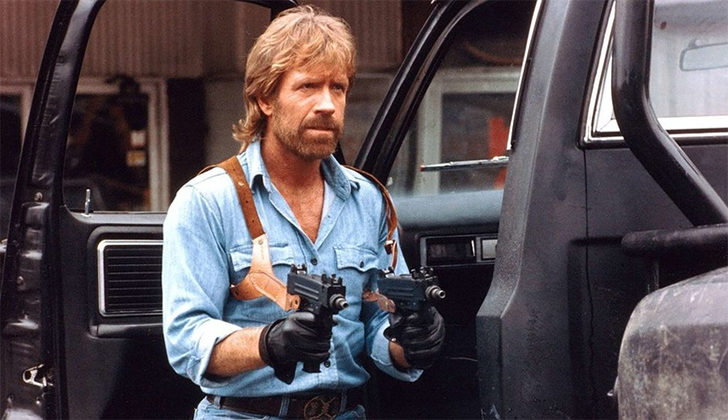
 Image Credit: American Cinema Releasing

Chuck Norris: The Important Movies Part 1
Chuck Norris is gone. In a “pop culture” sense, that seems impossible because Chuck Norris is, well, Chuck Norris. How the hell could Death come for Chuck Norris and get out of that confrontation alive? Chuck Norris was supposed to be immortal. The reality, of course, is that Chuck Norris was just a man, another human being on planet Earth and, eventually, Death would come for him and succeed. And based on what Chuck’s family posted online, Chuck Norris passed away at some point on March 19th, 2026. He was 86 years old.
Now, before everyone with the inclination to point out “who Chuck Norris really was,” I will deal with the “elephant in the room” when it comes to his very public and well-known views in terms of politics and other assorted social issues. Chuck Norris was a hardcore right-wing conservative Christian. He openly believed in and supported, more or less, everything one would associate with those ideologies. How could someone who doesn’t believe in or support any of those things possibly be a fan of his? I never met Chuck Norris. I’ve never heard of or read about a bad movie set experience with people he worked with, nor have I ever heard of or read about a bad fan interaction with him. Chuck Norris was, apparently, one of the nicest guys to work with and meet out in the world. I have no reason to doubt any of those stories or impressions. At the same time, I can’t reconcile how one of the greatest people who ever lived was also just horrendously wrong about everything and believed in the absolute worst things and aligned himself with some of the worst people in the world. I can’t make sense of any of it beyond acknowledging that people can be “complicated” and, sometimes, good people make horrendous decisions. I would also say that, at least from my perspective when it comes to the man Chuck Norris and what he believed, it’s a real life example of that old adage “don’t meet your heroes because you will be disappointed.” That adage isn’t just for actually meeting your hero in person. And if you don’t grasp what I’m talking about here, think back to that episode of The Simpsons where Lisa discovered the “real” Jebediah Springfield. Think about what Lisa realized at the end of that episode. Sometimes, the myth can be just as valuable, meaningful, and worthwhile as the truth.
And the truth is, for me, is that I was always more interested in, became a fan of, and was inspired by the characters that Chuck Norris played in his movies and TV shows. That kind of thing always meant more to me than anything the “real” Chuck Norris was. Yes, parts of his screen persona, both in movies and on television, were no doubt inspired by things like Norris’ storied martial arts career (world middleweight karate champion) and his anti-drug activism, but they weren’t everything. Chuck Norris was a real deal martial artist and he went after the bad guys, except for the two times he was the bad guy in a major way (the classic Bruce Lee movie Way of the Dragon from 1972, and Slaughter in San Francisco in 1974). He was a cool badass who usually did the right thing (although you could probably argue that he’s a real bastard in the two most important movies in his career, 1983’s Lone Wolf McQuade and 1985’s Invasion U.S.A.). He was also the guy with the cool cartoon and the action figure line (Chuck Norris: Karate Kommandos, a five-episode series that aired in 1986). All of that was the Chuck Norris that I know and that’s the Chuck Norris I’m a fan of. That Chuck Norris is the Chuck Norris that matters to me.
So, I’ve decided to write about Chuck Norris in a multi-part piece where I go on about what I consider his important movies. These aren’t necessarily his best movies (some are, some are not), but these are the movies that, when you look at who and what Chuck Norris was, made him who and what he was. These movies are responsible for creating the Chuck Norris persona.
So here we go.

Way of the Dragon (1972): Also known as Return of the Dragon and Revenge of the Dragon, this Hong Kong martial arts flick is the only movie Bruce Lee completed as writer, director, and star. It’s also the first movie of Chuck’s career where he had a major part, playing one of the movie’s villains, Colt. Before Way of the Dragon, Chuck had a bit part in The Wrecking Crew (1968), the fourth movie in Dean Martin’s Matt Helm spy comedy series, a movie that Bruce Lee had been working on as “karate advisor.” Lee knew Norris and basically got him the job on The Wrecking Crew, playing a bad guy henchman who gets beaten up by Martin’s Helm in a big fight scene. Chuck would get beaten up again in Way of the Dragon, but it would be in a show stopping ten minute fight against Bruce Lee’s main character in the Coliseum in Rome, Italy, a fight that is still considered one of the greatest martial arts fights in movie history.
Despite having his voice dubbed (this would happen again in Chuck’s second major movie role, 1974’s Slaughter in San Francisco aka Yellow-Faced Tiger, where he would once again play a villain), Chuck got to show in Way of the Dragon that he did have true blue badass fight skills (he was a multi-time world karate champion) and a formidable screen presence. And while Chuck’s Colt would lose to Lee’s Tang Lung in their epic fight, it was a good start to a potential movie career. Without losing to Lee, the biggest martial arts movie star in the world even after dying in 1973, Chuck likely wouldn’t have gotten his first starring vehicle in 1977, Breaker! Breaker!.
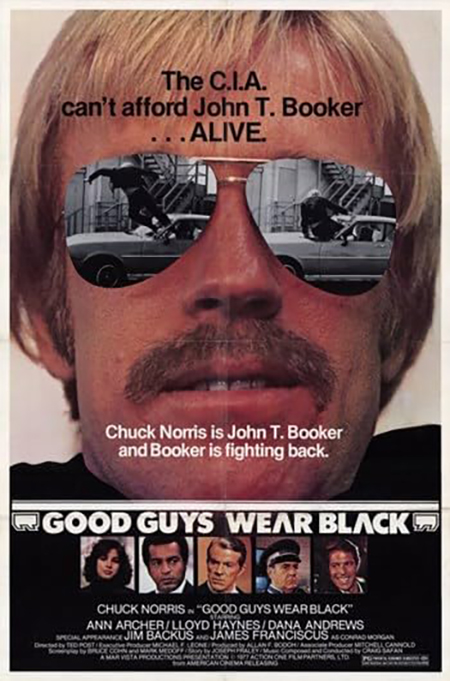
Good Guys Wear Black (1978): When you look back at Chuck’s overall career, Good Guys Wear Black is a movie that probably shouldn’t fit. Probably. Considered by many to be the first successful American martial arts action flick, it’s also part anti-war sort of conspiracy movie, and it’s technically the first movie in Chuck’s career where his character attempts to rescue American prisoners of war in Vietnam as part of the plot. In Good Guys Wear Black, Chuck plays John T. Booker, a retired CIA operator turned college professor (the first of three movies where Chuck would portray a college professor) who ends up embroiled in a big hooha conspiracy that involves someone eliminating members of his old CIA team known as the Black Tigers. Chuck’s Booker, once he’s aware of what the heck is going on, starts kicking ass and taking names. Because of its mild spy movie trappings, Good Guys Wear Black isn’t a non-stop action flick and doesn’t feature as many full on action sequences as you would expect it to. Good Guys Wear Black feels very much like a “typical” 1970s movie, if that makes any sense. While it’s never boring, the movie is deliberately paced, takes its time getting to where it wants to go, and is decidedly more cynical than you would expect it to be. I mean, when you realize that a big part of Booker’s mindset is that the Vietnam War was a bad idea and that he was against it, it’s freaking mind blowing. Chuck Norris was anti-war at one point? What?
Good Guys Wear Black is also the first time we see a Chuck Norris character perform the “mega kick through a car windshield” stunt that would also appear in the TV movie Logan’s War: Bound by Honor (1998) and at least once during the run of Chuck’s TV show Walker, Texas Ranger. While it’s true that Chuck did quite a few of his own stunts throughout his career, I’m not entirely sure he ever actually did this particular stunt. A stunt performer wearing an obvious wig did it in Good Guys Wear Black (I want to say it was Don Pike, who worked on a number of Chuck Norris movies and is listed as the “car stunt coordinator” in the credits for Good Guys Wear Black but I can’t say for certain that it was him. It would certainly fit if he did it). The performer who did the stunt in Logan’s War: Bound by Honor looked more like Chuck, but, again, I can’t say for certain that it was him there, either. I mean, if you were a movie producer or an insurance company, would you want your big name movie star jumping through the windshield of a goddamn moving car, even if it’s a controlled movie stunt? Of course not. The only thing that really matters is that the stunt looks cool, and it does that very, very much.
The character that Chuck’s Booker takes out via the windshield kick is played by Soon-Tek Oh, a top notch Korean actor and martial artist that would later appear as the main villain in 1985’s Missing in Action 2: The Beginning and as a bad guy in the 2000 TV movie The President’s Man. Amazingly, Soon-Tek Oh never did an episode of Walker, Texas Ranger, a fact that just boggles my mind. How the hell did that not happen? How?
The success of Good Guys Wear Black would lead to 1979’s A Force of One, where Chuck would share top billing with Jennifer O’Neill and play a professional karate fighter/karate instructor/former Special Forces operator who has to help the police track down a killer that’s using martial arts to kill people (there’s also a major drug running operation connected to the killings). One of the bad guys in A Force of One, Super Fly hisself Ron O’Neal, would work with Chuck again in 1988’s Hero and the Terror, the second of three horror/horror adjacent movies that Chuck would make. The other top bad guy in A Force of One was played by fellow real deal martial artist Bill “Superfoot” Wallace. Chuck and Bill have a pretty good fight at the end of the movie.
Oh, and the other two movies where Chuck portrays a college professor are the TV movies The President’s Man (2000) and The President’s Man: A Line in the Sand (2002). Just for the record.
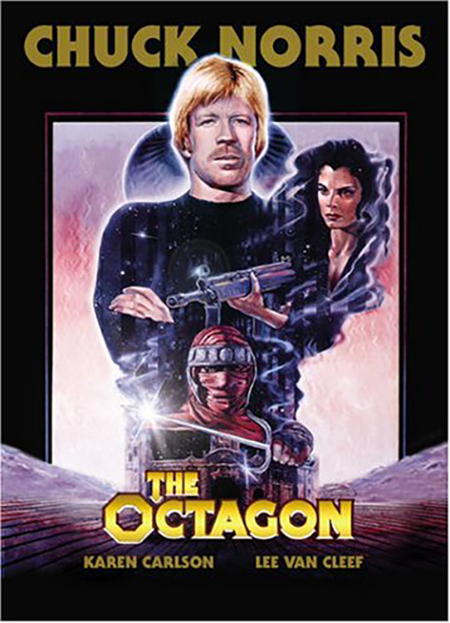
The Octagon (1980) and An Eye for an Eye (1981): Two movies are important at the same time? What? Just give me a second, I’ll explain.
Directed by Eric Karson, The Octagon is the only movie Chuck made that could be considered an art film. It’s weird and confusing and filled with all of these detours and flourishes that it doesn’t really need but they were done (like those tinny inner monologues), for the most part, because director Karson wanted them in the movie. Instead of telling a straight ahead story, the movie decides to be disjointed and “different” and it suffers because of it. Watching The Octagon can best be described as an “experience,” because outside of the movie’s final siege, where Chuck’s Scott James infiltrates the ninja terrorist compound operated by his estranged brother Sakura (the great Tadashi Yamashita) and eliminates plenty of bad guys and fights a terrifying ninja played by Richard Norton, it’s a movie that you’re only likely to want to watch once all the way through (you’ll want to watch the fights over and over again). So how the heck can this “bad” movie be important?
First, it’s the movie that essentially started the “ninja craze” that helped define a big part of action cinema in the 1980s. Yes, ninjas were depicted a few times in American movies before The Octagon, like in the Sam Peckinpah movie The Killer Elite (1975), but the whole “ninja thing” that led to the ascension of Sho Kosugi, the Cannon ninja trilogy (1981’s Enter the Ninja, 1983’s Revenge of the Ninja, and 1984’s Ninja III: The Domination), the American Ninja movies, and all of the low-budget ninja movies that filled video stores back in the day, started with The Octagon. And second, the general success of the movie at the box office proved, once again, that “Chuck Norris” as a brand was a brand that mattered. If you could get Chuck Norris to be in your martial arts action movie, there was an audience for it and you could probably make some money. Four movies into his career as a star that could carry a movie, that kind of thing is a big deal for any actor.
I wish I could understand why everyone involved with The Octagon thought “art movie” was the way to go with it. Martial arts action movies that are confusing are never, ever a good idea. And the movie has Lee Van Cleef in it, and LVC and Chuck don’t team up to lay siege to the Octagon ninja terrorist training facility. How the hell did that not happen? Why isn’t the prospect of that happening the entire movie? Chuck Norris and Lee Van Cleef are in the same movie! LVC’s appearance in The Octagon led to his starring role in the short-lived ninja TV show The Master (1983), a show that I’ve mostly reviewed all the way through (I still need to review the last episode. Here is the last episode I reviewed.
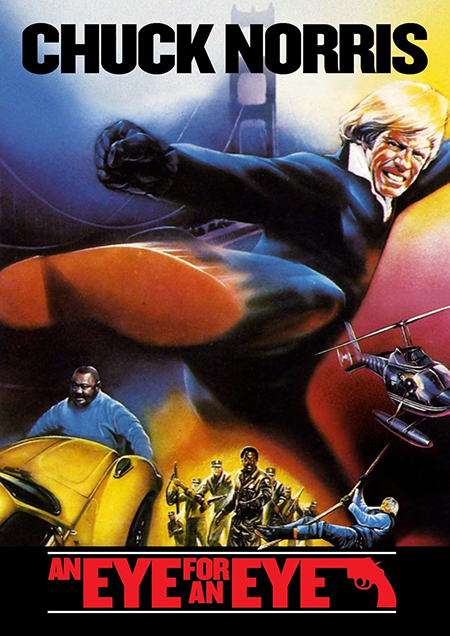
After The Octagon, Chuck would star in one of his absolute best movies, An Eye for an Eye. An Eye for an Eye is a non-stop martial arts action flick featuring one of the strongest casts in Chuck’s filmography (appearing in the movie are John Shaft hisself Richard Roundtree, Mako, Professor Toru Tanaka, Terry Kiser, Stuart Pankin, Matt Clark, and Christopher goddamn Lee is the movie’s main villain. Christopher Lee! Fucking Dracula!). An Eye for an Eye is also the first time Chuck worked with director Steve Carver, a relationship that would pay major dividends in two years. An Eye for an Eye is also the first movie where Chuck plays a cop, something he would do several more times in his career.
If the domestic martial arts movie boom that Chuck helped create in America had been able to continue in exactly the way it began, I’d suspect that Chuck would have made more movies exactly like An Eye for an Eye. Heck, he may have even tried to do a sequel to An Eye for an Eye. That didn’t happen, though. Martial arts cinema and action cinema as a whole would evolve, and, as I will explain later, Chuck Norris would decide to evolve with it.
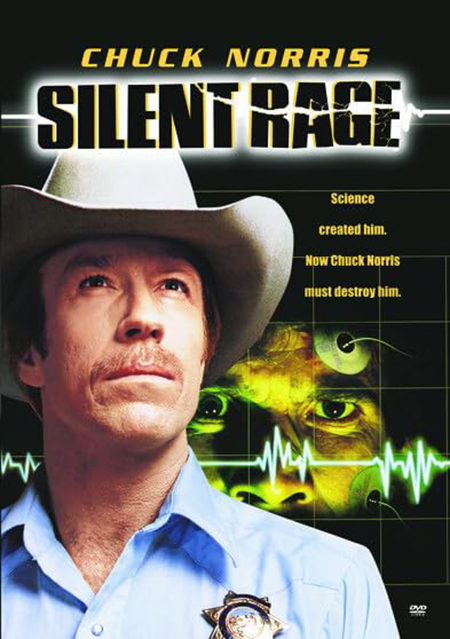
Silent Rage (1982) And then there’s Silent Rage, the first of two movies that Chuck would star in in 1982 (the second movie was Forced Vengeance, his last true martial arts action flick, which came out in July. Silent Rage came out in April). Silent Rage is also the first horror movie Chuck would star in (the other two were 1988’s Hero and the Terror and 1994’s Hellbound). And the biggest reason Silent Rage is important to Chuck’s career and persona is that it’s the first movie produced by his production company Top Kick Productions. Silent Rage, for all intents and purposes, is the first movie that Chuck actually made and had influence in making. Chuck Norris wanted to make Silent Rage.
Silent Rage is also the first movie Chuck made that takes place in Texas, a setting that would become synonymous with “Chuck Norris” in the future, both in the near term and much later on.
Silent Rage is nothing short of a brilliant mashup of horror suspense and martial arts action. Chuck plays Dan Stevens, a badass sheriff that is forced to take on an unstoppable killer named John Kirby (played by Brian Libby). Why is Kirby unstoppable? After being gunned down during a serious mental health episode (I don’t know what else to call it. He killed two people with an axe after telling his doctor, played Ron Silver, that he was “losing it”), Kirby’s body is experimented on by two scientists (Dr. Spires and Dr. Vaughn, played by Steven Keats and William Finley) with a serum they’ve created that allows Kirby to heal almost instantly. The serum essentially turns Kirby into an indestructible monster that can’t be killed. The serum also exacerbates Kirby’s mental problems and makes him even more unstable than before. Once Kirby is revived, he goes on a killing spree, eliminating the scientists that created him, his doctor, his doctor’s wife, and anyone else that gets in his way. Kirby eventually goes after Stevens’ girlfriend Alison (played by Toni Kalem), kills his sheriff’s deputy and partner (Charlie, played by Kent “Flounder” Dorfman hisself Stephen Furst), and then Stevens has to go after Kirby head on. Now, we see Stevens take on an entire biker gang earlier in the movie, demolishing them in a bar singlehandedly, so we know that Stevens can handle himself (and, well, he is Chuck Norris). Knowing that, if Stevens has to go up against Kirby, can Stevens actually beat and kill the indestructible man? And that conceit is what ultimately makes Silent Rage so great. How the hell can Chuck Norris take out a guy that can’t be killed? Is Chuck Norris going to make it out of the movie alive?
Well, yeah, Chuck Norris is going to make it out of Silent Rage alive. He is the star and Chuck Norris isn’t going to lose. But, as we see during the final fight between Stevens and Kirby, Chuck Norris doesn’t really get to win, either. Yes, Stevens is victorious in that he manages to incapacitate Kirby long enough to where he throws him down a well, a well so deep that Kirby isn’t going to be able to climb out of immediately, maybe never, but Kirby isn’t dead at the end of the movie. John Kirby is still down in that well, very much alive. That isn’t supposed to happen in a Chuck Norris movie.
Silent Rage was directed by Michael Miller, and he’s said in an interview (you can read bits and pieces of this interview on the Silent Rage Wikipedia page) that he always saw the movie as a “Frankenstein story,” and not a slasher movie (some people have compared John Kirby to Michael Myers, the masked killer from the Halloween franchise). While you can sort of see someone saying that Silent Rage owes a debt to Frankenstein type monster movies, mostly because of the “created by science” origin of John Kirby’s indestructibility, I think it’s patently absurd to suggest that Silent Rage wasn’t influenced by the slasher movie craze that was happening in the late 1970’s and early 1980’s. When John Kirby becomes an unstoppable killer, he’s outfitted in a jumpsuit that resembles what Michael Myers wore in Halloween (1978). Yes, John Kirby doesn’t exclusively use a knife to kill people, but he does try to use a knife once, he does kill a guy with a needle to the neck, and he does silently stalk his victims. All of that sure sounds like “slasher movie villain” to me. And on top of all of that, the movie’s main theme on its soundtrack, composed by Peter Bernstein and Mark Goldenberg, sounds eerily similar to the theme created by John Carpenter for Halloween. The Silent Rage theme doesn’t sound exactly like the theme from Halloween, but it is very much in the same ballpark. The only thing that Silent Rage doesn’t have that its slasher movie contemporaries did have is large amounts of gore. There are some bloody moments in Silent Rage, but the blood doesn’t flow like what we see in Pieces, which also came out in 1982.
In retrospect, Silent Rage shouldn’t work as a slasher movie because it “violates the rules” of the slasher genre. The “final girl” doesn’t get to kill the monster at the end. Chuck and his girlfriend have sex in the movie multiple times and they don’t die. That kind of stuff can’t happen in a proper slasher movie. But when you consider that Silent Rage was made in the early 1980s, the “rules” of the slasher movie hadn’t been firmly established yet. People were still experimenting with the “slasher movie” idea. What the heck, why not try to have your slasher villain go up against a real deal martial artist and total badass like Chuck Norris? Do it and see what happens.
Silent Rage did make money, but it wasn’t a big enough of a hit to entice Chuck Norris to make a sequel. Director Miller also suggests that Norris, despite going to bat to make the movie, didn’t totally vibe with the end result. The movie was “too different from the formulas” that Chuck had already done. I can buy all of that, as we didn’t get a Silent Rage 2, which I think is a shame. The B-movie world could have used at least one more John Kirby rampage. And it’s a shame that, as Silent Rage gained an even bigger audience over the years, that that sequel didn’t happen. It can’t happen now, as both Chuck and Libby are gone (Brian Libby passed away in 2021).
Man, Libby is so damn good as John Kirby. He’s terrifying. He’s one of the unsung slashers of the 1980s. Why the heck hasn’t anyone made an action figure of John Kirby yet? How did MacFarlane Toys not do that yet? Silent Rage is the second Chuck Norris movie Libby appeared in, as he played a terrorist in The Octagon. Libby also apparently did an episode of Walker, Texas Ranger, but he didn’t play an indestructible man in that episode. Truly, a missed opportunity.
There is one thing I don’t care for in Silent Rage. It happens twice, very quickly, and while it doesn’t ruin the movie, it’s something that I wish didn’t happen. Both when Stevens shoots Kirby in the hospital and Kirby flies out of the window to the ground below, and then again at the very end of the movie when Stevens drops Kirby down the well, Kirby makes a sound. John Kirby actually screams in those two moments. That shouldn’t have happened. As a slasher monster, John Kirby should never, ever make a sound. John Kirby should be a silent killer as soon as he becomes an “enhanced human monster.” Again, the fact that Kirby screams doesn’t ruin the movie, but it’s something I wish hadn’t been done. Think of how much scarier it would have been if Kirby flew through the air, smashed into the ground, and didn’t make a sound?
As I said, Silent Rage is the first of three horror/horror adjacent movies Chuck would make in his career. Hero and the Terror in 1988 has Chuck going up against a sadistic killer named Simon Moon, brilliantly played by Jack O’Halloran (just like John Kirby, Simon Moon is scary as hell, with the only difference being Simon Moon is fully human throughout the movie). And then in 1994, in Chuck’s last movie for Cannon Films and The Cannon Group, Chuck would fight the Devil in Hellbound. Well, the bad guy in Hellbound isn’t the full-on real Devil (the bad guy is actually called Prosotanos and he’s played by Christopher Neame), but he’s close enough to being the Devil. And Chuck plays a badass Chicago cop named Frank Shatter, which is just an awesome fucking name. Hellbound, as far as I can tell, didn’t get much of a theatrical release, but it was a major hit on home video. That’s how I first saw it.
So, have you seen Silent Rage yet? What the hell are you waiting for? See it now! Now!
**
Up next: Part 2!
**
Please check out and “like” The Gratuitous B-Movie Column Facebook page, which is here.
Buy my book Not Coming to a Theater Near You! 50 Great Direct-to-Video Action Flicks of the Early 2000s published by BearManor Media here or here or wherever books are sold!
Don’t forget to sign up with disqus if you want to comment on this article and any other 411 article. You know you want to, so just go do it.
B-movies rule. Always remember that.


