
Movies & TV / Reviews
Klara and the Sun Review
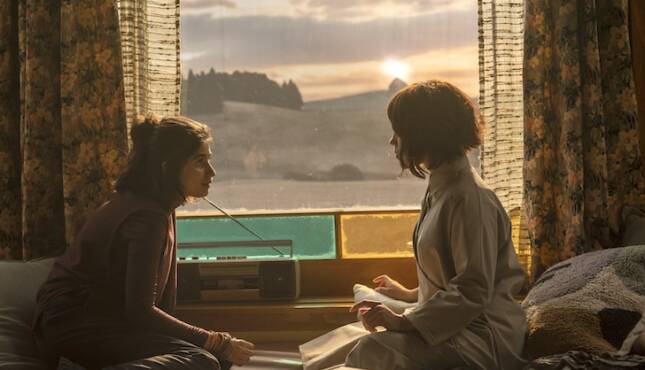 Image Credit: Sony Pictures Entertainment


 Loading...

Directed By: Taika Waititi
Written By: Taika Waititi and Dahvi Waller; Based on the book by Kazuo Ishiguro
Runtime: 116 minutes
MPA Rating: Rated PG-13 for thematic elements, some violence, and strong language.
Jenna Ortega – Klara
Amy Adams – Chrissie
Mia Tharia – Josie
Rachel House – Melania
Natasha Lyonne – Store Manager
Aran Murphy – Rick
Steve Buscemi – Capaldi
Director Taika Waititi adapts Kazuo Ishiguro’s bestselling novel about an android who yearns for love and companionship in Klara and the Sun. Despite some interesting ideas and solid actors, Waititi cannot quite pull off this intriguing sci-fi premise.
The story concerns Klara, an outdated, discontinued model in the movie’s future setting. Following a world war, digital devices and the internet are now against the law. Humans have replaced their smartphones with physical AI-bots, or artificial friends [AFs for short], as they’re called in the movie.
Klara’s B13 android model cannot compete with the popularity of the new, updated AFs. The B13s have the minds and intelligence of toddlers, but Klara stands out from her fellow AFs. She’s inquisitive about the world, and she watches in awe when she sees a couple show their love for each other.
Since Klara charges from solar energy, she worships the sun as her god, believing it to be a being of life and nourishment. Additionally, Klara cannot stop standing on one leg.
One day, Klara makes a connection with a young teenager, Josie (Tharia), who eventually convinces her mother to buy Klara as her new AF. Josie is a genetically enhanced human, undergoing a process called “lifting,” which transforms humans into genetic super-beings, setting them up for higher learning and professional standing later in life.
Klara immediately does her best to become a devoted companion for Josie, much to the chagrin of Krissie (Adams) and her skeptical housekeeper Melania (House). Unfortunately, Josie’s lifting procedure causes some negative side effects, but Klara’s childlike sense of wonderment might hold the key to healing Josie and her family.
Taika Waititi’s penchant for quirky and off-beat humor fails to vibe with Kazuo Ishiguro’s source material. Jenna Ortega certainly tries, delivering a spirited performance as this surprisingly naive, pure-hearted android.
Unfortunately, Waititi’s attempts at humor generally fall flat. Most of the humor focuses on Klara’s technological defects. Her visual sense struggles to adjust to new spaces, so when Klara enters a large wheat field, she becomes discombobulated. She struggles to simply walk up or down stairs as well.
The jokes with Klara adjusting to her new environment and comprehending the human experience fall woefully flat or appear excessively forced in execution. Ortega definitely does her best with the performance, but her overly cutesy antics fail to create a profound emotional connection.
The other problem is that the plot hinges on what’s meant to be an endearing bond between Josie and Klara. However, the bond never truly comes to life onscreen. Klara says she loves Josie and becomes emotionally attached to her, but their scenes and lack of chemistry fail to ignite the relationship.
The actors do their best with the material, but their characters suffer from a lack of development. Amy Adams’ character undergoes a very ambivalent arc that really needed to be fleshed out more.
Elsewhere, Klara and the Sun suffers from tonal whiplash. The movie attempts to maintain an almost cheerfully optimistic, family movie narrative, but it comes out of step with the story’s darker elements, along with the more dystopian aspects of the setting. Waititi appears unsure of the movie he wanted to make here, and his directorial vision never truly coalesces with the material.
Klara and the Sun does feature some interesting production and design attributes. The world-building elements interestingly depict technology regressing to a degree where robotics are heavily advanced, replacing smartphones, while other digital devices and WiFi technology have essentially become forbidden. The technological regression, with far more tactile and larger devices, looks visually interesting.
The intent with Klara and the Sun looks clear. Waititi attempts a heartwarming, bittersweet story about friendship with a sci-fi premise, but it does not feel natural. Despite Klara’s steadfast belief in the life-giving sun, the story never comes alive.
Where To Watch Klara and the Sun
Klara and the Sun arrives in theaters on October 23. Ticket and showtime information can be found on the movie’s website.


