
wrestling / News
JBL Explains Says He Made Almost 10 Times His Downside as Champion
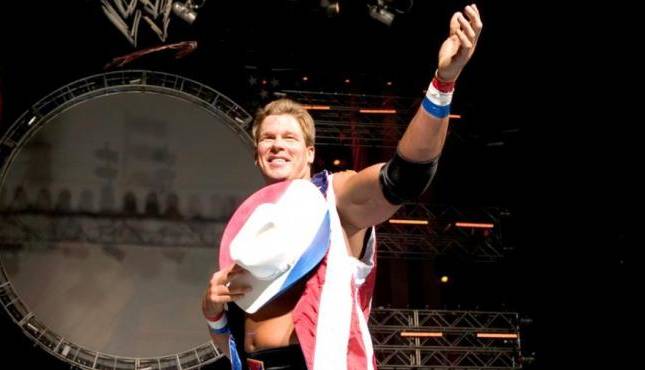 Image Credit: WWE

JBL says house shows used to make a huge difference in a wrestler’s pay, and that Vince McMahon had the final say on who got what. On the latest episode of Something to Wrestle, Conrad Thompson asked JBL about WWF running split crews in 2001 and how house show payoffs were decided. JBL said that during his WWE Championship run he made nearly 10 times his downside guarantee, explained that Vince would personally change payoffs out of a set talent pool, and described how and when wrestlers were paid at the time. You can check out his comments below:
On Split Crews & His Downside Guarantee:
“It depends on what show you’d been on. Back in the day, you didn’t want to be on the Hogan show. We had some split crews at times when I was there, but not that often, and I had no problem with it. Once you brought on the WCW guys, you had a ton of guys, too many guys for just one set of house shows. You’d have a lot of guys sitting home, and you want to make a lot more than your downside guarantee.
“Nowadays, it doesn’t matter. From what I understand, you get paid a certain amount. You work 100 shows a year, or you work 10 shows a year, you’ve got a contract. Now, you may not get it renewed if they’re not using you. You understand that. You want to be out there working, but it doesn’t matter as far as your money. What mattered to us was that we were getting paid off house shows, even though you had a downside guarantee. During my run when I was champion, I think, if I figure out the numbers right, I made nine times my downside guarantee, almost 10 times my downside guarantee. So it was huge as far as the house shows. When you have that many guys, I was in favor of it, because I wanted the guys working, and I also wanted me working, because I had rent to pay like everybody else.”
On How House Show Payoffs Were Decided:
“Oh yeah, it was huge. I got to go out there with Undertaker. You had a huge payoff. When me and Ron were on last, you got a huge payoff. It was noticeably different. But also, Vince took care of certain guys that he thought drew, or certain guys that were important to the roster. So even though you might be in the first match, Vince looked at it and went, ‘That’s one of my guys,’ and he was going to pay you better than what a normal first match would be.
“There was some type of percentage. I remember it was 27 or 33% or something like that. Whatever it was, there was a certain percentage that would go to talent. Now, how it got distributed, that was 100% Vince. I think for a while Gerald Brisco maybe did some of them, and Jim Ross did some of them, but there were times I would hear Vince would come in to scratch stuff out and change pay because he wanted certain guys to make more, and he thought certain guys should not make as much, because there was a finite pool. If he had some person make more money, he had to take it out of somebody else’s pay. But Vince was a great pay guy.
“The percentage was supposed to be set, but it’s how that got distributed. There was no scientific algebraic equation, like you’re in the first match in Fresno, you’re in the first match in Des Moines, here’s how you get paid. It was all up to Vince thinking, ‘This is what I should pay these guys for this match,’ and he had a great feel for it. If it was JR that was doing a lot of it, he had a great feel too. But the difference was massive, man. All of a sudden, you’re in a singles main event or a tag team main event, and if they deem that you’re not a fill-in, then the pay was dramatically different.”
On How Wrestlers Were Paid:
“It wasn’t direct deposit at the time. I think it’s all direct deposit now. I’m not sure when that started. It was a check that you would usually get two or three weeks after the event. Pay-per-views were like 90 days after. We always said they would leave the money in the bank trying to collect the interest. I don’t know if that was true or not, but I don’t think it was. I never got a check in the building. I don’t believe one time in my entire career.
“It was always very regular and very good. You could count on it at a certain time. The pay-per-views you could count on also, but it was pretty much 90 days before you would get that, and you were always wanting to get it, because you knew about what time it would come. You knew when you had a Garden payoff, or an LA payoff, or an overseas payoff, because those were so big. And then a pay-per-view, especially one of the bigger ones, you always couldn’t wait to see what the check was.”
If you use any of the quotes in this article, please credit Something to Wrestle with a h/t to 411mania.com for the transcription.


