
Movies & TV / Columns
Ricco Ross On Starring In Do You Want to Play?, Memories From Aliens
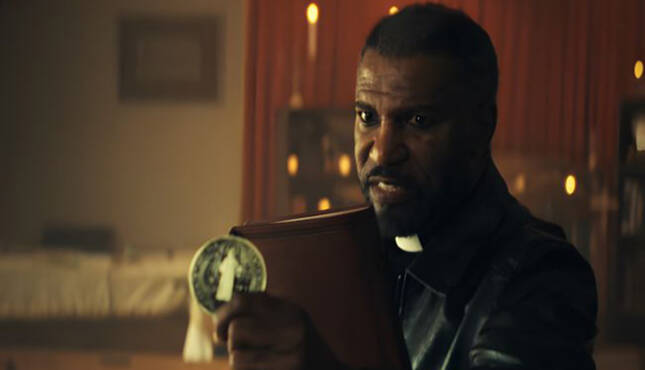 Image Credit: Nick Lyon

The 411 Interview: Ricco Ross
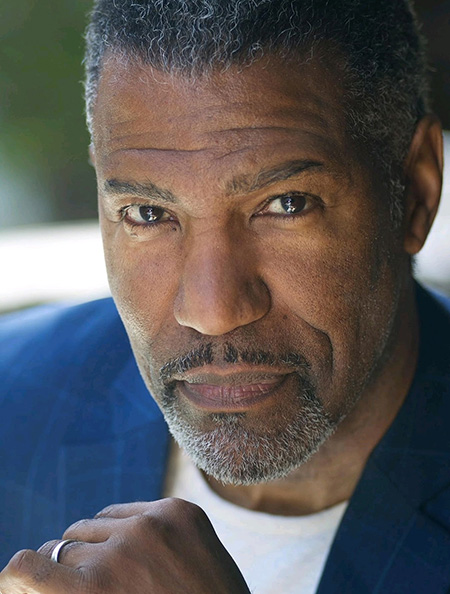
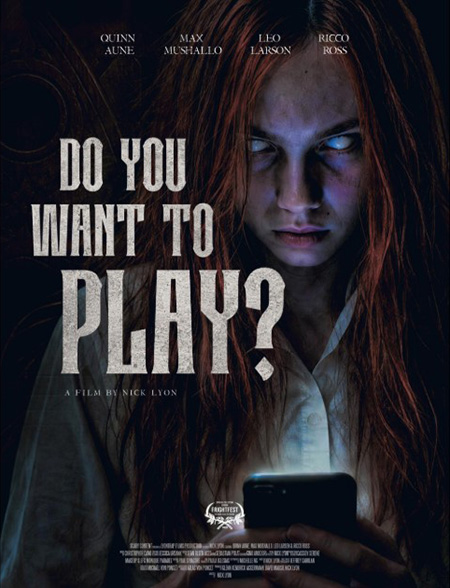
Ricco Ross is an actor, writer, and producer who has been appearing in TV shows and movies, according to his IMDb page, since at least 1982. Ross has appeared in such TV shows as Hill Street Blues (1982), Dr. Who (1988-1989), Highlander (1996), Babylon 5 (1997), ER (2006), Bite Me (2012), S.W.A.T. (2023), and Beauty In Black (2024-2026), and has appeared in such movies as The Dirty Dozen: Next Mission (1985), Death Wish 3 (1985), Aliens (1986), Project Shadowchaser (1992), Project Shadowchaser III (1995), Wishmaster (1997), Octopus (2000), Bermuda Tentacles (2014), and The Legend of Catclaws Mountain (2024), among others. Ross’ latest movie is the low-budget horror flick Do You Want to Play?, which was written and directed by Nick Lyon and stars Quinn Aune, Maxwell Mushallo, and Leo Larson and which just had its world premiere at FrightFest in the UK. In this interview, Ross talks with this writer about making Do You Want to Play?, working with the director and cast, his career, and more.
**
Bryan Kristopowitz: How did you get involved with Do You Want to Play??
Ricco Ross: Nick Lyon and I had already worked on four projects together, so we had a working relationship. One day he contacted me and asked if I would read this horror movie called Do You Want To Play? for the part of a Catholic priest? He didn’t know it at the time, but he had me at “Catholic priest.” I have played a lot of roles, but never a Catholic priest.
BK: How did you approach your character “Scary Gary?”
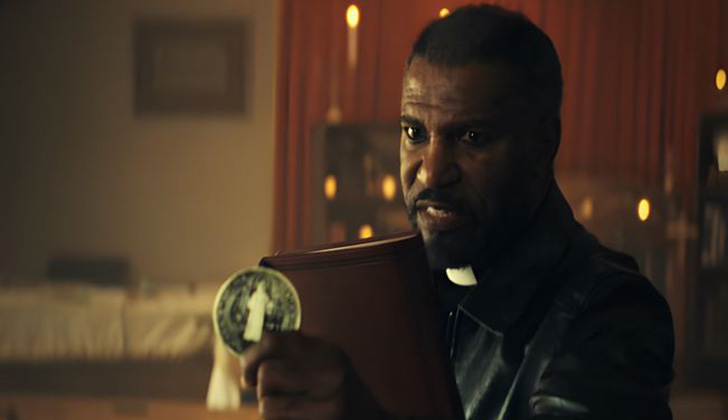
RR: With care. The character’s name spoke volumes, so I had to find justification for it. I went to work justifying it. I used an intensity and primal focus, make-up and wardrobe. As Scary Gary was now Black and a priest, I wanted to lean into that. The African diasporic have history of Voodoo stemming from West Africa. Haitian Vodou developed between the 16th and 19th centuries when enslaved West Africans blinded their faith with Roman Catholicism in colonial Saint-Dominique. This culture from the African diaspora had also migrated to other islands. So I gave Scary Gary a slight British/Island accent, and there he was!
BK: What was it like working with Do You Want to Play? director Nick Lyon?
RR: It was easy. We had made no less than four movies before Do You Want to Play? so there was already a sense of familiarity and trust between us. We communicated how we each saw the role. I made some choices like the voice and look of Scary Gary and we were off and running.
BK: What was it like working with Maxwell Mushallo, who plays Owen?
RR: I always enjoy working with young actors. They remind me of myself and Max was no different.
BK: What was it like working with Leo Larson, who plays Tommy?
RR: Leo played the role well making Tommy smart and caring without being loud about it.
BK: What was it like working with Quinn Aune, who plays Emily?
RR: Quinn was very impressive. I thought her acting had a wisdom far beyond her age and the same goes for her as a person.
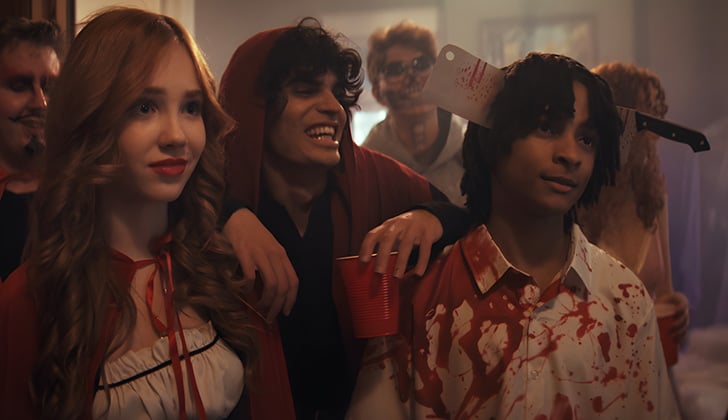
BK: What was the hardest part of making Do You Want to Play? for you as an actor? What was the easiest?
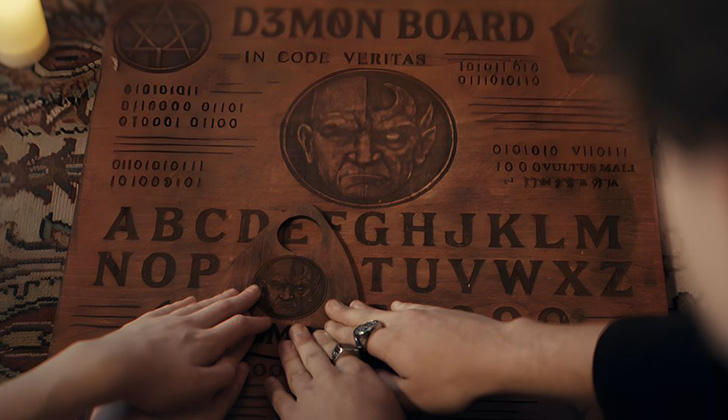
RR: The death scene was the hardest because there was no special effects, so I had to create the fear and horror from my imagination. The easiest part was doing the big assemble Ouija board scene. Once we found the rhythm of the scene, it took on a life of its own.
BK: Do you have a favorite scene in Do You Want to Play??
RR: The big assemble Ouija board game scene.
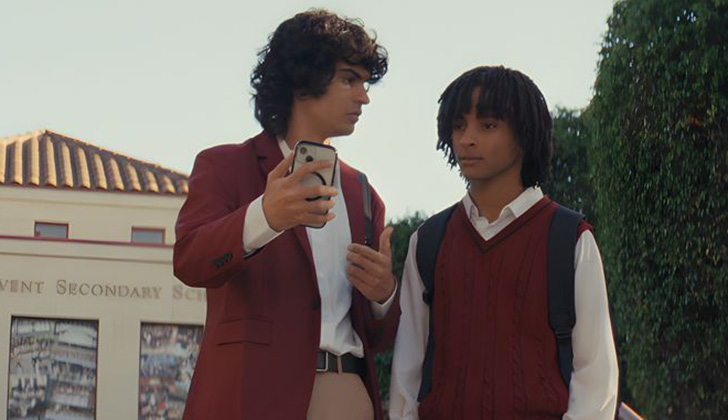
BK: You’ve worked in both movies and TV in your career. Do you have a preference for either, or is it ultimately more about the material?
RR: I prefer movies as one often has more time to play, create and find nuances in roles. TV productions move fast, so fast that often I feel like as an artist, I’m shooting in the dark.
BK: You’ve also worked on a number of genre projects in your career. Do you enjoy working in genre entertainment?
RR: For most of my career I wasn’t financially able to turn down roles, so I was often just happy to be working. If I had the luxury of choosing a particular genre, it would be films that fell into the suspense/thriller or action/thriller genre.
BK: What was it like working on the TV movie The Dirty Dozen: Next Mission (1985)?
RR: Amazing! I had seen the success of the first The Dirty Dozen (1967) and the sequel was my first big role in a movie. I wanted to do my best, so I decided to be celibate from the beginning to the end of filming. Lee Marvin took me under his wing and taught me how to pace my emotion for filming a movie. My character was an expert sniper and the mission was to kill Hitler’s right hand man, but I managed to get Hitler in my crosshairs and wanted to kill him. Lee’s character had to talk me out of it, as that was not the mission.
On the first long shot of filming the scene I was giving all of the emotion a scene like that would require. When we cut for that first take, Lee explained to me that my performance was great, but that we are going to do maybe 20 takes before we get to my close-up, “the money shot,” and that whatever I was using to create that emotion, would be long spent by then if I kept using it. I had to learn to pace my performance. He also taught me how to conduct myself on set, sometimes with words, other times by example. I was lucky to have had him as a mentor at that stage of my career. I would receive a Christmas card from him and his family until he died.
BK: What was it like working on the movie Death Wish 3 (1985)?
RR: How much time do you have? I love Michael Winner! I was living in London. He called me in for a meeting for Death Wish 3 and we just chatted. Afterwards, I asked if he wanted me to read/audition for the role and he said, “No, thank you. I would like to offer you the role, but you don’t have to read. I’ve seen your resume. I know you can do the role. I just wanted to meet you to see how you were as a person.” That was so different from Hollywood meetings! He had a great sense of humor and came to set knowing exactly want he wanted to do.
We filmed in London and New York. When we were filming in New York, some real gang members came to our outdoor location and demanded to be put in the movie as extras because no one asked their permission to film in their neighborhood. The producers gave them an emphatic “no” and they proceeded to stone the bus and area we were filming in. We had to pack up and move to another location!
BK: What was it like working on Aliens (1986)?
RR: Special. Myself and a few other male actors were called in to audition using the scenes of Hudson, as he had the most lines. After my audition I was offered a smaller role because it was early in the casting and James Cameron hadn’t seen many actors for Hudson. I told him if he wasn’t offering me Hudson or Hicks, I was going to pass. James asked if I would come meet with him again before I accepted any other offer. I said yes.
A few days later I was offered eight weeks on the movie Full Metal Jacket (1987) by Stanley Kubrick. The filming only overlapped a week. I went back to meet with James, as promised, and James said he would let me join Aliens a week late if Kubrick would release me after the eight weeks of filming. Kubrick said “no” to that request.
I was going to pass on Aliens to do Full Metal Jacket. Most actors dreamed of working with Kubrick and, at that time, Cameron was little known. Then James said he would rewrite three roles into one, and I would have that role. He also said he would schedule around dates of another movie I had been offered that conflicted with filming Aliens. He then offered to increase my pay and to credit my name above the film’s title.
He was the first director to write a role specifically for me, so I accepted the role of Frost, passed on Full Metal Jacket and the rest is history. No one knew Aliens would become the classic that it has become, but we all knew we had a great chance of making a good movie.
BK: What was it like working on two Shadowchaser movies, Project Shadowchaser (1992) and Project Shadowchaser III (1995)?
RR: In the 1980s it seemed like Black actors were the first to die in most movies they were in. I was one of the poster children of that phenomena. Because of my many death scenes, I had never had the opportunity to be in a sequel. Then I ended up living through Project Shadowchaser, not being cast in Project Shadowchaser II (1994) and then brought in for Shadowchaser III as a completely different character. But I was back and that was a first! I loved it!
I chose to cut my hair into a mohawk, dyed it blonde and added a temporary tattoo for the role in Shadowchaser III. After filming ended I found myself attached to the tattoo, so I decided to make the tattoo permanent. On my way to the tat artist I had the epiphany that getting a permanent tat based on a space prisoner was not a good idea. So, once I arrived at the tat shop I designed a new tat that represented me as a person and it is still the only tattoo I have on my body.
BK: What was it like working on the Tyler Perry Netflix show Beauty in Black?
RR: Changed my life!!! Both James Cameron and Tyler Perry have many things in common. They are both geniuses, in the true definition of the word. They are very tuned in to what their audience wants, how to tell a story, and they both enjoy having full control over the production. Among those similarities Tyler was the second writer/director to write a character specifically for me, with Cameron being the first.
Working as a lead regular on a worldwide platform like Netflix gave me the opportunity to show what I bring to the screen and audiences all over the world have responded to it. The role was so far from Ricco Ross that I really had to build him from the ground up. I used my UCLA training of working from the inside out and based the foundation of Horace on my father. I used the London Academy of Music and Dramatic Art (LAMDA) training of working from the outside in to find the right shoes and clothes. Then Tyler suggested a cigar and then a cane. This helped me find the voice and walk. Once I put it all together, I remember thinking, “I got you now, Horace! I got you!”
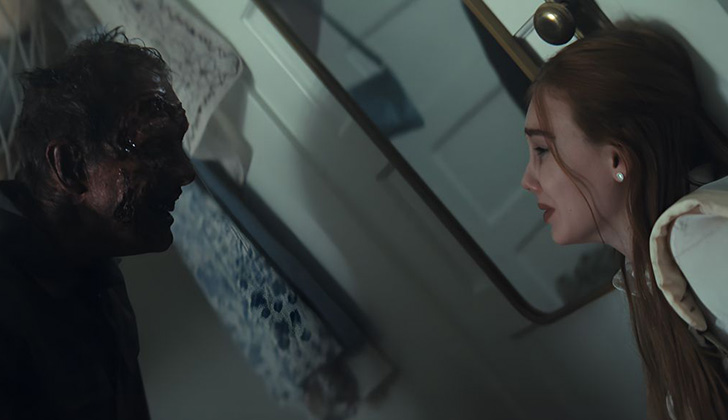
BK: Any upcoming projects you can tell us about?
RR: Yes, I filmed two small indie movie called What Heroes Do and Soulmates and a bigger movie collaboration with myself, Tyler Perry, and Netflix called The Gospel of Christmas. All have been shot and will be released throughout the next 12 months.
Lastly, I have about twelve projects, in various stages of pre-production, that are vehicles for me, which I am most excited about.
BK: What do you hope audiences get out of Do You Want to Play??
RR: The thrill I got as a teenager from watching The Exorcist (1973). I feel like Do You Want To Play? is The Exorcist 2.0.
BK: Have you ever messed around with an Ouija board in real life? And would you ever want to download an Ouija board app to your phone?
RR: Uuuuum….. no and hell to the no!
**
A very special thanks to Ricco Ross for agreeing to participate in this interview and to david j. moore for setting it up.
Check out my review of Do You Want to Play? here!
Check out the official Do You Want to Play? Instagram page here!
Check out the official Ricco Ross website here!
Check out the official Ricco Ross Facebook page here and official Instagram page here!
Check out the Ricco Ross IMDb page here!
Ricco Ross headshot image courtesy of Ricco Ross. Do You Want to Play? poster image courtesy of Mad World Creative. All other images courtesy of Nick Lyon.


