
wrestling / News
Eric Bischoff Says WWE Has An Audience Apathy Problem
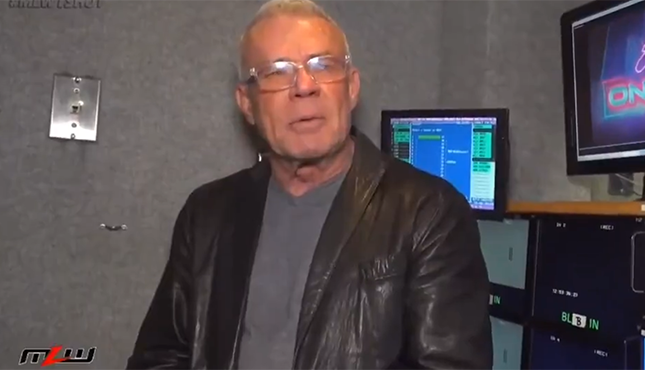 Image Credit: MLW

On the latest episode of 83 Weeks, Eric Bischoff discussed TKO President Mark Shapiro’s comments that WWE took a revenue hit on its international PLEs because it couldn’t sell sponsorships the way it does in the United States. Bischoff said there is too much wrestling content on the market and warned that WWE risks losing its connection with its audience if it chooses dollars over engagement. You can check out his comments below:
On Weighing Sponsorship Money vs. Audience Energy:
“I just don’t think the math maths, as they say today, long term. Short term, I guess. But it’s a value proposition. ‘Okay, we’re not going to be able to sell as much in sponsorships, but we get a better-quality product that reinforces the audience’s love for the brand.’ Don’t underestimate that. It’s a very valuable asset. So it’s something you would want to consider. ‘Yes, I’m not making as much money as I possibly could, but here’s what I’m getting in return.’ At least it needs to be discussed and analyzed, versus a straight math formula that says if I do them in the United States, I’m going to make a lot more money.”
On the Apathy He Sees In WWE Crowds:
“I’m probably as peripheral a fan as you could possibly be and still call yourself a fan. Meaning occasional, really on the outside edge of it, and it’s just a time thing. It’s not a personal taste or judgment; it’s just bandwidth and time. But what I’m seeing when I do watch, more than what I follow through news and social media, is that there’s an apathy. It’s not that the audience isn’t excited; it’s just that they’re not as excited as they have been in the past. That’s my read.
“As I’ve told you a million times, I don’t watch what’s going on in the ring as much as I watch what’s going on in the audience. That tells me everything my interest in wrestling needs to understand. The size of the crowd, the makeup of the crowd, what percentage of it is kids, what percentage of it is women. This is all anecdotal, but what impression do I have based on the composition of that crowd? When I see the level of interest in the product today, whether the building is sold out or not, it’s the energy that’s in those seats that matters. And I can feel it. You can see it if the show is produced properly. You bring the audience into the home of the viewer if you’re a smart producer, and WWE is the best at that. I’m not seeing as much of that as I used to. I’m not feeling it.”
On There Being Too Much Wrestling Content:
“I think there’s just too much product. There is too much WWE product, and there’s too much wrestling product in general. Do they all do pretty well in their relative positions in the market? They all survive. Tony’s surviving, not because he’s a profit center, but because he doesn’t need to be a profit center. And he’s got a contract with a television distributor, at least for now, so he’s good. MLW, Court Bauer, he’s good based on the world he set up for himself. He’s self-funded, so he doesn’t have anybody holding him accountable financially other than his banker. We all have somebody, and in Court’s case it’s his banker. He’s using his own money, much like Tony Khan, so he doesn’t have the same kind of pressure that a publicly held company like WWE has. But I would think at some point WWE is going to have to look at it like the Jim Cornette line: if everybody’s got a seven-foot giant, nobody’s got a giant. You’ve flooded the market with giants at that point. To a point, I think we have flooded the market with wrestling content.”
On What WWE Should Consider:
“If I were WWE, I would at least consider the real difference between slowly losing the emotional attachment of my brand to the audience versus maybe not making as much money as I could, but keeping the energy up. Because those fans in the United States will see those people in Europe having a blast, and guess what they’ll do when they go to a WWE show? They’ll bring that energy. They’ll compete with that. They’ll imitate that.
“You see that a lot in sports. You’re now hearing chants at events in the United States that you would typically only hear at a soccer game in Europe. It translates. Elvis Presley said it best: the most important part of the show is the audience. You have to understand that first, then figure out a way to encourage it and bring it home to the viewer who doesn’t have a chance to be there. That’s the connection to your audience that’s very, very valuable, and you can lose it if you over-dilute the market with your product and you’re willing to sacrifice audience engagement for dollars.”
On TKO’s Shareholder Obligation:
“Not to interrupt you, Conrad, but by law they have to do it. It’s a fiduciary responsibility. There’s latitude in there obviously, but every executive at TKO has a responsibility to their shareholders to maximize profit. That’s where it gets a little less cut and dry.”
If you use any of the quotes in this article, please credit 83 Weeks with a h/t to 411mania.com for the transcription.


