
games / Reviews
Crimson Desert (Xbox Series X) Review
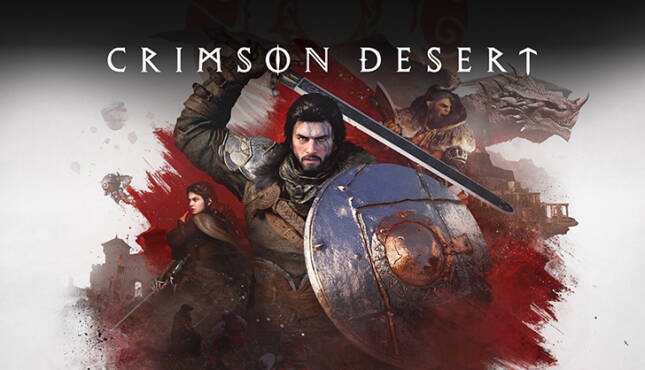 Image Credit: Pearl Abyss


 Loading...
Crimson Desert is one of those rare games that feels almost too ambitious for its own good—and somehow still pulls it off. Even in its current state, it’s messy, uneven, occasionally frustrating… and completely absorbing. This is very much a review in progress, because the developers are actively reshaping the experience in real time, but what’s already here is enough to make a huge impression.
From the moment you step into its world, the scale is overwhelming in the best way. The continent of Pywel feels dense, unpredictable, and alive, packed with dynamic events that constantly pull you off whatever you thought you were doing. One minute you’re following a main quest, the next you’re caught in a large-scale skirmish, chasing bounties, or just wandering into something that turns into a full-blown set piece. The game thrives on that chaos. It doesn’t always feel tightly controlled, but it rarely feels boring.
Combat is where Crimson Desert really digs its hooks in. It’s weighty, flashy, and surprisingly deep, blending melee, ranged attacks, and environmental interactions into something that feels halfway between a character action game and a sandbox brawler. There’s a real sense of physicality—hits land hard, enemies react convincingly, and fights can spiral in unpredictable ways. At times it’s borderline overwhelming, especially when systems overlap or the camera struggles to keep up, but when it clicks, it’s incredible. You start improvising, chaining attacks, using terrain, and turning messy encounters into something that feels uniquely yours.
That said, “flawed” is not an exaggeration. Performance can be inconsistent, with frame pacing dips that break immersion at the worst times. The UI is cluttered, tutorials don’t always explain systems clearly, and some mechanics feel half-finished or poorly communicated. Quest design can swing wildly from engaging to repetitive, and the narrative—while ambitious—doesn’t always land with the weight it’s aiming for. There are moments where it feels like three different games competing for attention.
But here’s the thing: none of that stops it from being incredibly hard to put down. There’s a constant sense that something interesting is just around the corner. Even when systems don’t fully work, they almost do—and that “almost” is enough to keep you experimenting. It’s the kind of game where you forgive its rough edges because of how much it’s trying to do, and how often it actually succeeds.
A big part of why this review feels unfinished is because the game itself is. The developers are clearly treating Crimson Desert as a living project, with ongoing tweaks, balance changes, and content adjustments that noticeably impact the experience. Systems that felt clunky one week might feel improved the next. Features are being reworked, expanded, or sometimes completely rethought. It creates a strange dynamic where you’re not just playing the game—you’re watching it evolve.
That evolution is exciting, but it also makes it hard to lock down a definitive verdict. What’s here now is already impressive, but it’s also clearly not final. There’s a sense that the developers are still chasing their ideal version of the game, and we’re along for the ride. In a more traditional release, some of these issues would weigh heavily against it. Here, they feel more like growing pains.
And yet, despite all of that, it’s impossible to ignore just how compelling the overall experience is. Few games manage to feel this alive, this reactive, and this willing to take risks. It’s messy in a way that feels creative rather than careless. You can see the ambition in every system, even when those systems don’t fully come together.
Calling it a “flawed masterpiece” might sound contradictory, but it fits. The flaws are real and sometimes significant, but so is the impact. It’s a game that sticks with you, that keeps pulling you back in, that makes you curious about what it will become next. Even in its current state, it delivers moments you won’t get anywhere else.
So yes, this is a 10/10—but not in the traditional sense of perfection. It’s a 10 because of what it is and what it’s clearly becoming. It’s bold, chaotic, occasionally broken, and completely captivating. If you’re willing to accept its rough edges and embrace the fact that it’s still evolving, Crimson Desert is something special. And this review will probably need updating, because the game itself certainly won’t stay the same for long.


