
wrestling / Columns
Kidd Bandit On Being a Trans Woman In Wrestling, Why She Retired & Started Her Own Promotion
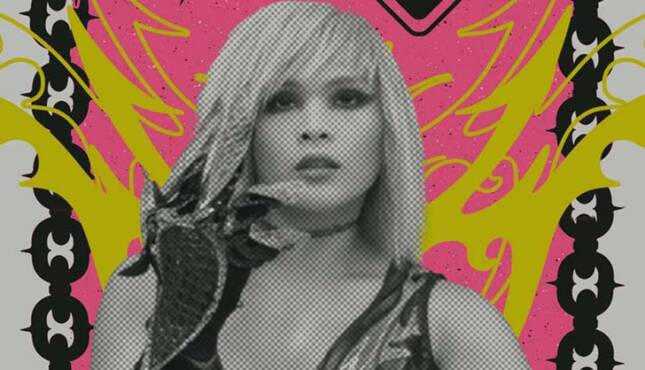 Image Credit: Pride in the Family

Hello folx! Welcome to 411’s exclusive interview with Kidd Bandit! I recently got to sit down and talk with Kidd Bandit about her time in pro wrestling, her decision to retire and start her own company, and what life has been like transitioning as a pro wrestler!
Could you introduce yourself and let them know where they can find you?
Kidd Bandit: “Hello, I’m Kidd Bandit. You can find me on Twitter, Instagram, Bluesky, and TikTok under the name Kidd Bandit. I’m also the owner and one of the head trainers of T4T Wrestling, which is a wrestling company based in Los Angeles. The handle for T4T Wrestling is @t4twrestle on all social media platforms.”
How has it been for you to transition in a somewhat public limelight?
Kidd Bandit: “It sucked, freaking sucked. I’ll be real; when I came out, I was really stoned. I was really stoned. So I first came out to my partner. I was like, ‘Hey, I think I’m trans,’ and she was very supportive. So, I was like, ‘Hell yeah, okay, cool.’ And then a couple of edibles later and lo and behold, I’m coming out on Twitter. And I’m like, ‘Oh, shit, all right. Well, cat’s out of the bag now!’ I kind of made a public statement about it, then I woke up the next day and it blew up. And I’m like, ‘Well shit, no going back now!’
“But yeah, it would have been something I deeply researched before I committed to it. It wasn’t something I was like — you know, I wasn’t going to like Pride parades, or anything. I had queer friends, but I wasn’t friends with them to find solidarity because I’m queer as well. I was friends with them because we play video games together. So, discussions about being queer weren’t really something that ever really entered our like dynamic. All we talked about was League of Legends!
“So, yeah, even though I was exposed and familiar with the queer community and I considered myself bisexual — I’ve always been part of it — I never really understood the nuances behind all the studies and discoveries about what being non-binary is, or all the new pronouns that people were using to identify themselves.
“And coming out as a public figure or rather, like a semi-niche micro celebrity on a far corner of the internet, levels of notoriety as it were, I felt like someone who was publicly coming out. So I also needed to take that responsibility seriously. And part of that responsibility was educating myself about the things that I might get asked or have to talk about. I had to figure out ways to talk about the important nuances and the stuff our community deals with. And also for the broader LGBTQIA+ community.”
Thankfully, you had some trailblazers you could follow within the pro wrestling world.
Kidd Bandit: “Absolutely. Getting to work shows like the Big Gay Brunch and working with other queer talents helped me to understand bits of their perspective of being queer in their culture. I was in a different city or country almost every weekend and got to meet and learn from so many people. This helped me formulate my own view on what being queer is. This industry has been very cruel to marginalized communities, and I got to publicly document what I was dealing with. Not only as a 5’5 pro wrestler, but now as someone who was transitioning while still wrestling.
Being a bit of a public figure came with the understanding that people live through you vicariously. And when they do that, you have to be very mindful of, how you conduct yourself. Because you don’t want to disappoint anyone, right?
But also, when people are living vicariously through you, you don’t know what aspect of your life they’re seeing and identifying with. So for me, it was maybe people are vibing because I like anime, maybe it’s because I’m Asian, or I like Kingdom Hearts, maybe it’s because I’m trans. Maybe it’s all those things. Maybe the person I am embodies someone very similar to me. Or maybe that person doesn’t have a lot of role models.
And while I may not look at myself as a role model, someone else might. So, it’s my responsibility for me to acknowledge that people do see me in that light. And I need to take that responsibility seriously. There’s not a lot of like trans wrestlers even today, for all the strides that the movement and the community have made over the years, there’s still way more to be made, you know. The internet put a rocket to my back before I was ready when I, when I debuted, like, I was, like, oh, yay, I get to finally wrestle. It’s so cool. Before I knew it. I was like viral on Twitter.
And I was like, I got to lock in because, like, you never know when you’ll ever go viral again. And when I failed, I failed in front of a lot of eyes. Every mistake that I made, every, like, happened while I was in the spotlight. There was never a learning curve where I was allowed like a leeway or like a grace period.
It’s like you’re representing an entire community now. You have to be perfect.
Kidd Bandit: “Yeah! But what people didn’t understand when I first transitioned, you’re being pumped with all these new hormones. You’re going crazy because you have all these chemical imbalances in your body. You’re going through puberty all over again, you’re gonna say stupid stuff and make dumb choices. And just be a teenager mentally, because that’s what your body’s going through. I had the unfortunate luxury of going through that while being on the spotlight.
“And it wasn’t fun because looking back, I was miserable, but I couldn’t complain about it because I was privileged by how my career blossomed. I got to cut so many lines. I didn’t have to pay as many dues because I went viral, so it was definitely a very tricky and nuanced experience. A lot of goo and a lot of bad, and a lot of the bad, doesn’t even sound that bad. But it was definitely bad for me. And a lot of good doesn’t sound that good, but it was definitely great for me.”
Did you have more difficulty finding bookings or being accepted in locker rooms once you transitioned?
Kidd Bandit: “Funny enough. No, well, my locker room experience has always been very simple. I find a corner, and I stay in my corner. I pull out my phone and I play video games until it’s time to call my match. Then I put on my clothes and then do my match. Like, yeah, I’ll be friendly to people and stuff. But, I’ve always put myself arms length from everyone in wrestling. I have friends here and there, but like, you don’t see wrestlers going on Twitter posting about, like, what a good time it is with Bandit, you know, you mostly see fans do it.
“And I was always introverted. I prefer the company of video games and, you know, text-based RPGs. And frankly, I also understood from like the get-go that you can’t cause drama, or you can’t be involved in drama. If there’s no drama to share it with, so I went from my debut to my retirement with, like, zero locker room Scandal, because I stayed away from everyone like a damn little edgy emo kid in the corner of the classroom. Which is how I grew up. So, I’m like, all right, you know, it served me. Well, I guess so.”
Do you feel like those challenges led to your decision to walk away from the ring and focus more on giving back and starting T4T Wrestling?
Kidd Bandit: “Yeah, definitely it’s also one of those things where I was, like, ‘Why am I really retiring?’ I’m not retiring because I’m hurting. I’m still wrestling pretty well. I’m not retiring because I’m old. I’ve barely turned 30. And, it’s not like I’m not getting booked, I was. I just had a freaking World Tour, I was just all across Europe, Japan, and the Philippines. I just did a full tour of America, and when WrestleMania came, I actually ended up gaining a lot of bookings, to the point where I was turning down bookings. I felt like I didn’t want to do too much, but the offers were there. So, it’s not like I was leaving wrestling in a position because I was not being fulfilled. I definitely was. I love wrestling, I love meeting people, I love kicking people in the head. It gave me sense of purpose. It gave me something to look forward to every week, you know.
“But I realized two distinctly important elements that made me think that, ‘Okay, this is bad.’ The first of which was when I realized I’m not built for this. I’ve never really cared about fame. But when I got the when I got to this point, I’m like, ‘Shit.’ Fame and popularity are so integral in showbiz. I work in the entertainment industry, but my job is behind the scenes. So through wrestling, I was on the opposite side. I was in front of the camera and in the limelight. But as a wrestler I realized that yes, I wanted to be famous because it was important. I wanted to get notoriety because it would help me get better bookings, better matches, and make more money.
“But I didn’t get any glory out of it. I didn’t get that validation from the fans cheering for me. I did a lot of wrestling because I really enjoyed the movement, the choreography, and the martial arts aspect. That’s what I live for in terms of the wrestling. It wasn’t like it wasn’t nice to hear the crowd go loud, obviously. I don’t think anyone’s gonna decline that, but to hear some wrestlers talk about it, that’s what they live for. And for me it was mostly the moves. I love the craft, you know?
“I felt like if I ever get a chance to be on TV and make a living out of this, it won’t be because I’m a good wrestler. It will always be about who and what I am, and I’ve always just wanted to be known as a good wrestler. I hope one day people can look back and see me as a good wrestler, because that is the metric of success for me. That sounds so avant-garde, but it matters to me. I put my body through all the training and pain that comes with being a wrestler, and I want to be validated for that effort.
“And the other side of that is, I don’t think my mental state could have handled the pressure of being a big name trans wrestler. You hear the stories of other trans athletes and what they deal with. And I just couldn’t handle being in that spotlight. For perspective, I got to work with Zack Sabre Jr., and everyone was talking about how good the match was. And then I saw people online saying stuff like ‘This would have been a good match, but Kidd Bandit is trans, so it sucks.’ And that stuff killed me.
“So I figured if I already pretty much accomplish everything I want to do, why wouldn’t I want to go out on top? Like, if this is going to be the pinnacle of what I’m able to get done in my career or what I’m able to handle, then why not step away? Why not figure something else out? Why not try to revive a good idea that was soured by the mismanagement of funds? I could put all the skill sets that I’ve developed and use all the networking and resources to help my community.”
Can you explain what T4T Wrestling is all about?
Kidd Bandit: “So, I was part of an event last year for a wrestling company called T Boy Wrestling. They ran in LA, and essentially the idea for this company was to channel that same level of try to tap into that same demographic audience. So when we came up with the idea for [a] revamp, we had a couple of names that were kind of being thrown out there. The T4T Wrestling idea kind of just came about because of the event that T Boy Wrestling held.
“We wanted to take what they did and help to introduce more trans women and nonbinary folx into the fray, and T4T Wrestling was a placeholder name we had. But as we got closer to announcing the company, I made the decision to stick with it. It would be easy for the trans community to understand, and I’m hoping that people also understand that this isn’t a dating thing. (Author’s note: T4T is shorthand for trans for trans in the trans dating community). This is a pro wrestling company, and pro wrestling companies love acronyms. It also shows what we are about and who we are marketing to.”
So, would you say it’s By Trans, For Trans?
Kidd Bandit: “Haha, I’m going to steal that.”
Do you feel like you’re carrying on what Effy started with the Big Gay Brunch, or do you feel this is something new?
Kidd Bandit: “It’s a different thing. What Effy’s doing is a showcase of the premiere of queer athletes in the scene. I know he goes out of his way to be as inclusive as possible. But if you look at the quality of talent that ends up working these shows, they’re usually folks who have made a name for themselves or are in high demand. And we all deserve a platform where all the best can gather and apply their craft.
“And I’m so grateful to be a part of it, but what we’re doing is drastically different from that. Because while we’re incorporating parts of that, I’m definitely reaching out to the talents of the highest caliber that I could afford in my budget. At the same time, we’re also focusing on the future. We’re kind of creating a pathway for wrestlers to try it out. We’re going to have a mini showcase. These are our students, we gave them 10 weeks of training, and they came up with this very short match. And they wouldn’t be judged in the sense of traditional pro wrestling, where it’s like a match where two people are trying to win.
“We want them to incorporate drag. We want them to incorporate contemporary dance. Any interpretation they have for themselves, for their gender identity, for what they want to put out there. You know, it’s performance art, and we’re giving them that platform through the medium of pro wrestling.”
It sounds almost like a drag show built on the framework of pro wrestling. Which is very unique.
Kidd Bandit: “Yeah, we are creating something unique. And everybody says that; everybody wants to be unique, you know? But I think what we’re really trying to do is, how do we create a style of wrestling, or how do we use the world of professional wrestling? You put a trans lens or a non-binary lens into that platform, and how do we use that to tell stories using our bodies and our choreography and our movement? And not necessarily into a classic case of like, ‘Here’s wrestler A versus wrestler B, it’a contest of skill.’
“This time around it’s like, ‘Hey, these are wrestling moves, this is a ring, these are new ways people can tell a story.’ The thing I’m always astounded by is when we were running T Boy Wrestling last year, that was their approach to pro wrestling. They were calling it performance wrestling. It’d be the story of how someone is trying to overcome like being misgendered in public, and somehow they were able to contextualize that internal struggle in a wrestling setting. Where one wrestler was representative of someone’s inner thoughts and demons, and the other wrestler was supposed to represent them, trying to overcome that. And that’s pretty poetic; it screams theater, but it had elements of wrestling attached to it.”
“So, yeah, I’d say it’s a lot different than what Effy is doing. We are giving a platform for trans and nonbinary folx to learn and showcase their stories, while Effy is giving the best queer talent in the world a place to show how good they are and to be themselves.”
A big thank you to Kidd Bandit for taking an hour of their day to talk to me about their life and wrestling. Be sure to check out both Kidd Bandit and T4T Wrestling on all social media platforms!


