
wrestling / Columns
The Curious Case of The Bella Twins’ Legacy
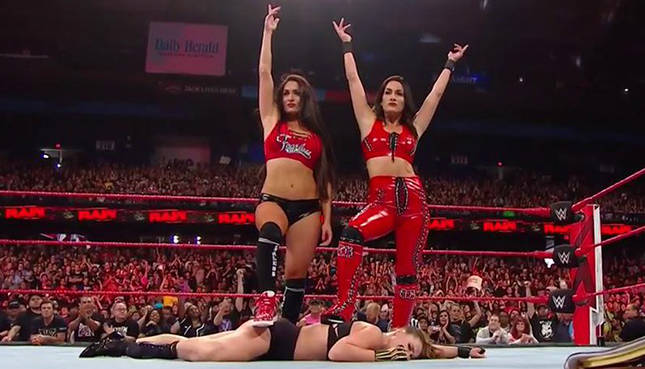 Image Credit: WWE

Over the Spring and Summer, Len Archibald will be a 411Mania guest columnist analyzing the state of women’s professional wrestling in North America.
My fellow marks, this is a topic tailor-made for a deep dive, and I can already feel the passion buzzing for this one. The Bella Twins aka The Garcia Twins – are indeed a curious case, a true Rorschach test for wrestling fandom.
When it comes to the careers of Brie and Nikki Bella – feelings that fans catch is rarely singular. Depending on who you speak to, it’s a mishmash of admiration, frustration, critical analysis, entertainment and a looming presence over women’s wrestling that is hard to ignore – even when some fans try their best to erase them. Few duos in professional wrestling ignite as much debate, elicit as many strong opinions as possible, or challenge preconceived notions of “worth” quite like these twin siblings. They are WWE Hall of Famers, pioneers of reality television integration into the wrestling sphere, yet their contributions have been met with a polarizing reception from the very fans who witnessed their rise.
And as we approach WWE Evolution 2 in Atlanta in the next few weeks – with rumors swirling about The Bella Twins potentially re-signing with the very company that defined them – it’s time to pull back the curtain on their multifaceted legacy. This isn’t just about wins and losses; it’s about dissecting their in-ring contributions, mainstream impact, and the often-harsh criticisms they’ve faced, all to determine if their place in the ongoing narrative of the “Women’s Evolution” is truly perceived with the fairness it deserves. This is a story for every wrestling fan, from the casual viewer who knows them from reality TV to the hardcore devotee who dissects every lock-up and promo. It’s a look at how two women navigated a seismic shift in an industry, leaving an indelible, if complicated, mark.
TWIN MAGIC MYSTIQUE

The journey of Nikki and Brie Bella into the wrestling world began, like many, in the crucible of WWE’s developmental system. They both made their debuts as part of the much maligned WWE Diva Search in 2006 – early eliminations but were signed in 2007 to Florida Championship Wrestling (FCW) – recognized for their raw charisma, and possessed an uncanny identicalness that WWE quickly capitalized on. It was Brie who made the initial splash on SmackDown in August 2008, frustrating opponents with her elusive tactics. Just weeks later, the secret was out: her seemingly miraculous endurance was due to “Twin Magic,” where Nikki would swap places under the ring to finish the match. It was a simple, yet effective heel gimmick that instantly established their mischievous, interconnected dynamic.
For the next decade, The Bella Twins became consistent, if sometimes understated, fixtures of the burgeoning Divas division. They were often embroiled in storylines that, while sometimes criticized for their superficiality, ensured their consistent presence on television. Brie’s single reign as Divas Champion in 2011 marked her individual ascent, but it was Nikki who would later etch their names into the record books. Her second reign as Divas Champion, lasting an unprecedented 301 days from November 2014 to September 2015, became the longest in the title’s history. This period saw her embrace the “Fearless Nikki” persona, a character that hinted at a more aggressive, athletic, and dominant competitor. This is also a moniker that has recieved much criticism as fans percieve it as exaggerating her contributions to the Women’s Evolution – along with ties to her own personal life (which I will not divulge in here, as that is not relevant to this op-ed.)
The Bella’s first brief departure from WWE in 2012 could have been the end, but their return in 2013 coincided with a true game-changer: the launch of E!’s Total Divas. This reality show flung open the doors to the personal lives of WWE’s female talent, transforming them from in-ring performers into relatable, aspirational figures. The success of Total Divas (and its later spin-off, Total Bellas) cannot be overstated; hardcore fans may scoff, but it was a phenomenon that expanded WWE’s reach far beyond its traditional wrestling demographic…women who were not wrestling fans were tuning in to see the lives of these female wrestlers.
When Total Divas premiered on E!, it drew 1.34 million viewers. While its ratings fluctuated and eventually declined over its long run (typical for reality shows), it consistently performed well for the E! Network for several seasons, especially in its early years, often garnering over a million viewers and ranking high in its time slot for various demographics.
Even as the “Women’s Revolution” officially kicked into high gear around 2015 with the rise of Charlotte Flair, Sasha Banks, Becky Lynch, and Bayley – The Bellas remained prominent figures just as Total Divas reached its peak in popularity. Nikki, still in her record-breaking reign, found herself at the forefront of the division, finally using her star power to put over Charlotte Flair strong in a “passing of the torch” feud as Flair ended Nikki’s historic reign at Night of Champions 2015.
The height of Nikki Bella’s career culminated in a historic moment at Evolution 2018, where she main evented against then WWE Raw Women’s Champ, Ronda Rousey. Subsequent occasional appearances, including memorable Royal Rumble showings, solidified The Bella’s intermittent presence until their formal induction into the WWE Hall of Fame in 2021 as a tag team. They now continue to thrive as their real names, The Garcia Twins, managing successful business ventures and a popular podcast, proving their star power extended far beyond the confines of the ring.
THE UNSEEN INFLUENCE
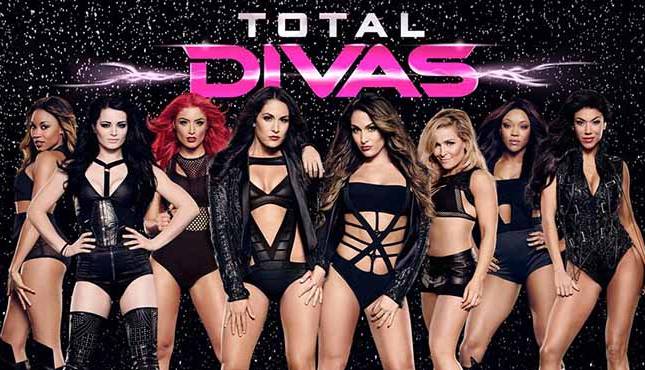
To truly understand The Bella Twins’ legacy, one must look beyond the confines of the ring and recognize their impact on mainstream exposure and audience growth. Total Divas and Total Bellas were not merely reality television shows; for a while they were cultural phenomena that brought WWE’s female talent to a wider, non-traditional wrestling audience. My fellow marks, we’ve debated for decades how to attract new eyes to our beloved sport. The Bellas, wittingly or not, built a bridge. Their E! Network shows showcased the lives of female wrestlers outside the ring, humanizing them, making them relatable, and, crucially, making them famous to millions who might never have tuned into Monday Night Raw.
This exposure wasn’t just about fleeting fame; it generated significant revenue and interest, which, indirectly yet undeniably, contributed to WWE’s willingness to invest more in its women’s division. Brie Bella herself once famously stated that Total Divas “opened the door for women’s wrestling.” This isn’t mere hyperbole; it’s a testament to the fact that mainstream visibility creates value, and value, in turn, creates opportunity. When a major network dedicates prime-time real estate to your female talent, it sends a clear message: these women are marketable, they are compelling, and they deserve investment.
Stephanie McMahon has repeatedly cited the reality shows as a key factor in expanding WWE’s female audience, stating that while female viewership for WWE’s core programming (like Raw and SmackDown) remained stable at around nearly 40%, the female viewership on other platforms “went through the roof” due to Total Divas and Total Bellas. She highlighted these shows increased female engagement on platforms like YouTube and social media, stating, “Women love action, but I think they also really love the stories. They love the characters, they love the drama. Women need a reason to watch, more so than men I think, so the more you can get your female audience engaged in the character and in the story, then they care.” (Whether this statement is an overgeneralization of WWE’s female audience is up for debate, but numbers are numbers.)
David Meltzer has often asserted that Total Divas (and by extension Total Bellas) does not get enough credit for expanding WWE’s audience, indicating a significant influx of female viewers. Advanced wrestling analytics often confirm these trends, showing that shortly after Total Divas began in 2013, there was a noticeable increase in female viewership for WWE’s flagship shows like Raw and SmackDown. This increase was often a year-over-year improvement specifically for the female demographic, even when male viewership might have been stagnant or declining.
This shift means that while core wrestling programming might have maintained its existing female percentage, the overall audience size grew with more women tuning in, thus changing the overall gender split.
The factual evidence points to a clear impact: Total Divas and Total Bellas served as a crucial gateway for new audiences, particularly women, to discover WWE. While core wrestling programming might have maintained its existing gender split, the reality shows brought in a net increase of female viewers across WWE’s ecosystem (linear TV, digital, social media), contributing significantly to the overall growth and diversification of the fanbase. They played an undeniable role in making WWE’s female talent more marketable and visible, arguably laying some of the groundwork for what would become the “Women’s Revolution.”
Here’s some maddening food for thought to keep you up at night: Total Divas peak popularity was its early years, around 2013-2014. Know what else was popular in WWE at this time with direct ties?
The series’ highest rated episode garnered 1.67 million viewers on August 11, 2013. Daniel Bryan won his first WWE World Heavyweight title exactly one week later at Summerslam from John Cena. The series’ second-most watched episode hit 1.55 million viewers when it aired on March 30, 2014. One week later, Daniel Bryan walked away from WrestleMania XXX as the big winner, defeating all of Evolution in one night to become WWE World Heavyweight Champ. So…did The Bella Army have a hand – directly or not – into the success of The Yes Movement?

And let’s not discount some genuine in-ring development, particularly from Nikki. While criticisms of their early in-ring ability were often valid – the reliance on “Twin Magic” and more basic offense was evident – Nikki’s progression was palpable. Her “Fearless Nikki” run was not just a character shift but IMO was a demonstrable improvement in her athleticism and execution. That record-breaking Divas Championship reign, however controversial at the time, did give the title a degree of stability and main event focus, even if the matches themselves didn’t always set the world on fire.
IMO, Nikki’s dedication shone through when, after neck surgery to fuse her C6-C7 vertebrae, she still expressed a fervent desire to perform. This was a woman who was financially secure, with no need to risk her body, yet she chose to return to the squared circle. An argument can be made that level of perserverence speak volumes about a genuine love for the craft, rather than just a superficial pursuit of fame. Similarly, Brie’s marriage to Daniel Bryan, arguably one of the greatest technical wrestlers ever, suggests a shared passion for the industry that goes deeper than casual interest. It’s hard to imagine Bryan, whose life revolves around the pursuit of wrestling excellence, falling in love with someone who was only “half-assing” her own dedication to the art.
Their star power for some transcended WWE. They successfully leveraged their WWE fame into a thriving lifestyle brand, including wine (Belle Radici), skincare (Nicole + Brizee), and a highly successful podcast. This savvy business acumen, this understanding of personal branding, is something many wrestlers, male or female, aspire to. They became undeniable personalities and household names, proving that the wrestling ring could be a springboard to broader success. It’s also worth noting how many current female wrestlers, from Chelsea Green to Bianca Belair to Tiffany Stratton have cited The Bellas as inspirations, acknowledging their role in making wrestling a viable career path for women. Chelsea Green even suggested that Total Divas was “truly, what got 75% of the females in NXT there.”
Some of The Bellas’ high-profile storylines, while sometimes steeped in the “Diva” melodrama, yielded significant moments. Brie Bella’s intensely personal feud with Stephanie McMahon leading into SummerSlam 2014, intertwined with her husband Daniel Bryan’s meteoric rise, was a major angle showcasing Brie’s ability to connect emotionally and command a narrative. Nikki’s long-running public relationship and storyline with John Cena also brought immense external media attention to WWE, blurring the lines between reality and fiction in a way that only pro wrestling can – before it eventually self-destructed both on and off camera.
SHADOWS OF SCRUTINY
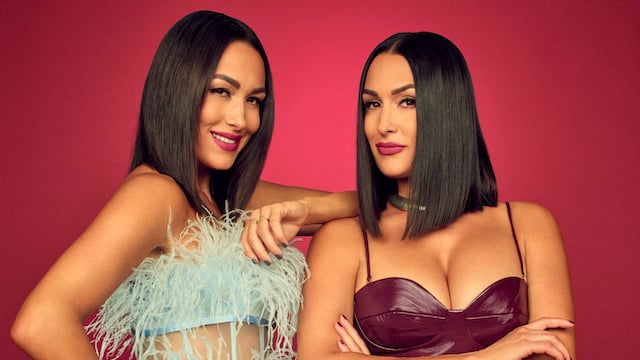
Yet, for all their contributions, The Bella Twins remain lightning rods for criticism, particularly among segments of the hardcore fanbase. The most frequent complaint, often valid in their earlier years, revolved around their perceived limited in-ring skills. Matches that leaned heavily on “Twin Magic” or featured basic maneuvers were often cited. The Wrestling Observer Newsletter awarded the Brie vs. Nikki feud “Worst Feud of the Year” in 2014 and “Worst Worked Match of the Year” in 2013, damning condemnations that cemented a certain perception. The main argument made is The Bella’s success was more attributable to their looks and reality TV exposure than to pure wrestling prowess.
Their peak popularity undeniably coincided with the “Divas Era,” a period often viewed negatively for its emphasis on looks, bikini contests, and shorter match times over genuine athleticism. This association led to accusations that they perpetuated the “Diva” stereotype rather than challenging it. While the “Women’s Revolution” aimed to dismantle this very image, The Bellas’ prominent role within it clearly made them the main targets for those who felt they represented the “old guard”, particularly the misogynistic perceptions in WWE spearheaded by its owner.
Then there are the more insidious criticisms – the perceived “hand-picked” status and accusations of backstage politics. While difficult to prove definitively, claims from former colleagues, such as Maria Kanellis, suggested that The Bellas used their influence (and their relationships with top stars) to block opportunities for others or secure their own prominent positions. The on-screen and off-screen drama depicted on Total Divas, while boosting ratings, sometimes fueled perceptions of “catfights” and less-than-professional behavior, which some argued overshadowed athletic competition and the serious pursuit of wrestling credibility.
Those criticisms did not stop PWI from ranking Nikki Bella #1 in their Female 50 edition, along with being named Diva of the Year by Rolling Stone in 2015.
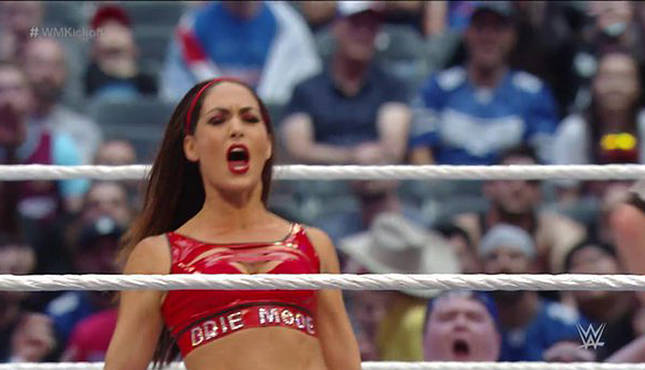
Even their Hall of Fame induction was met with a vocal segment of the fanbase arguing it was premature or underserved when compared to other female wrestlers with arguably stronger in-ring résumés. It’s a testament to the passionate, sometimes unforgiving, nature of wrestling fandom that such an honor sparks such heated debate.
I do believe the Bellas place in history is indeed complicated: they entered WWE at a time where female professional wrestling was not being taken seriously and – yes, we have to discuss the elephant in the room which is The Bellas/Garcia’s father-in-law and once right-hand man to Vince McMahon, John Laurenitis – embroiled in the current McMahon sexual assault civil case. McMahon and Laurenitis…let’s call a spade a spade – perceive female professional wrestling under a very specific lens. And that relationship will always loom a dark cloud over the Bellas place in history – and that is not their fault.
NUANCE OF LEGACY
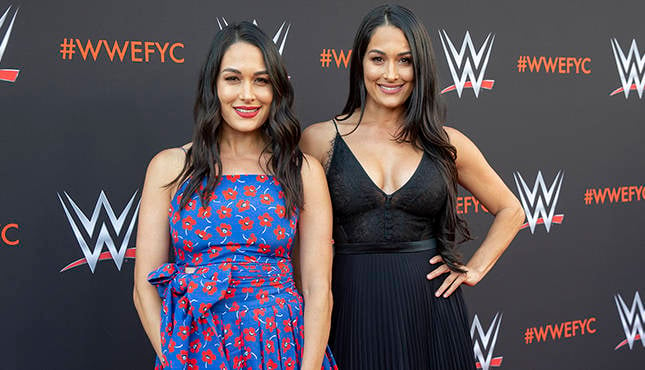
So, did The Bella Twins receive a fair shake? The truth, as it often is in wrestling, is far more nuanced than a simple yes or no.
We must remember that The Bellas operated within the strictures of the “Divas Era” creative direction. They were given a framework, often limited in scope, and they undeniably made the most of it. To fault them entirely for the presentation of the division at the time is to misunderstand the hierarchical nature of WWE’s booking. They utilized the opportunities given to them, and in many ways, transcended those limitations.
How long did WWE allow fans to disregard their female matches as “bathroom breaks”? I don’t remember anyone stepping up in 2010. A good chunk of women’s matches back then would get “boring” and “you fucked up” chants frequently. WWE really did not do much to rectify this behavior. The majority of female performers in the Divas Era were not given the tools to train and succeed the way the women in NXT later were. Imagine the morale of the main roster female performers back then. Of course the stench of “untalented, privileged pretty face bimbo” would be attached to the Bellas…but that label was attached to a LOT of the Divas during this era. I can’t tell you the number of times talents like Kelly Kelly, Candice Michelle or Layla were referred to as “a dime a dozen” by fans – judged not for their athleticism, but their physical appearance.
Let’s be honest – fans in this male-dominated industry – did not respect many of those Divas Era performers. AJ Lee, Paige, Beth Phoenix, Natalya, and Mickie James were the most respected names. Even Michelle McCool, who I believe is an underrated wrestler was still not viewed as a Divas Champion “worthy” of hardcore fans’ time. It didn’t help that her romantic link to The Undertaker fueled the fire of nepotism, a criticism that befalls The Bellas as well.
Were The Bellas a crucial element of the “Women’s Revolution” or did they simply benefit from it? This is the million-dollar question. The “Revolution” was a groundswell, a culmination of decades of hard work by countless women, and a pivotal shift in company philosophy. The Bellas were not the primary in-ring revolutionaries like the Four Horsewomen, who consistently delivered critically acclaimed matches that forced a change in perception. However, they served as bridges from the past great battles between Trish Stratus, Lita, Victoria, Beth Phoenix, Mickie James and Jazz along with their mainstream visibility playing a critical element of keeping WWE’s female talent visible. By broadening the audience and proving the marketability of female talent, The Bellas did undoubtably provide contributions, softening the ground enough that they could have enough of a platform to make sure #GiveDivasAChance had social media oxygen. These were the seeds of change planted to truly take root.
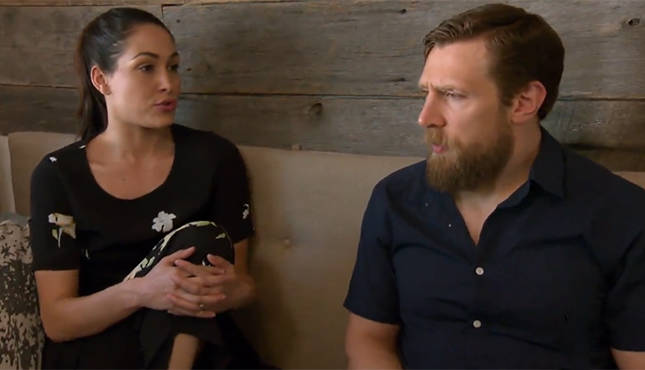
The Bellas’ success outside WWE showcases a business acumen and understanding of self-branding that many wrestlers, male or female, can only dream of. It’s what Eva Marie tried to accomplish. It’s what Jade Cargill is aiming for. They successfully balanced being WWE Superstars with being reality TV personalities, a demanding feat that showcased their diverse appeal. Their legacy, therefore, is not solely defined by match quality. It’s about influence, impact, and adaptation. The Bellas might not be lauded for five-star technical clinics, but their undeniable influence on WWE’s mainstream appeal and the sheer visibility of its women cannot be ignored. They have nearly 30 MILLION FOLLOWERS between all their social media platforms – that is a number undeniable to even the most hardened of critics.
When #GiveDivasAChance was launched, how many of the “Bella Army” took to social media to spread the message? Would it surprise anyone if the bulk of that social media footprint that eventally did lead to the Women’s Evolution came from the Bella’s most ardent, passionate fans? You can’t force change without numbers – and I am certain that a large number of those who supported our intended view of what women’s professional wrestling should be in the 21st century…was a direct result of the mere existence of The Bella Twins.
AN ENDURING, EVOLVING IMPACT
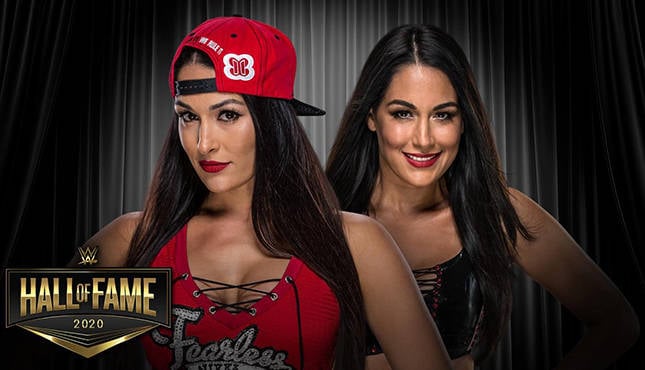
The curious case of The Bella Twins’ legacy is not easily closed. Did they receive a fair shake? Perhaps not always, in the court of public opinion. While valid in-ring critiques, particularly from their earlier work, hold weight, they have too often overshadowed their truly significant contributions to mainstream visibility and their ability to forge remarkably successful careers both inside and outside the wrestling ring.
Their legacy is not solely defined by the technical prowess of their suplexes or the crispness of their dropkicks. It is defined by their enduring popularity, their unprecedented success in brand-building, and their undeniable role in expanding the reach of WWE’s female talent into popular culture. They represent a unique and essential chapter in WWE history, bridging the sometimes-maligned “Divas Era” with the fiercely celebrated “Women’s Evolution.” They were the familiar faces, the reality TV stars who, whether fans realized it or not, were introducing new eyes to the very concept of women’s wrestling.
Remember, they say Vince McMahon was so “anti-Playboy” that he allowed his talent to pose as cover girls (Sable, Chyna, Maria Kanellis, Tori Wilson, Ashley Massaro) several times. Were the Bellas hired more for their physical appearance as opposed to their in-ring prowess? I don’t think there is much of a doubt – but again, that is not their fault. They were presented an opportunity, took it and made a very successful career out of their efforts.
I believe the Bellas, like the majority of female performers during the Divas Era, were placed behind the 8-Ball and put in an unfortunate position to fail. By this point in WWE’s history, between the antics, storylines and treatment of women during the Attitude Era combined with the ridiculous dissolution of the WWF Women’s Title, WWE conditioned fans to believe women’s wrestling held no importance.
Women’s wrestling – as presented by Vince McMahon, Kevin Dunn and John Laurenitis, only was viable when it suited very specific storylines, anything concerning Stephanie McMahon or to titillate their primarily male audience. In fact, Stephanie McMahon – a non-wrestler/authority figure, was presented consistently as simply above the level of most if not all the Divas during this time. Perception is reality. IMO, The Bellas did the best with what little tools and credibility they were given and maximized it more than anyone else from the Divas Era. That has to count for something…right?
As we stand on the precipice of WWE Evolution 2, with the prospect of a potential Bella Twins return, their story becomes even more relevant. What would their presence mean for the current landscape? Could they bring a jolt of mainstream attention, a blend of nostalgia and genuine star power that few others can offer? Their potential return isn’t just about another match; it’s about connecting the past to the present, acknowledging the journey from Divas to Superstars, and further cementing the idea that the WWE Women’s division is a force to be reckoned with, built on the shoulders of many – including the often-misunderstood, undeniably influential, Bella Twins.
For a lifelong fan like myself, this enduring debate, this complicated legacy of Brie and Nikki Bella – only adds another layer to the rich tapestry of professional wrestling. It’s a reminder that greatness can be measured in many ways, and sometimes, the most impactful contributions are those that defy easy categorization. It is a curious case, one that I am certain will be debated for as long as a 4-sided rings and running the ropes are a thing.
…And as always, Fuck Cancer. 🧬🩻🏥🩸
HAPPY PRIDE MONTH🏳️🌈🏳️⚧️
Agree or disagree? Think I am insane? Leave a comment!
Follow me on Instagram!
Follow me on Bluesky!
Subscribe to my YouTube Channel!
Subscribe to 411Mania’s Own Kat Bourn’s Substack!
SUPPORT THE CANADIAN CANCER SOCIETY
SUPPORT THE AMERICAN ASSOCIATION FOR CANCER RESEARCH
SUPPORT CANCER RESEARCH UK


