
wrestling / News
Maven Huffman Explains Why WWE Is in Trouble, Cites Lack of House Shows as a Major Problem
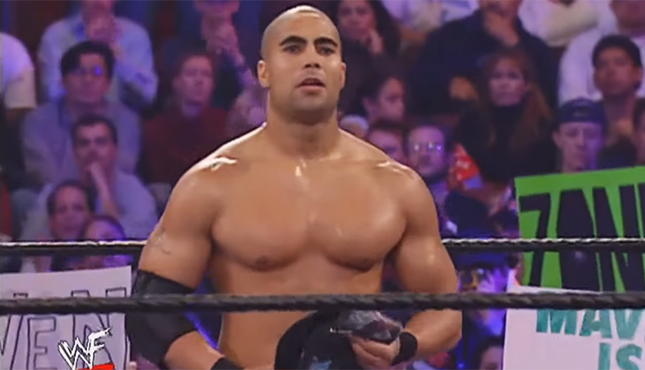 Image Credit: WWE

During a recent video posted on his YouTube channel, former WWE Superstar and Tough Enough winner Maven Huffman (aka Maven) discussed issues he believes are causing major problems with WWE. He specifically cited WWE’s reduced house show schedule as a problem, as it’s detracting from wrestlers’ better learning their craft, along with building camaraderie among the roster. Below are some highlights of his comments:
Maven Huffman on WWE Drastically Reducing Its Live Event Schedule
“The first problem I see is the absence of house shows or non-televised events. During my time, we were wrestling weekly, three untelevised shows, and then we had Raw or SmackDown every week. In fact, when I first got in the WWE, the WWF at the time, our schedule was to have several house shows, then Raw, then Smackdown. So, that meant we were wrestling four to five times per week. Now, before you get mad at me and say, ‘Mave, and they still do house shows.” I recognize they still have occasional house shows in larger markets and bigger areas, but it’s nothing like it used to be. In fact, recently Cody Rhodes did an interview and remember Cody was a part of the WWE when house shows was a mainstay. So Cody understands how eliminating shows makes the wrestlers not always be at their peak, optimum performance level. The current talent is wrestling as much in a month now as we would wrestle in one week, sometimes even less. Young me would have loved that schedule. But I also recognize now, with a little bit of age and a tiny bit of wisdom attached to me, that you only get better by doing something repeatedly over and over. You flat out don’t get better as a wrestler by not wrestling. And by limiting house shows, it’s not making the guys in ring work any better.
“I immediately think back to the match that CM Punk and Jay Uso had. Two guys who I believe one day will be in the Hall of Fame and will have earned it. Two guys who I know can wrestle circles around me. Two guys who are at the top of their games. And on a recent episode of Saturday night’s main event, they put a match out that both guys in their heart of hearts probably wasn’t happy with. They looked sluggish. Their timing was off. They lacked any aggression, and they looked like they were still in the feeling out process of working one another out. The feeling-out process we would do away with after one or two nights of house shows. When you work somebody three maybe four times in one week. You get to figure out what works, what doesn’t work. You get to remove the stuff that, maybe it just doesn’t look and feel as crisp as it should. and you understand exactly how your opponent moves. How is this important? Because if someone always charges and takes a bump or delivers a clothesline and veers off a little bit to the right or left, well, you start recognizing that, and you can then change your body and adapt,t and you’re not feeling this out on television. I know what you’re saying. ‘But Maven, isn’t it important to put on a good show out for the live audience?’ Yeah, of course it is. But wrestling, they’re making their money and their revenue through their television deals. That I guarantee. But the lack of house shows doesn’t just hurt the overall quality of the matches.”
On the Lack of House Shows Hurting Camaraderie in the Roster
“In a recent interview, Cody Rhodes gave, he talked about the lack of on-road camaraderie. One of the things that I really fear is not. It’s one thing to say, “Hey, the reps and learning how to do That’s one thing. Actually, the thing I fear the most is that it’s hard to say you’re part of a team if you’re not playing with your team all the time, right? So, it’s see people and you, hey, you know, great job last night, MSG, you know, have. But those are a lot easier when I know you already, right? When I got to feel, you know, like when it doesn’t feel obligatory, when it doesn’t feel, and again, it will be replaced by some other energy. But but that I thought for me it was incredibly valuable that you know that was tight you know and and you learned and and there was a rhythm and it helped with the live TV matches and when you’re on the road with guys when you’re experiencing ups and downs with guys and when you’re breaking bread and sharing meals with guys night after night you’re kind of looking out for one another. We used to say on the road, we are with our wrestling family more than we were with our real family.
“It was commonplace to see guys constantly on the phone catching up with their wives, with their kids, finding out what was going on in their hometown. And it’s great that the wrestlers today can spend more time with their family. That overall is a great thing, but something has to suffer. And what suffers is match quality, and just overall caring about the guys you’re on the road with. Nowadays, the wrestlers are seeing each other one day a week. And while they’re seeing each other, they’re doing it from their buses and maybe catching up with each other in catering rather than being on the road night after night, experiencing just what the road has to offer. I know in my own experience, I don’t miss the matches. I don’t miss the cheering or booing from a crowd as much these days. But what I do miss is the car rides with Al Snow, with Devon Dudley, with Umaga, and with Randy Orton. Those are the stories that stay front and center. Those are the memories that to this day I cherish the most.
“Now, I’m sure the wrestlers today, they like, respect, and care for one another. I’m not saying they don’t. All I’m stating is when you’re forced into being together, and you overcome obstacles together, bonds are naturally formed. And those bonds aren’t forced. When your camaraderie is better and when you care more for one another, the product’s going to benefit. Obviously, you want to do the best every time you go out, every time you lace them up. But if you know someone’s family because you’ve been on the phone with someone’s family two or three times in a weekend, you start to care not only about your performance, but about theirs. It was commonplace for my mom to call me day in and day out. And Umaga, Ekey, got to the point to where whenever she would call, he would see my phone ringing. He would always be like, ‘Maven, give me that phone. Let me talk to Big Sharon.’ Why? Because he cared not only about me, but he grew to care about her eventually. To this day, that’s the memories that I hold. That’s what I care about.”
On Wrestling Needing To Look Like a Real Fight
“Aside from the lack of house shows and quality of matches, camaraderie, the one thing I can’t help but notice is how every match in the WWE looks like a dance. It looks structured. It doesn’t look like a free-flowing, just listening to the crowd, reacting from your audience, giving what your opponent gives you. It looks like every move is laid out and diagrammed like roots on a map, like roads on a highway. And to me, that hurts your overall product with your casual fan. You cannot bring in casual fans if everything looks like a dance. If it breaks Al Snow’s number one rule of professional wrestling, this is supposed to be a fight. When you can tell it’s not a fight, when you can tell it’s a dance, it just doesn’t look like it’s supposed to look. There were times I had no clue what was going to happen in the ring. Why? Because my veteran was walking me through the match. He didn’t know what was going to happen. Why? Because he was listening to the crowd. And it made us work better together. It made the match look more real and just less structured. I’m not saying we didn’t have spots memorized. We did. I’m not saying I didn’t wrestle this way during my time. I did. What I am stating, though, is once I got out of the WWE, once I started working with guys who refused to call matches backstage, I got better. I learned my craft. And I learned the most important thing about wrestling, and that’s listening to your audience and giving them what they want.”
On Wrestlers Not Understanding How to Improvise After Botching a Spot
“And I’m not sure if something changed in the WWE in the last 20 years, but I’m noticing a lot more if a spot gets botched, meaning the wrestlers don’t perform what they called, they don’t immediately just shove it. They go back to it, and they make sure they get it in. I’ve seen it happen two or three times where wrestlers go for a spot, it doesn’t go quite the way they want, and they immediately go back for it, when all this does is tell your audience that what we’re doing is predetermined, that this is a dance that we’re going through, and we practiced all this backstage. Now, I’m certainly not saying it didn’t happen during my time. It did. But one of my earliest lessons was I went for a move immediately after. It didn’t go right. And I was cut off aggressively by my opponent, Test, and as he’s picking me up, as I’m gaining my composure, as I’m realizing I just had my head knocked off, he’s telling me, if you mess up a spot, don’t go back for it. If you go for a move, it doesn’t look right, it doesn’t feel right, it doesn’t perform the way you want, and then you go right back for it, all that is telling your audience, ‘Hey, I messed up, but I’m going to fix it right now.’ And that’s not doing anyone any favors.”
If using any of the above quotes, please credit Maven Huffman, with a h/t to 411Mania.com for the transcription.
More Trending Stories
- Ricochet Says ‘No One Is at Fault’ or Spot That Injured Steven Borden at AEW All Out
- Sheamus, CJ Perry, Ron Killings, Others React to Passing of Pac
- Marina Shafir Speaks on Loss of Pac After Her Match at Warrior Wrestling
- WWE Reveals Footage of Surprise Appearance & Confrontation at Last Night’s Worlds Collide Event (SPOILERS)


