
wrestling / Columns
Survivor Series: A Thanksgiving Tradition

In November 1987, the World Wrestling Federation presented a new pay per view concept called the Survivor Series. The catchphrase of the event was “Teams of Five Strive to Survive.” I remember leading up to the first show being not exactly sure what exactly this event was going to be. All I knew was that seeing the match-ups, the event sounded pretty cool.
THE BEGINNINGS
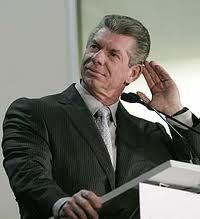
Behind the scenes, the invention of the Survivor Series was McMahon’s way of countering the NWA’s Starrcade as wrestling’s Thanksgiving tradition. With the tremendous success of WrestleMania III on pay per view, the WWF threatened cable companies that if the carried Starrcade, not only would they NOT be allowed to carry the Survivor Series, but the WWF would not grant them access to broadcast WrestleMania IV. This business strategy worked for the Titan Sports owned company as all but four companies caved into the WWF’s demands. It’s a decision that affected the wrestling industry on two fronts.
The first was that without the expected pay per view revenue that Crockett Promotions was expecting, Jim Crockett would have to sell his company less than a year later to Ted Turner. The second is that WWF’s move prevented the fans from receiving the opportunity of turning Thanksgiving into THE wrestling day of the calendar. When Crockett first heard that the WWF would be airing anew pay per view on Thanksgiving night, they went to the pay per view providers and offered to move their show to the afternoon. The pay per view industry loved this idea as they envisioned Thanksgiving as an all-day wrestling affair. The cable industry was even looking at offering a special price for fans who purchased both shows. It could have been a true wrestling holiday, but alas that was not meant to be.
THE FIRST EVENT
The first show took place on November 26th, 1987 from the Richfield Coliseum in Richfield, OH. There were only four matches on the show. The opening contest featured newly baby faced Randy Savage teaming with former rivals Ricky Steamboat, Jake Roberts, Brutus Beefcake, and Jim Duggan against the Honky Tonk Man, Ron Bass, Hercules, Danny Davis, and Harley Race. I loved this match, because Randy Savage had just turned face, so I was interested in seeing the interaction between Savage, and his new teammates.
The next match featured a women’s elimination match between Fabulous Moohla, Rockin’ Robin, Velvet McIntyre, and the Jumping Bomb Angels against Sensational Sherri Martel, Donna Christianello, Dawn Marie, and the Glamour Girls. What I remembered about this match was the performance of the Jumping Bomb Angels. They were fantastic. I had never seen Japanese wrestling at that point in my fandom. What I saw was amazing. These women were better and more athletic than most of the men on the WWF roster at that time. Simply incredible.
The eighties were considered at the time to be the “golden age” of tag team wrestling. In the NWA, you had teams like the Russians, the Road Warriors, the Rock n’ Roll Express, the Midnight Express, the Fantastics, and Tully Blanchard and Arn Anderson. On the WWF side, there were the British Bulldogs, the Killer Bees, the Hart Foundation, Demolition, Strike Force, and Greg Valentine and Brutus Beefcake. The NWA wanted to take advantage of their wealth of tag teams by creating a huge tag team tournament event called the Crockett Cup. At the Survivor Series, the WWF put all of their top teams together in one huge ten team elimination match. On one side you had Strike Force, the Young Stallions, the Rougeaus, the Killer Bees, and the British Bulldogs against the Hart Foundation, the Islanders, Demolition, the Bolsheviks, and Greg Valentine and Dino Bravo. When one tag team partner was eliminated from the match, both teammates were forced to leave the match. Out of all of the Survivor Series matches over the years, the five team vs. five team matches at the first two Survivor Series were my favorite. I loved being able to see every team in one match at the same time, and see the different team outfits standing next to each other on the ring apron. Too bad the WWE doesn’t have that depth today, because I would love for them to bring this Survivor Series match back today.
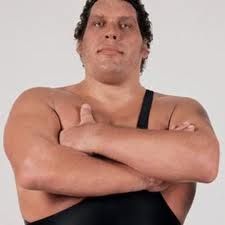
The main event that first year centered around the first time Hulk Hogan and Andre the Giant would square off against one another since their WrestleMania III showdown. Hulk Hogan’s partners consisted of Paul Orndorff, Don Muraco, Ken Patera, and Bam Bam Bigelow. Muraco was a substitution for Billy Graham, who suffered a hip injury and could not wrestle on the show. Andre’s tag team consisted of Rick Rude, King Kong Bundy, the One Man Gang, and Butch Reed. What I remember most about this match was that Hulk Hogan, not only wasn’t one of the survivors of the winning team, but he wasn’t even the last man eliminated on his team. That honor went to Bam Bam Bigelow, who eliminated King Kong Bundy and the One Man Gang, before succumbing to Andre the Giant. It was the first time that a pay per view ended for the WWF with a heel being victorious.
CH-CHA-CHA-CHANGES
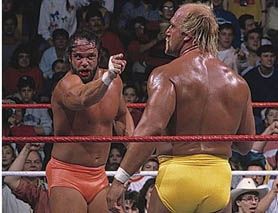
The next year, not much changed from the year before. The show was held in the same arena as the inaugural show. The elimination matches were still five on five. The only minor difference was that you had “co-captains” for each team instead of one captain. This was obviously done to keep Hulk Hogan and Randy Savage on the same level since they were teammates in the same match. Even though Hulk Hogan was the “face of the WWF,” if you had him as the captain and the WWF Champion Randy Savage as one of his teammates, it would have devalued Randy Savage’s run as the champion, in an era when the World Champion was supposed to be looked at as the leader of the company.
The 1989 version was held outside of the Richfield Coliseum for the first time, as Chicago’s Rosemont Horizon was the home for the third annual Survivor Series. For the first time since the event’s existence, there was not an all-tag team elimination tag team match. Instead, the primarily tag team wrestlers were spread out through other elimination matches on the show. The WWF went back to the solo captains for this show. The WWF also changed the concept of the “five on five strive to survive” slogan, and instead had each elimination match feature a four vs. four match-up.
The 1990 Survivor Series featured the debut off the Undertaker. Like in 1988 when the WWF had to find a way to put Hulk Hogan and Randy Savage on the marquee with equal billing, the same applied in 1990. In 1990, the Ultimate Warrior became the WWF Champion and was supposed to be the new “face of the WWF.” However, things didn’t work out, and Hulk Hogan was still the “face” of the company. To put both men in the main event, and have them both as equals, the WWF created the Ultimate Match of Survival, which pitted the baby face survivors vs. the heel survivors of the undercard matches on the show.
The fifth Survivor Series in 1991 was the first Survivor Series that did not take place on Thanksgiving Night. Instead, this installment took place the night before Thanksgiving. This also featured the first three on three elimination bout as the Legion of Doom (survivors) and the Big Boss Man defeated the Natural Disasters and Irwin R Schyster. However, the biggest change in the event was that the WWF World Championship was defended for the first time in a match pitting WWF Champion Hulk Hogan vs. the Undertaker where the “deadman” captured his first WWF World title.
Since then, the WWF/E has presented mostly a mix of “Survivor Series” style elimination matches with normal tag team and singles matches to round out their shows. While the WWE still institutes at least one elimination match on the card each year, the show has lost its uniqueness and luster that it had from its early years as the WWF’s rival show to the NWA’s Starrcade. While the show is still looked at as one of the “Big Four” pay per views in the fans’ eyes, it’s now just another show on the WWE schedule. In a perfect scenario, I would like the WWE to go “old school” with the card for one year. Give me a five-on-five Divas elimination match, two five-on-five mens’ elimination match, a five team-on-five team elimination match, maybe a five on five NXT elimination match, and a WWE World Heavyweight title match on the show.
The Survivor Series is a great pay per view tradition, and is looked forward to by the fans as the very first step on the Road to WrestleMania. Can’t wait to see where this year’s Survivor Series takes us. Imagine that, over 1,500 words regarding the tradition of the Survivor Series, and not one mention of a “screwjob.” That’s a first.
More Trending Stories
- Killer Kross Reveals No One Was Allowed on Headset in Gorilla in WWE After He Listened In Once
- Killer Kross Was Initially Bothered That Triple H Didn’t Speak To Him After WWE Exit
- Latest WWE Ticket Sales Numbers For WWE RAW, SmackDown, NXT & House Shows
- Dark Side of the Ring Season 7 Full Episodic Schedule Released


