
Movies & TV / Columns
Nick Lyon On His New Horror Film Do You Want to Play?, Possible Sequel
 Image Credit: Nick Lyon

The 411 Interview: Nick Lyon
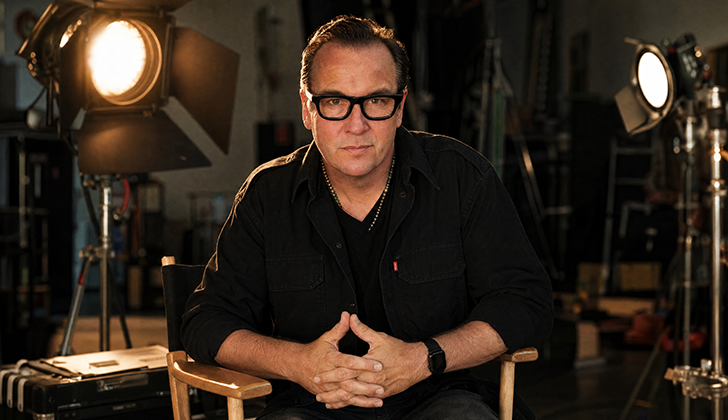
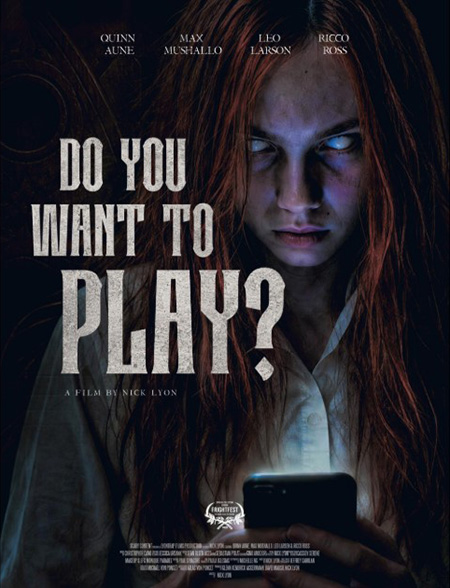
Nick Lyon is a writer, producer, and director who has been making movies, according to his IMDb page, since at least the year 2000. Lyon has directed such movies as Species: The Awakening (2007), Zombie Apocalypse (2011), Bullet (2014), Christmas in Vienna (2019), On Fire (2023) (check out my review of On Fire here), President Down (2025) (check out my review of President Down here), and Cruel Love. Lyon’s latest movie as a director is the low-budget horror flick Do You Want to Play?, which just had its world premiere at FrightFest in the UK and which stars Quinn Aune, Maxwell Mushallo, Leo Larson, and Ricco Ross. In this interview, Lyon talks with this writer about making Do You Want to Play?, making an Ouija board horror movie, working with the cast and crew, and more.
**
Bryan Kristopowitz: How did Do You Want to Play? become your next movie as a director?
Nick Lyon: I had actually written the original script a long time ago, around 2011. I always wanted to do a possession story built around a spirit board, but by the time I came back to it, there had already been a lot of Ouija-board movies like Ouija (2014). I didn’t want to just make another one.
What made the project interesting to me again was the idea of updating the mythology. Instead of technology replacing the old ritual, what if technology simply gave it a new way to reach people? That became the D3MON app. The original D3mon Board still exists in the movie, but now Owen has turned that mythology into an app and the way people death scroll on phones possession seemed perfect. Once I found that idea, the film suddenly felt contemporary again.
BK: Where did the idea for Do You Want to Play? come from?
NL: I feel that every generation finds a new way to communicate with the unknown. People carved symbols into stone, held séances, used spirit boards, and now we carry these phones in our pockets so why not extend the powers to a phone as well?
The idea became: what happens when an ancient ritual becomes an app? The phone isn’t evil. The app isn’t really evil. They’re just the newest doorway that one must open to become possessed.
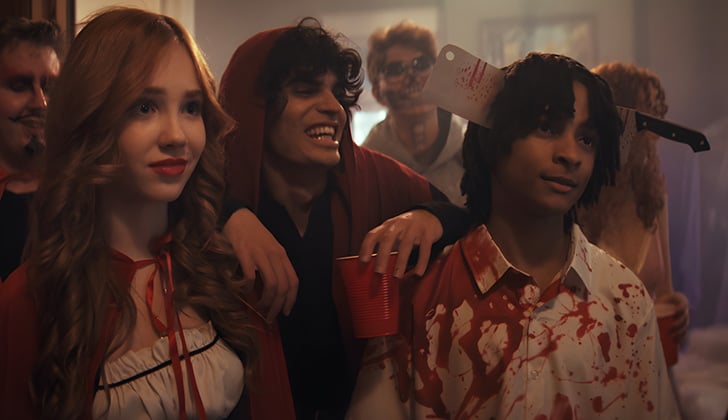
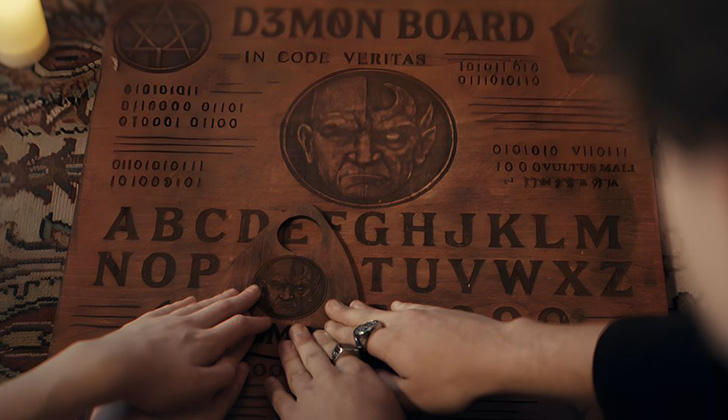
At the D3mon app launch party, Emily actually plays the original physical D3mon Board that inspired the app, and then the app begins communicating with her as well. That collision between something old and something completely novel and new is really the foundation of the film.
BK: Was Do You Want to Play? always the title of the movie or is it something you figured out later on?
NL: No. The project existed for a long time under the D3mon title, including D3mon: Face of Evil. As the movie evolved, Do You Want to Play? felt much more appropriate.
It sounds innocent, almost childish, but in the context of the movie it becomes an invitation. That’s really what the entire film is about—the moment innocent curiosity becomes participation and unwillingly opening the door. Somebody opens the door because they want to see what is on the other side.
BK: Where was Do You Want to Play? filmed? How many actual real locations were used?
NL: The production was based and shot entirely in Los Angeles.
BK: How did you cast Do You Want to Play??
NL: Paul Sinacore was our casting director, and the biggest thing for me was finding young actors who actually felt like they could be friends. You can have all the possession effects and horror imagery in the world, but if Emily, Tommy and Owen don’t feel real before everything goes wrong, the movie doesn’t work.
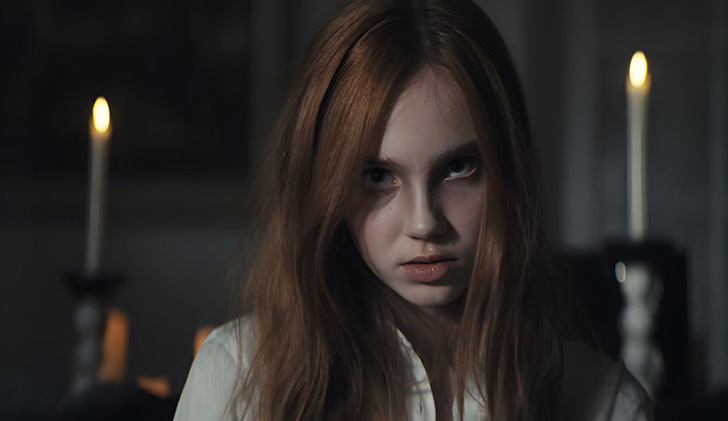
Quinn immediately had the emotional quality and sense of innocence I wanted for Emily. Max and Leo brought very different energies to Owen and Tommy and were great, which was important because there is already history and tension between those characters. Then we were fortunate to have Ricco Ross bringing a completely different level of experience to Scary Gary. Ricco as a veteran grounds the whole story and Quinn Aune is the young actress, I believe, will shine big in coming years. She is a star in the making.
BK: What was it like working with Quinn Aune, who plays Emily?
NL: Quinn had to do a tremendous amount in this movie. Emily has to begin as a believable teenager and then gradually lose control of herself without the performance ever becoming simply “possessed girl acting.” The most important thing to me was that Emily always remained a real person underneath everything happening to her. Quinn understood that. She could be scared, angry, vulnerable and incredibly physical, sometimes within the same scene. At 13 that is a very rare skill and she is a natural!
I think she’s an actress people are going to hear a lot more about. She plays the young Anya Taylor-Joy in Apple TV’s Lucky and the young Nicole Kidman in Amazon’s Scarpetta, so she has some extraordinary projects coming out around the same time.
BK: What was it like working with Maxwell Mushallo, who plays Owen?
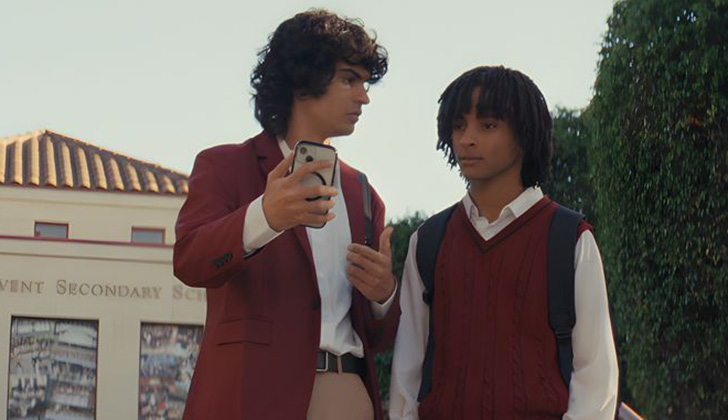
NL: Max had a difficult job because Owen could very easily have become just “the computer guy.” But Owen carries a lot of responsibility for what happens. He created the app, and suddenly this thing that he thought was just technology and code has consequences he could never have imagined.
Max gave Owen intelligence without making him cold. He had the “Ivy League” vibe while remaining real that I needed. There’s also the history between Owen and Tommy, which was important because I wanted their broken friendship to have a real emotional cost. Owen isn’t just there to explain the app—he has something personal to lose and has real feelings for Emily.
BK: What was it like working with Leo Larson, who plays Tommy?
NL: Leo brought a very grounded quality to Tommy. His delivery just felt real. Tommy is basically being asked to believe something completely impossible because the person he loves is disappearing in front of him. I didn’t want him to suddenly turn into an action hero. His courage comes out of loyalty and “first love.” Leo understood that and kept the performance very human, even when everything around him was becoming increasingly supernatural.
BK: What was it like working with Ricco Ross, who plays Gary the priest/“Scary Gary”?
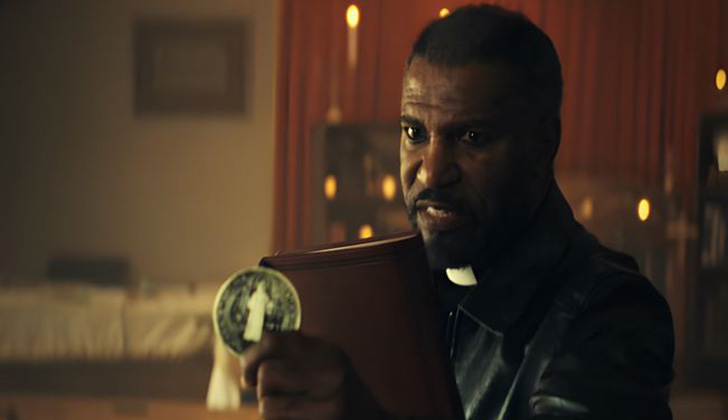
NL: Ricco is a longtime collaborator of mine and we’ve worked together on a number of films. I trust his talent and instincts as an actor because he always brings something beyond what is on the page. And as a priest he brought a different type of priest, not so stuffy. He is an influencer priest as well so that makes him fun and gives him different angles to go with as a character.
Gary could have easily become the traditional horror-movie priest who arrives and explains everything. Ricco made him much more interesting. He’s a former Jesuit who has reinvented himself as this paranormal broadcaster, “Scary Gary,” but underneath the personality he recognizes that what is happening to these kids is very real and he wants them of real consequences and dangers of allowing the darkness in. And Ricco brings an enormous amount of genre history with him, from Aliens (1986) to Beauty in Black (2024) so there’s a gravity that comes with him the second he enters the movie.
BK: How long did it take to make Do You Want to Play?, from completing the script to finishing post-production?
NL: The funny answer is that if you count from the first version of the script, it took more than a decade because I originally wrote it around 2011 and then came back to the concept years later. But in terms of the actual production—from the version we decided to shoot through principal photography and finishing the movie–it took about 9 months to complete and of that just 10 filming days.
BK: What was the hardest part of making Do You Want to Play? for you as a director? What was the easiest?
NL: The hardest part was probably keeping the supernatural side of the film connected to the emotional side. Possession can become visual very quickly—you have makeup, practical effects, sound, VFX—but none of it matters if you stop believing in Emily. So, I was constantly trying to make sure that the horror was happening to a person we cared about rather than simply creating a series of horror set pieces. The easiest part was probably working with the cast once we found the characters. They were very committed, and when that chemistry starts working you can concentrate on directing the scene rather than trying to manufacture relationships that aren’t there.
BK: Do you have a favorite scene or sequence in Do You Want to Play?
NL: I really like the D3mon app launch-party sequence because the whole idea of the film is contained in that scene. They’re playing the original D3mon Board, Owen’s app is there, the app starts communicating, and suddenly the line between an old superstition and this new technology disappears. It begins like teenagers doing something they probably shouldn’t be doing, and by the time they understand that something has actually answered them, it’s already too late. But probably my favorite scene is when Scary Gary does an exorcism on Emily. That feels like it really came together well.
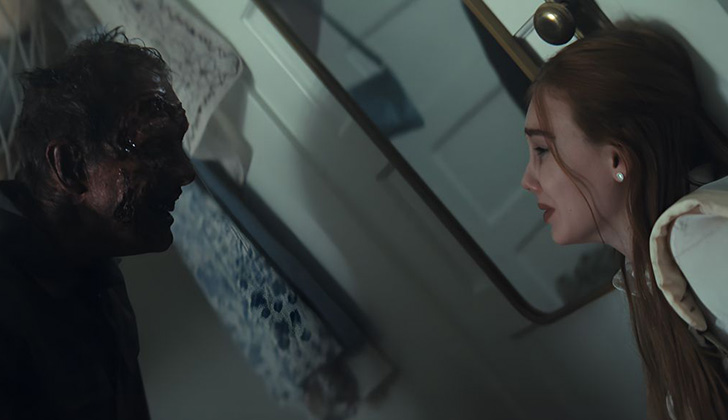
BK: There are some spectacularly gruesome sequences in Do You Want to Play?. How difficult was it to pull off the face-carving sequence?
NL: For hard core enthusiasts it may not have enough gore. That was one of the sequences where I really wanted something physically present on set. We used makeup and practical-effects work as the foundation and then used controlled visual effects to extend the illusion rather than replacing it. I always think actors respond differently when there is actually something there—makeup on the face, blood, texture, something they can react to—and the camera responds differently, too. Monique Paredes handled the SFX makeup work, and the approach throughout the film was to give the possession a practical physical weight and use VFX to take it the last part of the way.
BK: How did making Do You Want to Play? compare to some of the other horror movies you’ve made in your career? Was it easier? More difficult?
NL: I’ve directed more than 40 films, and a lot of them have involved very large external threats—zombies, creatures, disasters, war, things that are physically attacking the characters. This one was much more intimate, which is just as hard because to tell the story you need lots of specific shots to tell the story. The threat is inside Emily, and that changes how you approach the horror.
In some ways that makes it simpler because you’re not trying to create hundreds of zombies or destroy a city, but emotionally it’s more difficult because the audience has to believe in these relationships. The movie is really about first love, friendship, family, and identity underneath the supernatural mythology.
BK: Any upcoming projects you can tell us about?
NL: I am working on The Vessel, which is about a research crew in the arctic that pulls up a 5 million year old small insect in an ice core that attaches itself to a human host to procreate.
BK: What do you hope audiences get out of Do You Want to Play?
NL: First, I hope they have fun and that we scare them. It’s a horror movie, and I never want to lose sight of that, but I also believe it is accessible to a younger audience and teen crowd. Underneath it, I hope they connect with Emily, Tommy and Owen. For me, possession becomes frightening because you’re watching someone lose the things that make them themselves—their relationships, their identity, even control over their own body. I also like the idea that the movie doesn’t say technology is evil. Technology is just the conduit. The dangerous thing is still very old: curiosity, invitation and the human need to knock on a locked door simply because somebody told us not to.
BK: After the UK FrightFest premiere, how many other film festivals will Do You Want to Play? hit?
NL: FrightFest is our first festival screening, and we have other festivals and opportunities we’re looking at, but I don’t want to announce anything until it’s confirmed. For me, FrightFest is a great place to begin because that audience really knows and loves horror. And I actually hope to distribute it sooner rather than later.
BK: Any possibility of a Do You Want to Play 2?
NL: I end the film with the next film starting. The mythology is much bigger than what we explore in this one film. Ward Weaver is only the visible face of something much older, and once you have the idea of an ancient supernatural force being able to travel through technology, there are a lot of places I could take it. But I also think I have to earn a sequel. Right now, I want people to see this movie and hopefully respond to these characters. If audiences want us to open the door again, I’d be very happy to do it.
BK: Have you ever messed around with an Ouija board in real life? And would you ever want to download an Ouija board app to your phone?
NL: Let’s just say we had St Benedict Medallions (exorcist medallion), blessed by a priest and given to the entire cast and crew on day one. I’m fascinated enough by it to make a movie about it, and have had my experiences as a teen, but after spending this much time making Do You Want to Play?, I’m probably the last person who should download an Ouija App. The question is, are we opening ourselves up to it every time we doom-scroll and get zoned out on our phones already?
**
A very special thanks to Nick Lyon for agreeing to participate in this interview and to david j. moore for setting it up.
Check out my review of Do You Want to Play? here!
Check out the official Do You Want to Play? Instagram page here!
Check out Nick Lyon’s official website here, official Facebook page here, official Twitter page here, official Instagram page here, and IMDb page here!
Do You Want to Play? poster image courtesy of Mad World Creative. All other images courtesy of Nick Lyon.


