
Movies & TV / Columns
Director Sam Firstenberg On the New Restoration Of Riverbend
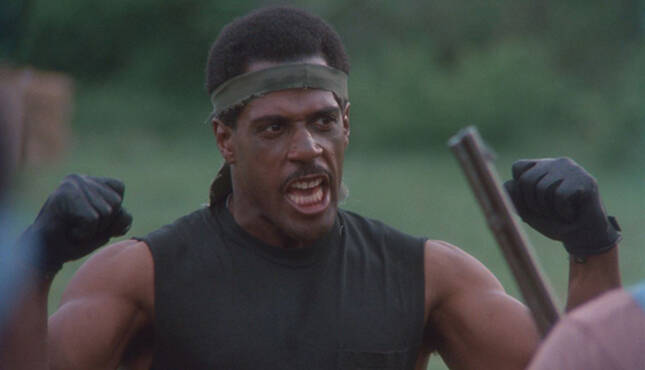 Image Credit: Reelblack Renaissance

The 411 Interview: Sam Firstenberg

Sam Firstenberg is a presently retired movie director and, to this writer and B-movie nerd, nothing short of a cinema God. In the 1980s, Firstenberg directed four classic ninja movies, two with Sho Kosugi (Revenge of the Ninja in 1983 and Ninja III: The Domination in 1984) and two with Michael Dudikoff and Steve James (American Ninja in 1985 and American Ninja 2: The Confrontation in 1987). Firstenberg also directed the classic action flick Avenging Force (1986), which also featured both Dudikoff and James, as well as the immortal break dancing sequel Breakin’ 2: Electric Boogaloo (1984). Firstenberg made all of those movies for the legendary Cannon Film Group. In the 1990s and into the 2000s, Firstenberg made movies for various low budget “Cannon” like outfits, continuing his B-movie excellence with movies such as Cyborg Cop (1993), Cyborg Cop 2 (1994) and Spiders II: Breeding Ground (2001), among others. Firstenberg’s thought lost action-drama from 1989, Riverbend, was recently rediscovered and restored by award-winning filmmaker Michael J. Dennis and his film preservation outfit Reelblack, and is set to be screened at the Aero Theater in Santa Monica, California on October 14th, 2025, with other dates in other cities to follow. In this interview, Firstenberg talks with this writer about making Riverbend, working with Riverbend stars Steve James and Margaret Avery, how Riverbend was rediscovered, and more.
**

Bryan Kristopowitz: How did you get involved directing Riverbend?
Sam Firstenberg: At the time, my agent informed me that there was a production group from Texas that wanted to hire me to direct a movie called Night of the Eagles (the original title of Riverbend), and he sent me the script to read. I believe they knew my directorial work after watching the American Ninja movies and the film Avenging Force (1986), which I directed a few years earlier with the actor Steve James in all of them.
BK: Where was Riverbend made?
SF: Riverbend was filmed entirely in Texas, in the vicinity of Waxahachie, south of Dallas.
BK: How did you cast Riverbend?
SF: The truth is that most of the cast was hired before me by the producers. When I arrived in Texas for pre-production, nearly all the cast was in place except for the two stars, Steve James and Margaret Avery. I was asked to bring in Steve since I had worked with him earlier, and I did. Margaret was offered the lead female role through her agent in Hollywood. All the others were local theater or TV actors from Texas.

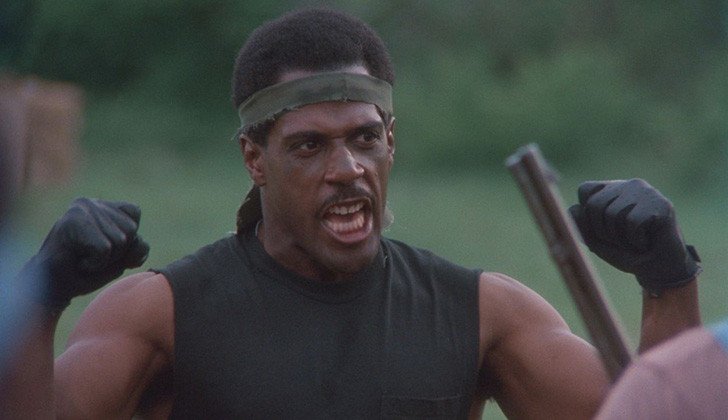
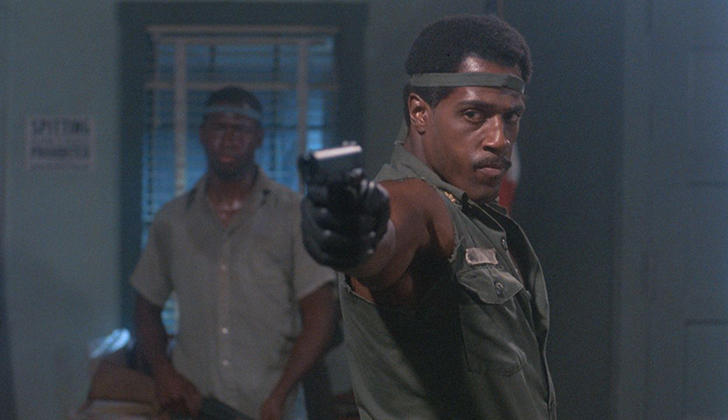
BK: What was it like working with Steve James, who plays Major Samuel Quentin?
SF: I directed Steve in three movies prior to this one, so our working relationship was excellent—friendly, respectful, and professional.
BK: What was it like working with Margaret Avery, who plays Bell Coleman?
SF: Margaret was, at that point, a Hollywood Academy Award-nominated star after co-starring in the smash hit The Color Purple (1985). When I learned that she agreed to join the cast, I didn’t know what to expect in terms of our working relationship. But once she arrived in Texas and I had the chance to meet with her, I realized right away that she is a sweetheart of a person. Once we started rehearsing and filming, I saw how professional and serious she is about her acting and collaborating with the director. Our interaction was very positive and very friendly.
BK: What was it like working with Tony Frank, who played the racist Sheriff Jake?
SF: Despite his despicable mannerisms in acting as the rude Sheriff Jake, Tony Frank was actually a very gentle and funny person who exhibited the utmost commitment to the part he played and respect for my directorial instructions. It was a sheer pleasure to watch him perform.
BK: Do you consider Riverbend an action movie or more of a drama?
SF: Although there are some elements of action in the story, I consider Riverbend more of a social drama with some great twists and turns in the plot, uplifting moments, and a hell of an ending.

BK: What was the hardest part of making Riverbend for you as a director? What was the easiest?
SF: The hardest part for me was dealing with the harsh language of the script; it employs the N-word frequently in keeping with the time and location of where and when the movie takes place. Making a movie is never “easy,” but there was nothing too difficult in making this one. The atmosphere on the set was always positive.
BK: How long did it take to complete making Riverbend?
SF: The filming period took 36 days (six weeks), but if we include the preparation and the editing after filming, it comes out to about half a year.
BK: How was making Riverbend compared to making some of the other movies you made with star Steve James, like American Ninja or Avenging Force?
SF: A full-fledged action movie with 45 minutes of intense action is much more involved and complicated than a movie with 15 minutes of “simple” action—both in terms of the sophistication of stunt work, pyrotechnics, mechanical gadgetry, risk-taking, manpower, and spending.
BK: Describe your working relationship with Riverbend composer Paul Loomis.
SF: Ironically, I never met the composer Paul Loomis. After the editing was completed in Los Angeles, the producers took the movie out of my hands and brought it back to Texas, where they hired Paul to compose the score without consulting me anymore. I never found out why they did so.
BK: Why did Riverbend essentially disappear after its home video release went out of print?
SF: Riverbend was privately financed, so the owners could do whatever they wanted with it. They sold it and transferred the ownership to a small distribution company based in Hollywood. That company transferred the rights to another, slightly bigger distribution company to sell the distribution rights all over the world. Then they struck a deal with Paramount Pictures, a major studio, to distribute it on videocassettes in the U.S. For some reason, Paramount decided to come out with a very limited and small distribution campaign with only a small number of low visual quality VHS cassettes. Until today, I don’t know the reasoning behind this decision.
BK: Are you surprised by the interest in, and then the restoration of, Riverbend?
SF: Very much so. For many years, I was hoping for such a rediscovery and every so often I even inquired about the whereabouts of the rights to the movie, but never found the answer and never pursued it vigorously—until I met Michael Dennis of Reelblack.
BK: How did you get involved with the restoration of Riverbend through Reelblack?
SF: I posted a copy of the entire movie to my YouTube channel and, at the same time, found out that Michael Dennis had also uploaded it to his Reelblack channel. I reached out to him to thank him for doing so, and through some communication exchanges, we discovered our mutual desire to see to it that this movie would be restored to its original glorious quality. Since then—four years ago—we slowly but surely advanced the matter to reach our goal. It was not easy, and to be fair, I must admit that Michael did most of the work, not me. Along the way, we encountered some obstacles and temporary setbacks, but we also forged a good friendship.
BK: What do you hope modern audiences get out of Riverbend?
SF: This is a pretty interesting movie with an unusual plot that has never been told before. At the same time, it presents a controversial problem of an unjust social situation in American history. The problem of racial injustice has not been resolved yet – neither here nor all over the world. Hopefully, this cinematic story of intolerance and suggested remedy will resonate with modern audiences both as a compelling drama and a message carrier.
BK: Just how cool was Steve James?
SF: Steve James was the embodiment of coolness—a Herculean hero on screen and a gentle, decent soul in his private life. He would have been very proud of this resurrection and the upcoming screenings.
**
A very special thanks to Sam Firstenberg for agreeing to participate in this interview and to david j. moore for setting it up.
Check out my review of Riverbend here!
Check out Sam Firstenberg’s official website here and his official Facebook page here!
Check out the official Reelblack website here!
Check out the official Riverbend Restored website here!
Check out the official Reelblack Instagram page here!
Check out the official Reelblack Renaissance Instagram page for Riverbend Restored here!
Check out the official Reelblack Facebook page here, official Twitter page here, and official YouTube page here!
Sam Firstenberg and Margaret Avery image courtesy of Sam Firstenberg. All other images courtesy of Reelblack Renaissance.


