
wrestling / News
David Otunga Weighs In on WWE Montreal Screwjob, Says Bret Hart Lacked Creative Control in 1997
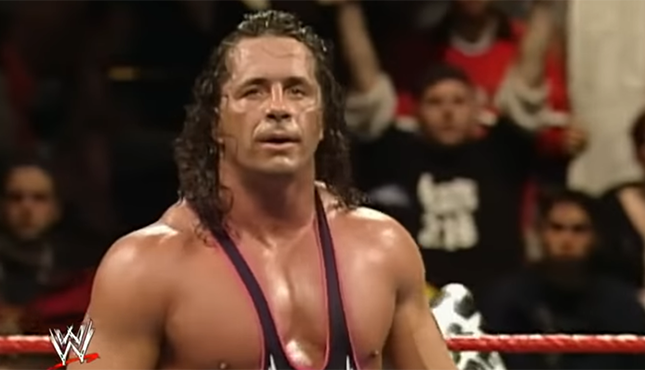 Image Credit: WWE

Former WWE Superstar and Harvard law graduate David Otunga has shared a legal interpretation of the 1997 WWE Montreal Screwjob, asserting that Bret Hart did not hold creative control at the time of the incident. Speaking in a recent legal breakdown on his YouTube channel, Otunga explained that Hart’s 1996 WWE contract did include a clause for “reasonable creative control.” Still, that clause became invalid when Vince McMahon informed Hart that the deal could no longer be honored.
Otunga described this as “an anticipatory breach,” a legal concept that nullifies an existing contract once one party declares they cannot fulfill its terms. By the time Survivor Series 1997 took place, Otunga said, the agreement was effectively void, as Hart had signed with WCW and no longer had the legal right to exercise creative control over his match in Montreal.
“There was no creative control, and the contract was void. So any argument of the creative control clause, reasonable or otherwise, is out the window. I’m sorry. It would’ve been different if the contract hadn’t been voided. And Bret still had creative control, reasonable creative control that would’ve given him a leg to stand on in negotiating, and or if this went to court. But the fact that the contract was void, I’m sorry, but he doesn’t have creative control. He didn’t have it on that night.”
While acknowledging the personal betrayal felt by Hart and the ethical controversy surrounding McMahon’s actions, Otunga noted that, from a legal standpoint, McMahon’s decision to protect the company’s interests did not violate the law.
“Personally, I don’t agree with what Vince did, but legally. He wasn’t necessarily in the wrong, ’cause if you go back to that time in 1997, I mean, Vince told Bret that he couldn’t honor the contract or he couldn’t pay him. Uh, I don’t know if I believe that. I don’t know if Vince was being honest there or not, because just two years later, I mean, they went public with an IPO.”
Otunga concluded that McMahon’s actions, while morally debatable, were legally defensible because Hart’s contract had already been breached. The clause granting creative control no longer held authority once that breach had occurred.
More Trending Stories
- Tony D’Angelo Says WWE NXT Officials Have Spoken To Him About Not Making It to the Main Roster Yet
- Dave Meltzer Assesses WWE Crown Jewel in Saudi Arabia, Says Backstage Workers Aren’t Happy
- Update On Spoiler From Last Night’s TNA Impact Taping
- Roman Reigns Explains Why He Doesn’t Work WWE Live Events Anymore


