
Movies & TV / Columns
Sam Cortez On Writing & Producing Call Sign Romeo, Featuring Amateur Wrestling
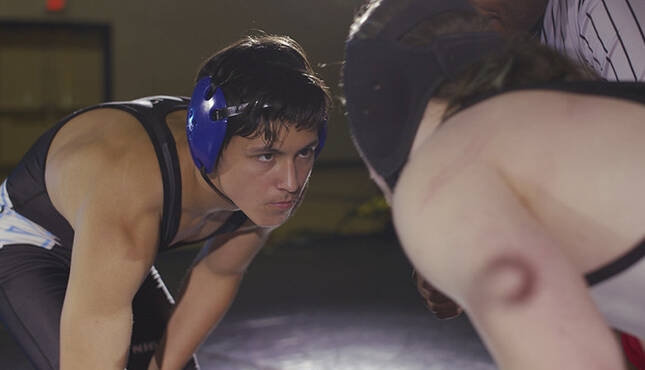 Image Credit: Freestyle Digital Media

The 411 Interview: Sam Cortez
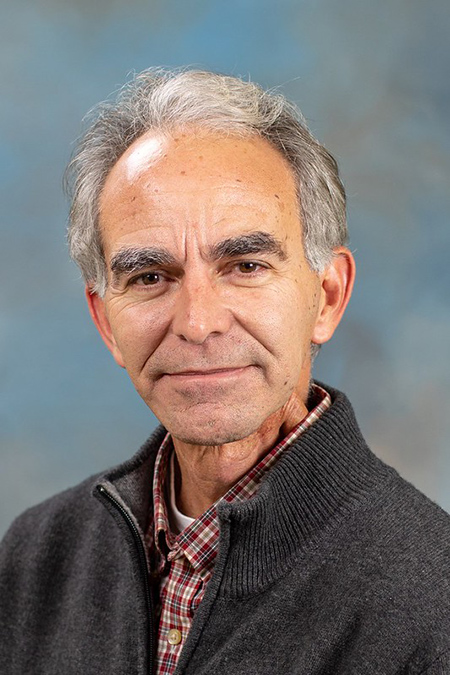
Sam Cortez is a writer and producer who is making his feature film debut with the new drama Call Sign Romeo, set to hit all digital HD internet, cable, and satellite platforms starting on July 4th, 2023. In this interview, Cortez talks with this writer about how he worked as a producer on Call Sign Romeo, worked with both director Raymond Wallace and co-screenwriter Stuart Parks II, and more.
**

Bryan Kristopowitz: How did you come up with the idea for the script for Call Sign Romeo? How was the story inspired by true events?
Sam Cortez: Although the story and characters are fictitious, some of the things that happen in the movie happened in real life. The events generally took place several years ago, including in particular the local high school wrestling team pursuing individual & team state championships, and how it ultimately resolved. In addition, the fights at school, the girlfriend going to West Point, the wrestling banana split and Kortezki v2, applying to the Naval Academy, and the mix-up with the Congressional nomination were all based in reality. Having key concepts to draw from made the story and the screenplay easier to put together.
BK: Did you always intend to have high school wrestling as the sport your characters participate in? Were there any other options?
SC: For most sports like football, basketball, baseball, etc., if one side is losing big time with only a few seconds left, there is no hope. But in boxing (think Rocky and Creed), MMA, and wrestling, no matter how badly you’re trailing, you still have a chance to win, either by knockout or pin. Combat sports are a natural for a dramatic ending!

BK: Describe your working relationship with fellow credited screenwriter Stuart Parks II, who also acts in the movie. How long did it take to get the script right for making the movie?
SC: I tried to have an overall vision of where we were going, while finding talented people like Stuart that could take it to the next level. Once the film came together it was well over two hours long. We had to cut several scenes and lots of dialogue, and through a collaborative effort we were able to get it to our goal of an hour and forty-five minutes.

BK: Describe your working relationship with director Raymond Wallace.
SC: Raymond is a true professional, always prepared, able to pivot when circumstances change, and tremendously patient with the actors.
BK: How did you become a movie producer? Is movie producing something you always wanted to do or was it something that just sort of happened?
SC: At the start I thought the framework of the story was good, and I just kept working on it little by little, and over time the pieces started to fall into place.
BK: What surprised you, if anything, about making a movie?
SC: The Outer Banks of North Carolina turned out to be the perfect place to film a story about a high school senior that wants to be a fighter pilot. Orville and Wilbur Wright first took flight in the Outer Banks, and the Wright Brothers National Memorial is right across the way from the local high school. In addition, the Navy has a bombing range in the area, so fighter jets roaring overhead is a daily occurrence. Once the production was underway, the support from the community for filming in the Outer Banks was fantastic. We were able to utilize numerous businesses and locations, and thereby highlight the beauty and attractions of the area.

BK: What was the hardest part of making Call Sign Romeo for you as a producer? What was the easiest?
SC: One of the bigger challenges was that we filmed during Covid, so we abided by all the protocols and best practices. We were also limited as to how many people we could have indoors at one time. That meant that director Raymond Wallace had to call for tight gymnasium “crowd” shots and inventive lighting. Nevertheless, we got through it, and no-one got Covid. I really like the way the soundtrack turned out. We were able to select some excellent original rock and roll music for the action. It’s a lot easier to listen to music and say, “I like that for this scene” than to try and figure it out yourself.
BK: Do you agree with the movie’s PG-13 rating?
SC: We didn’t want an R rating, and some of the action and themes were probably too much for PG. So it probably landed about right.
BK: Any moviemaking heroes?
SC: Not really any heroes, but I enjoy movies primarily for their entertainment value.
BK: Any upcoming projects you can tell us about?
SC: Nothing to share at this point.
BK: You’ve written a movie and produced a movie. Any interest in directing a movie?
SC: No interest in directing. To quote Dirty Harry, “A man’s got to know his limitations.”
BK: What do you hope audiences get out of Call Sign Romeo?
SC: We wanted to make an entertaining movie that makes you feel a little better coming out of the theater than when you went in. I’ve had people tell me they liked the movie so much that they brought their kids and saw it again. I thought we may have achieved our goal when one of our reviewers noted that in Call Sign Romeo “Inspiring dialogue and dynamic guitar riffs are given priority…”
BK: Would you want to fly a fighter jet in real life? What would you want your call sign to be?
SC: I wouldn’t be able to handle it. Since you don’t get to pick your own call sign, I would probably end up with Call Sign Unconscious.

**
A very special thanks to Sam Cortez for agreeing to participate in this interview and to david j. moore for setting it up.
Call Sign Romeo is set to hit all digital HD internet, cable, and satellite platforms starting on July 4th, 2023!
Check out the Call Sign Romeo official website here and official Facebook page here and official YouTube channel here!
Sam Cortez image courtesy of Sam Cortez. All other images courtesy of Freestyle Digital Media.


