
wrestling / News
Big E Was Dealing With Depression at The Height of The New Day, How He Moved Past It
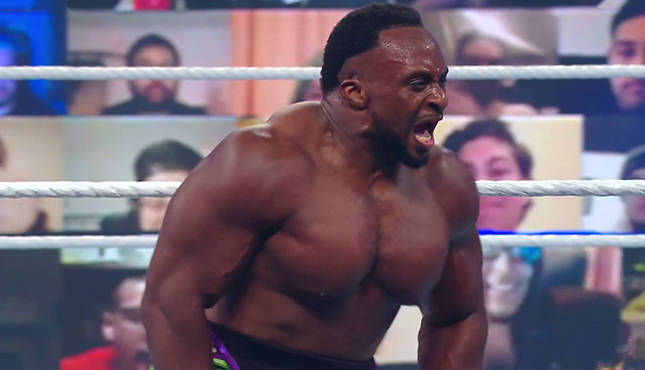 Image Credit: WWE

On a recent episode of his podcast, What’s Your Story? With Stephanie McMahon, former WWE Champion Big E discussed his lifelong battle with severe depression. Here are the highlights:
Big E on still dealing with depression at the height of The New Day: “Yeah, then things started to really spiral. And I felt like I was just stuffing things inside of me more and more and more. And you get to a point where [things explode] and that’s what happened with me is, I just thought I’d shove everything down. I wouldn’t talk about what I was feeling and what was going on with me until things got worse and worse, to a point that I was — you know, I was very suicidal. I think the reason I didn’t end up acting on that is because I didn’t want the people around me to — one, I didn’t want anyone to discover my body. I didn’t want anyone to deal with that trauma or for the act that I did to myself to hurt others.
“But I was struggling for a reason to still be here. And that was something — you know, I really I struggled with that. Even you know, I think so often people think when you have the right relationship, or you have the right job, or you get to a point where you have enough success or enough money, or whatever it is, it’ll fill that hole in you. But it didn’t. And And in many ways, like rust gave me so much purpose and saved me, but it didn’t erase the way I felt about myself. It didn’t — you know, I still struggled with like, suicidal thoughts. Even at the height of The New Day, when we’re taking off, we’re doing all these incredible things, and I’m truly having a blast with like, two of my very best friends. There were still times where I would struggle with these bouts of depression. So none of those things erased how I felt about myself. I felt more purpose with wrestling, I felt more purpose here in the WWE. But it didn’t take away how I felt about myself.”
On whether he still deals with it: “I don’t. And I am so deeply grateful. I will go on and on about meditation and mindfulness. I have to give credit to a woman named Kat Simpson who worked in VIP here for a while, doing the meet and greets and whatnot. And she introduced Headspace, this app, to me. And I was someone who like, I was at a — so the worst part of my depression was 19 to 23. Those years were hellacious. I don’t know how I really made it through those years. Things got better to a point where my depression was manageable, but I would still go through these cycles. And I thought, ‘This is just who I am and something I have to manage.’ So I’d have, like really — I’d have good periods and then inevitably, here’d be a cycle of depression that I would just have to suffer through. And I thought, ‘This is just what I have to do the rest of my life. I have to find a way to manage it.’
On how the app helped him through the pandemic: “But in 2019 she mentioned this app to me. And I would dabble here or there. But I would always find an excuse. Like, ‘Okay, I have a 6 AM flight, leaving TV to go back home. I’m not gonna get up at 3 AM to meditate. It’s always easy to find excuse, because we’re busy. We got things to do. So then the pandemic hits. And I had a friend who actually worked here as well, Anthony Notorale. And we’d have this running joke, that was fairly dark. That as soon like within 48 hours of me being done with wrestling or retiring, I would need to be put on suicide watch. Because it’s like, wrestling and the road… We’d talk about our own struggles with the pressure. Hopefully, he’s in a much better place. It was joking, but there was a serious element as well. Because the great thing is like, I found so much purpose here. But being on the road is a nice distraction as well. You’re not stuck with your thoughts. And it’s — especially then, like when I first started the road, we were doing five shows a week every single week. So it’s town to town to town. You’re home, you repack, you’re back out on the road. So you don’t have a lot of time to sit with yourself.
“But when the pandemic hit, I’m home every single day. And when we did have shows, we were at Amilie, we were in St Pete[rsburg]. So I was in Lando Lakes at the time, and all of the shows were drives for me. So I wasn’t getting on a flight. So I was legitimately sleeping in my bed every single night, and I thought — I was truly worried when I heard we were going to be on lockdown. I thought, ‘If I don’t do anything for my mental health, I’m worried that this is going to go very, very badly for me. That a real spiral is going to happen here.’ Because I live alone, and I was just sitting in the house every day. So I told myself, ‘You know what? I have no more excuses. I’m going to meditate every single day. For 10 minutes I’m going to wake up every day, and I’m going to open up Headspace. I’m going to do this meditation, this mindfulness, and just see. Who knows?’ And it was — it wasn’t something that changed me overnight. It wasn’t something that I saw these vast leaps in a week or two. But just being consistent every single day for months, and months, and months over time. I never understood — people talk about rewiring your brain. I never understood that, it never made any sense to me. But then after a few months, I noticed the way I would react to certain things that would usually have me spiral. It’s like I — there’s nothing. And then like, the next day, still nothing. And I feel good about myself and over time. And it’s why I would just continue to beat the drum for mindfulness and meditation, because it has vastly changed my life. It has increased my gratitude. It’s made me so grateful for the small things.”
If you use any of the quotes in this article, please credit the What’s Your Story? With Stephanie McMahon podcast with an h/t to 411mania.com for the transcription.


