
wrestling / News
Paul Heyman Recounts Conflict With Vince McMahon That Led To 2006 WWE Exit
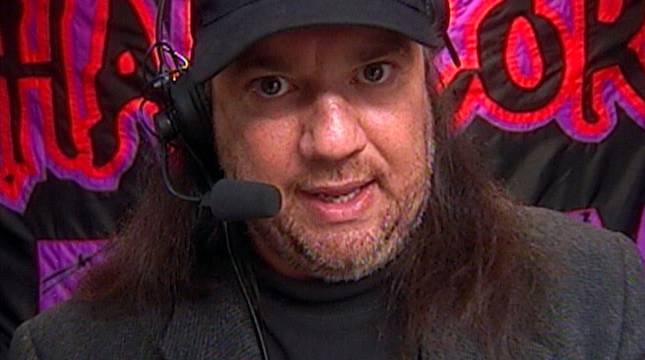 Image Credit: WWE

Paul Heyman recently recounted the story of his issues with Vince McMahon over ECW that led to his 2006 exit from WWE. WWE’s reboot of ECW following the success of ECW One Night Stand 2005 was widely viewed as a major creative failure. Even Rob Van Dam, who thought it was “cool” at first, acknowledged that WWE eventually destroyed the brand.
Heyman has been very open in the past about how rough that time was for him, as he was fighting Vince McMahon on every part of ECW’s presentation. Following 2006’s reviled December to Dismember PPV, Heyman and McMahon had it out on the latter’s plane and Heyman was gone from the company after that. He spoke about his exit on Insight With Chris Van Vliet and the ECW reboot in general; you can see the highlights below:
On His Exit From WWE in 2006:
“We had very different visions for the rebirth of ECW. I was a lead writer of the third show, Raw, SmackDown, ECW, and he was the chairman of the board with 85% of the voting stock. One of us had to leave. Don’t know if you’re a betting man, if you’re gonna place a bet on which one of us was gonna leave, I think the [man] who’s just merely the lead writer of the third show, is going to be the one whose ass is out the door, not the chairman of the board with 85% of the voting stock.”
On What Led to the Relationship Falling Apart:
“The rebirth of ECW.”
On ECW One Night Stand Going Well:
“Because it was a one night stand, and One Night Stand 2005 was a magnificent event that was as authentic an ECW presentation as we could put on in 2005 including but not limited to, but certainly highlighted by the Sandman’s entrance, which I fought for to the point of almost getting fired.”
On McMahon Not Wanting to Pay For Metallica:
“Right. When that music hit, everyone at the Hammerstein Ballroom knew, wow! This is a real ECW show. This is how it felt back in the 90s, and in 2000. ”
On How It Went After That:
“2006 I thought was a B minus show that had a main event that was so memorable that the audience made such a spectacle of Rob Van Dam versus John Cena. Because in ECW, Rob Van Dam never had a world title shot, 23 months as the world TV champion, and for most of those 23 months, the world TV title meant as much, if not more, than the world title, because it was held by Rob Van Dam and pushed in that fashion. But Rob Van Dam finally going for the big title against John Cena, who was the antithesis of what an ECW fan thought should be a performer on an ECW show, and their main event was so memorable for the audience’s reaction. The character of the audience was the star of that show, and the fact that Rob Van Dam won made that show popular, acceptable, beloved. Coming out of that, had we presented somewhat of a new style, a progressive, innovative approach to professional wrestling in 2006 that was a genuine alternative to anything WWE was offering at the time on Raw or SmackDown, it could have been a hit. But instead it just became a third brand utilizing stars off of Raw and SmackDown. First move I made in the new ECW, I brought CM Punk up from OVW. I wanted Rob Van Dam to be the legend from the original crew, and then you sprinkle in all these other ECW originals as we move the new stars up into the spotlight of what would become a new version of ECW, which was at its worst a complete alternative to anything else that’s out there, and instead that it was not what WWE was willing to put on the air, and was amongst the most miserable experiences of my entire life, because it became very personal between me and Vince very fast, because I spent seven and a half years of my life building a brand that at some point became more of a cause than a business. So when you give your life to the cause, you give seven and a half years, and these are prime years too.”
“The worst day of my life in ECW was still a wonderful day. I was living out a dream and fighting for my life doing it, and knowing that I’m fighting for a cause that I believed in. So, no one drank the Kool-Aid of the cult of ECW more than Paul Heyman did. I gave seven and a half years of my life to that cult, to that cause, to that mindset, and to Vince, because he was bored with no competition. WCW is gone, ECW was gone, TNA was nothing in terms of capturing Vince’s attention. So, what did Vince McMahon get to do? ‘Oh, God damn it, I get to change an ECW booking on Paul Heyman.’ It’s power, it’s how Vince operates. And so it became a very personal tug of war between whose vision will be implemented for ECW, when the whole dynamic was, ‘Let’s create a third brand that’s a true alternative to the other two,’ so it just became a miserable working environment.”
On the Breaking Point Of the Relationship:
“The breaking point was a week after we started, and I couldn’t take it anymore then, and still had to last another six months in the job. The breaking point was the December to Dismember. Coming off of Survivor Series, it was obvious to me that CM Punk was embedded in the zeitgeist of the mindset of the audience in WWE of who is the next big star. He captured the imagination of the WWE crowd, and if we could get the title on to Punk and put Van Dam on the chase, we were getting Bobby Lashley. Put Bobby Lashley on the chase, and the rest of the characters in ECW would rise with the tide as the hottest sensation in WWE, CM Punk, is our champion. Rob Van Dam, who would still be more popular than Punk in the moment, going after the title. Bobby Lashley being anointed as the next big star coming off of SmackDown and changing his style to a more MMA-based style. Wow, we could have really taken this to where, by Mania, ECW would have been red hot. Instead, because I was so infatuated with the idea of an ECW with CM Punk as the champion and Rob Van Dam on the chase and Bobby Lashley on the chase, that Vince said, ‘No, I want the title on Bobby Lashley. We’re going to beat CM Punk first in the Elimination Chamber, and we’re going to beat Van Dam second in the Elimination Chamber,’ which was a matter of spite.
“Once we get to that, that now I’m affecting everybody else’s career, number one. Number two, I’m affecting the audience having a chance to like the product. Because the product is being sabotaged by the very person who wants something out of the product for it to be profitable, but he can’t get out of his own way in terms of competing with me behind the scenes for the decisions that are being made on a product that is still associated with me instead of with him. So just the clash between the two of us became just a god-awful miserable experience that one of us had to escape and he wasn’t going anywhere.”


