
mma / Columns
UFC After Freedom 250: What Happens in Seven Years?
 Image Credit: UFC

With the topics at hand I feel it prudent to get a little bit of disclosure about myself out of the way up front. I am not a member of any political party. My general leanings would be slightly on the conservative side but fundamentally no party in the United States fully represents my world view, my desires for the direction for the country or culture. No party, platform, or individual satisfies all my personal preferences in this respect. Nor will one ever do so. Furthermore because elements of culture and politics – the two being inexorably linked these days in particular – are going to be discussed as well, I would like to assert that it is not my intention to simply blare my worldview at you. If you are here to simply see one side lampooned and have your own worldview reflected back at you, I imagine you are in the wrong place. I am not planning on preaching, lecturing, or propagandizing with this. It is my sincere hope that by the end of it I will not have engaged in those practices.
With that out of the way, we have to talk a bit about UFC Freedom 250.
On Sunday, June 14th, the UFC held what is likely to be a singular event in their history. Seven fights, all curated for action and held on the south lawn of the White House. The 14th serves as both Flag Day in the States as well as being the birthday of President Donald Trump. Since around 2016 the UFC has increasingly associated itself with the right wing of the American political and cultural landscape. I don’t consider that much of an arguable point, but I do not include it here by means of passing moral judgment. It is simply a statement of fact. What I want to talk about here is the risks associated with this shift. It has stopped being a bid for attention, as it was in 2016, and has become an increasing part of the business machinery. To understand my concerns I need to highlight an example which I observed in real time.
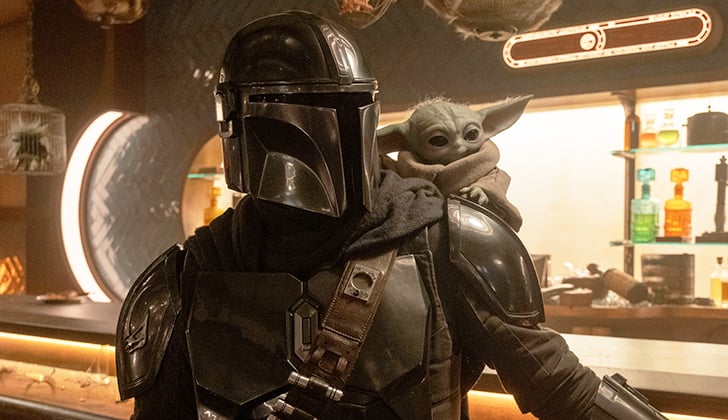
Star Wars used to be the biggest pop culture IP on the planet. Once it was acquired by Disney there was a concerted shift in terms of content direction from what it had been previously. Each of the three movies of the sequel trilogy had diminishing box office returns and each seemed to divide and subdivide the fandom, removing huge swaths of paying customers. There are many reasons for this, first largely being that those three movies were poorly planned out, devoid of deeper meaning or thematic resonance (largely influenced by J.J. Abrams and his God-forsaken “mystery box” style of storytelling). All of that would have been bad enough, but the messaging and marketing from Disney about this was equally divisive. There was a specific effort to shift Star Wars into the cultural landscape in ways that it was ill-suited to do. Endless sound clips about diversity, how terrible the fans were, “The Force is Female” t-shirts. The people responsible for Star Wars were going to use it to further their cultural and political agenda.
I do not present this as a moral condemnation, simply a statement of fact. These are the events that transpired. And there were consequences to those choices. In 2026 Disney released a Star Wars theatrical film for the first time in 7 years with The Mandalorian and Grogu, a film which opened soft at just $80 million worldwide then saw a 70% drop in its second theatrical week to finish third that weekend at the box office behind two low budget horror movies directed by YouTubers. Disney has burned up billions of dollars worth of film, TV, toys, fan goodwill, and now an IP that used to be the biggest in the world lies in ruins.
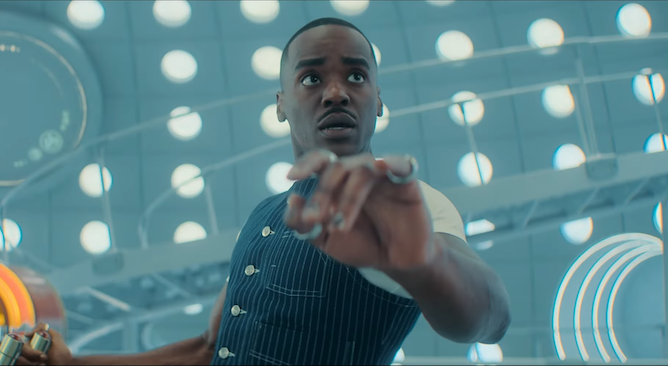
A similar trajectory could be tracked to Doctor Who. I am not calling for apolitical art or entertainment, such would be impossibly boring. Doctor Who might be a great case study for the problem here. It’s not that the show talked about culture or social issues, or even that it had a point of view on those things. It’s that the show became so preachy and poorly done that even the audience which was inclined to agree with the stance it was taking were turned off and stopped watching. If you don’t believe me on that claim I assure you there are near endless videos on YouTube of former fans reaching their breaking point even when their general inclinations were in line with the point of view the show was taking. When you’re preaching to the choir and the choir keeps getting smaller you’ve failed on a very fundamental level. Creatives drove that move for Star Wars and Doctor Who while the UFC is being driven by money.
In 2016 UFC President Dana White introduced Donald Trump at the Republican National Convention. The general tenor of the culture in the mid-2010s was leaving a gap in the market around young men in particular, and the UFC audience has always skewed both male and concentrated in the 25-45 demographic. The American cultural and political left largely abandoned that demographic in this time frame, the cultural and political right did not. Again this is not a value judgment, simply what happened and what incentives the UFC was following. This was a time when very few sports or entertainment properties had a direct line to younger men. The UFC had that, and the American political and cultural right sought to use it while the UFC was happy to be used in exchange for more money and connections they could leverage to their own ends.
What happened with Star Wars andDoctor Who was largely a function of True Believers in the cause convincing higher-ups that this creative direction would yield financial returns. It clearly did not, but I am of the opinion that most of the creatives genuinely thought it would. With the UFC I do not believe too many people there have much genuine belief in the cause. The UFC has worked with the political left quite a bit, especially when trying to get MMA legalized in New York, and TKO CEO Ari Emanuel has a fairly long history of donation and association with the political left. To say nothing of the acrimony the UFC had with the right when Republican senator John McCain was making hay at their expense during the dark ages of the sport. The UFC is simply following money, and the money is pointing them to the political and cultural right.

The UFC’s leaning into the right side of the spectrum was well and truly solidified in 2020. What might have been just a brief flirtation with their general audience leanings and the culmination of the inferiority complex the UFC has had about mainstream attention finally being vindicated by the sitting US President watching a fight cage-side at UFC 244 in 2019 turned into full-blown alignment in 2020. The UFC had been purchased by WME before 2020, and WME took on a huge debt load to afford it. Enormous interest payments were looming, and much of how WME planned to pay those was with the UFC’s large profits. But a huge part of the UFC’s revenue stream is contractual broadcast deals. At the time the UFC was with ESPN and was required to provide a specific number of events per year. Fail to reach that number and things get ugly, especially when the amount of money at stake was around 300 million dollars just that year.
When the world shut down during the COVID-19 pandemic, the UFC missed 5 events in a row at the end of March, all of April, and extended into May. Those were 5 full events of about 6 hours broadcast time each that they were contractually obligated to produce to get paid the lion’s share of their guaranteed yearly revenue. Now I am not going to attempt to litigate the response to the pandemic, but the UFC needed to get operational again and make up those events. The political and cultural left opposed that, the political and cultural right was more accommodating. It is no surprise the UFC followed that incentive structure all the way to UFC Freedom 250.
The UFC isn’t facing the same vulnerabilities that pure entertainment properties like Star Wars did. Pop culture IP has to consider the fans or face dire consequences while the fans are no longer the driving force of UFC revenue. The UFC pretty regularly treats fans poorly; exorbitant ticket prices and Dana White publicly telling anyone criticizing the new over-reliance on generative technology to “shut the fuck up and watch the fights” being two examples. The fans represent about the third or fourth most important figure to the UFC. First is their guaranteed revenue from broadcast deals. The UFC currently has a deal with Paramount Skydance that’s worth 1.1 billion dollars per year for seven years just for the American market. There are deals with the UK, Brazil, Canada, etc. that represents the bulk of their yearly revenue. Second is their business-to-business side of things, being paid by locations to bring shows there. The UFC doesn’t go to places like Abu Dhabi, Saudi Arabia, Azerbaijan, or Western Australia out of the goodness of their hearts. They are paid fees to bring their shows to those areas, and generally paid quite well. The promotion will show up, air B-roll footage of places around the location, and sing their praises to fill the now 7-hour runtime of any random UFC broadcast. The fans are third at best, and probably oscillate in that position along with the sponsors who’ve turned the UFC canvas and overall broadcast into something more garish than NASCAR. Hey, remember when the UFC levied that criticism at fighter shorts or fight banners? Yeah, that “standard” aged like milk.
What does all this ultimately mean, and why spill digital ink talking about it? The UFC is not going to go away, they have far too much guaranteed revenue and too efficient a machine operating for that to be too much on the horizon. But the more the UFC attaches itself to a cultural and political identity, the more it opens vulnerabilities in the audience. Even those potentially inclined to agree with your stance will grow weary of preaching if that’s all you do. The political media in the States wound up taking a serious look at the UFC after the White House event, and to the shock of no one have developed strong opinions. There are plenty of criticisms to level at the UFC, fair ones should be taken seriously while those that are purely partisan-based should be discarded. Discerning which is which is, as always, the tricky part. That media machinery though is starting to turn over and take aim at the UFC, and I’ve seen this play out before. I watched less organized but no less effective fan-driven media react to the creative direction of Star Wars, and over time those kinds of sustained attacks (fair or otherwise) have an effect. And while the UFC is not going to go bankrupt or cease operations in the next seven years, what will the audience for all their content wind up being over time? Will it be as large as it could be?
The life cycle of MMA fandom only lasts 5 years on average, and there’s a very real secondary turnover point around the 8-year mark. If you get past the 8-year mark you’re kind of just here for the duration. We’re about due most of the COVID-era fans burning out, and at this point it’s looking like the UFC is drawing from a smaller pool of potential fans with how they’ve grown political ties. There are reasons beyond what I’ve talked about here for these choices, such as Zuffa boxing trying to gut the Ali Act, but all choices carry consequences. My fear is what the UFC landscape looks like after this Paramount deal is up, what does it look like in 7 years? In 7 years Star Wars went from a billion dollar picture (despite how poorly The Rise of Skywalker was received) to a film failing badly and losing to low-budget horror. And if that kind of alienation, polarization, and overall IP degradation can happen to something as big as Star Wars then it can happen to anything.


