
Movies & TV / Reviews
Undertone Review
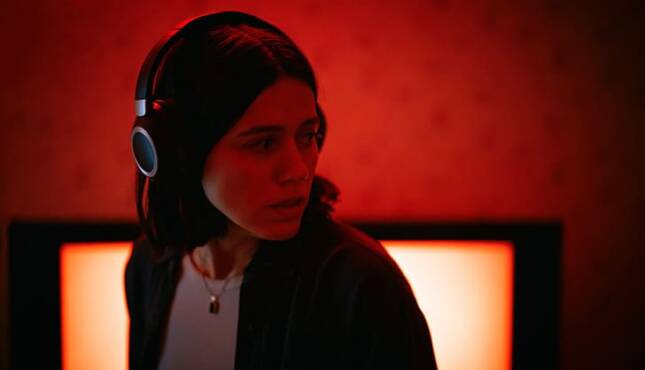 Image Credit: Fantasia IFF


 Loading...
Directed by: Ian Tuason
Written by: Ian Tuason
Starring:
Nina Kiri – Evy Babic
Michèle Duquet – Mama
Kris Holden-Ried – Justin
Keana Lyn Bastidas – Jessa
Jeff Yung – Mike
Running Time: 93 minutes
Rated R for language.
Sound design is an essential part of a horror maker’s toolbox: the crunch of bones, the shriek of claws on pipes, the eerie sounds that echo in the night all drive our fears and anxieties up, giving a filmmaker ample opportunity to put us on the edge of their seat. The audio effects can make or break a horror film, and have done so for many a fright flick.
The sound design in Ian Tuason’s Undertone is particularly essential to its success. This creepy podcaster-centered film relies on subtle sound nuances to build the tension in its story. Careful direction from writer-director Ian Tuason and a solid performance by Nina Kiri make this a film that will creep the hell out of fans of slow-burn indie horror.
Undertone stars Kiri as Evy, the co-host of a horror-themed podcast with her friend Justin (Kris Holden-Ried). She’s also undergoing personal turmoil as she’s caring for her devoutly religious mother (Michèle Duquet), who is in the final days of her life. Evy’s isolation makes the podcast, as she tells Justin at one point, one of the only things keeping her centered.
The two link up remotely for their latest episode, which centers around 10 audio files sent anonymously to Justin. As the two begin to listen, they hear snippets of a couple whose may or may not be dealing with an increasingly present supernatural force. Evy, who plays the skeptic of the two has a number of explanations, while Justin is more credulous.
As they try to work through the audio files over multiple recording sessions and Evy starts investigating them, she starts to notice strange things happening around her and her mother. The deeper into the audio files they get, the clearer it is that something is very wrong – not just with the files, but in Evy and her mother’s house.
Much of what Undertone is selling doesn’t seem particularly scary when you just describe the plot or even lay out specific scenes. most of Tuason’s film involves a woman sitting at a desk with headphones on, listening to audio clips and bantering with her co-host.
But the devil is in the details here, and Tuason’s direction takes the cake. The gradual unfolding of the story is punctuated by an incredible sound design from David Gertsman that resonates throughout, whether it’s during the podcast sessions when Evy and Justin are listening to the increasingly ominous audio files – some punctuated with creepy renditions of nursery rhymes or those sequences in-between as Evy is essentially alone in the house.
The visual tricks that Tuason uses hearken back to the films like Paranormal Activity franchise; he often has Nina Kiri framed off-center, leaving plenty of the darkened house in frame. It’s an intentional choice to keep the audience off-kilter, examining darkened kitchens or staircases on the edge of the frame to make sure nothing is creeping in. It makes for clever misdirection and plays on our growing anxiety as things start to come clearer into focus.
Kiri is essentially carrying this film by herself; she is the only person appearing on screen for almost all of the film while most everyone else is heard on the phone or over the internet. It’s a difficult job, and one Kiri ably rises to. Evy is dealing with a lot of trauma, and the actress shows the shades of such throughout. Credit goes to Holden-Ried as well, who manages to make a connection with just his voice.
This is clearly not a film for everyone, it should be said. Those who don’t enjoy slow-burn horror will have trouble connecting to this. There are also elements of the story that feel reminiscent of a number of other films which, once you pick up on them, make it clear what’s going on in the mystery. But for audiences willing to engage with the story and what Tuason and his team are doing, this is a memorable bit of audio-focused horror that is hard to get free of.
A version of this review was originally published out of Fantasia Fest in August 2025.


