
wrestling / News
Seth Rollins Recalls WWE Being In ‘Rough Shape’ When He Came In, Reaction To FCW
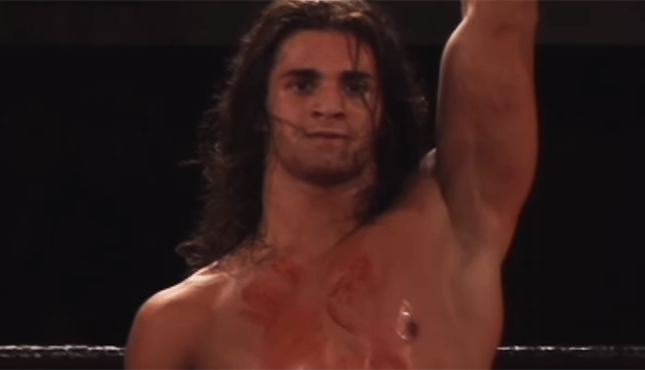 Image Credit: AAW

Seth Rollins has acknowledged that WWE was not in the best shape when he originally came into the company and recalled his reaction when he first arrived in FCW. Rollins joined WWE in 2012, an era that saw WWE at a crossroad of sorts. He spoke about the era on Bert Kreischer’s Something’s Burning.
Rollins recalled his initial reaction to coming into the warehouse at FCW, WWE’s then-developmental system, and how he questioned why he had left the indies for that. You can see the highlights below:
On Coming Into WWE During a ‘Rough Era’
“Oh, I’ve definitely been through some bulls**t eras. When I came in and I started in 2012 — I mean, the WWE was in rough shape at that time. I mean, we were right in the middle of the PG era. But it was like PG era also hyper-misogyny era. Like, everyone just lamenting the Attitude Era but also like trying to move forward at the same time. It was a weird time to be in wrestling. And like everybody, they weren’t recruiting wrestlers anymore. They were recruiting bodybuilders and kind of like failed amateur athletes. But they didn’t have a place to train them and it was a disaster. Really a disaster.”
“I couldn’t even tell you the type of people that — if you were 6’3″ and 240 lbs, you could get signed to WWE in 2010, easily… They they just put you in the warehouse in Tampa and think that they could turn you into a superstar. That was what happened.”
On His Reaction To Walking Into FCW:
“The warehouse in Tampa was on Dale Mabry, South Dale Mabry and Gandy. I remember it like it was yesterday. It was literally just half of a warehouse. It was two rooms. One of the rooms was a training room. It had two wrestling rings set up in it. The other room was like a showroom. So they would do their their local TV in there. We would tape it on Thursdays and would run on Sundays on like Bright House networks. And it was a sweat box. There was no AC in the place. So you would just go in in Tampa, Florida, like in the summertime indoors — I mean, it was excruciating. And there was no end in sight. You just went down there.
“So when I got when I got signed in 2010, I was at the top of the game on the indies. I was Tyler Black, I was a Ring of Honor World Heavyweight Champion which was a big deal at the time. And I was like — if you were to recruit one guy off the indies, it probably would have been me. And I remember thinking to myself, ‘Okay, now I’m going to the big leagues. I’m going to WWE, the big leagues. And I walked in to that warehouse, and I and I could not believe my eyes. Thinking, ‘This was what I gave up wrestling in the Hammerstein Ballroom to do.’ You know what I mean? Being able to travel the world on my own. You know, make my own schedule, do my own thing on the indies. I was starting to make a good amount of money there. But I was my dream was always WWE, WrestleMania, et cetera. I walked into this warehouse. I could not I could not believe that this was this was the top of the food chain. It was unreal. It’s literally just a dirty grimy warehouse, like with a shower that hadn’t been cleaned since I — ever, had never been cleaned. Just dirt, like ‘maybe wear your flip-flops when you go in there.'”
On What He Learned There:
“Gosh, I learned a lot there from a political standpoint. So, I learned how to have confidence in myself, one. Because when I walked in, I thought — like I said, I was walking into the big leagues. ‘Oh, I’m gonna learn how to do things a different way.’ But what I realized when I got there was that I was already better than everybody in the room. And so it allowed me to have the confidence to be like, ‘Oh, I can now lead all of these people in the ring. I can take them and help elevate them because I know what I’m doing and they’re learning what to do.’
“But I’d already had great experience on the indies learning from guys like Brian Danielson and Claudio Castagnoli and Chris Hero, Samoa Joe, the list goes on. Guys who like had — you know, AJ Styles, who had the the experience and they took me under their wing. So I learned being in the ring with them. Then I went to FCW in Tampa, and no one had that experience because like I said, they were all just dudes from a local gym they brought in. So I was like light years ahead. So I learned how to lead. I learned like, kind of what the politics of wrestling looked like and how to — maybe manipulate’s not the right word, but ‘learned how to play the game.’ Learned how that that side of things worked.”
If you use any of the quotes in this article, please credit Bert Kreischer with a h/t to 411mania.com for the transcription.


