
wrestling / Columns
Ask 411 Wrestling: Who is History’s Greatest Second Gen Wrestler?
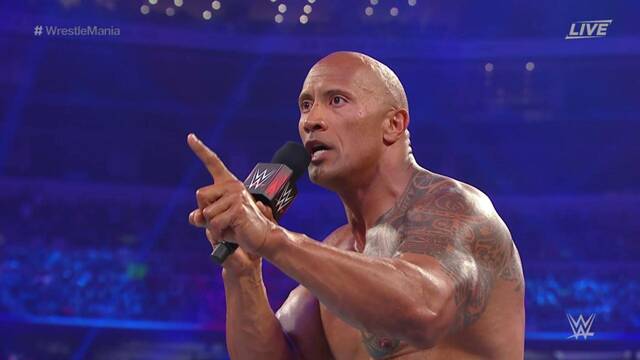 Image Credit: WWE

Welcome guys, gals, and gender non-binary pals to Ask 411 Wrestling for some yet-to-be-determined date in June 2018.
This week we’ve got quite a bit in the old mailbag, including a fairly research-intensive question and the continuation of a big ole’ answer that we started last week.
Before we get there, don’t forget to send any questions that you might have to [email protected] or give me a follow on the Twitters.
And, hey, we’ve still got a banner.

Last week, I did something that I don’t think I’ve ever done before and decided to split the answer to a question across two columns because it was going too long. To cue it back up, here’s the original question from Night Wolf the Wise:
We all know it’s very hard being a wrestler. You have to have the ability to wrestle, cut really good promos, be athletic, etc. We’ve seen so many wrestlers rise up and become great wrestlers and achieve stardom. At the same time, we’ve seen wrestlers crash and burn and become nothing more than low card wrestlers and even jobbers. What’s even harder than being a wrestler, is being a multi generation (2nd, 3rd, and 4th generation) wrestler. People expect so much from you and basically live in your parent’s shadow. You aspire to be a great wrestler to not only carry on your family’s legacy, but to step out of their shadow and achieve success on your own to separate yourselves from them. In your opinion, who are the 10 best muti-generational wrestlers (past or present) that lived up to their parent’s legacy or surpassed them and became great wrestlers in their own right?
Also, who are the 10 worst wrestlers that never lived up to the hype and that never achieved the same level of success as their parents?
In last week’s column, I answered this question as it related to the WORST multi-generation wrestlers, and, this week, I’m going to go to the other side of the coin and talk about the BEST. Here goes.
Best Multi-Gen Wrestlers
https://www.youtube.com/watch?v=ZIUIC2r6sR8
10. Katsuyori Shibata: One of the differences between professional wrestling in Japan and professional wrestling in America is that Japan has produced significantly fewer second generation wrestlers. I have to say that I’m not entirely sure why. However, perhaps the most successful practitioner of puroresu who followed in his father’s footsteps is Katsuyori Shibata, the recently-retired New Japan star who roughs up his opponents and knocks out ****+ matches like it’s effortless. Shibata, who also has sixteen career MMA fights and one kickboxing bout to his name, is the son of the late Katsuhisa Shibata, a former sumo who started his pro graps career in the old Tokyo Pro Wrestling in the late 1960s and wound up in New Japan when the company was first founded by Antonio Inoki in 1972. The elder Shibata was forced out of the “sport” before the 70s were over due to an injury, and he remained a New Japan referee for over twenty years beyond that. Though he had a respectable career and was in some prominent matches as Inoki’s tag team partner, his son certainly eclipsed him.
https://www.youtube.com/watch?v=36o2zdxBb88
9. The Guerrero Family: I might be cheating a little bit by including a group of wrestlers here as opposed to focusing on one member of this family, but, well . . . it’s my column and not yours. (Also, lie, cheat, and steal and what not.) Besides, it’s difficult to choose just one of these men for this slot. Gori Guerrero was lucha libre royalty, the tag team partner of none other than El Santo in La Pareja Atomica (“The Atomic Pair”). He even had a match with Lou Thesz when Thesz was NWA World Heavyweight Champion and swung through Mexico City. Though Gori was almost as big a star as there could be in Mexico, his four sons – Mando, Hector, Chavo, and Eddie – became international stars with each of them having strong runs in not just Mexico but also the United States and Japan. Though Eddie might be viewed as the most successful because he has a WWE Championship reign to his credit (and by most reports was days away from his second when he passed away), his brothers’ stardom should not be underplayed just because they came along during a generation in which fewer competitors received runs with major championships. Of course, Chavo’s son Chavo Jr. also became one of the first third-generation wrestlers that most fans were aware of, though he never quite reached the same heights of the prior generation. Overall, that second generation of Guerrero boys might be the most talented and accomplished group of more than two brothers in pro wrestling history.
https://www.youtube.com/watch?v=PbeVqhnHKbU
8. Ted DiBiase, Sr.: Many modern fans will primarily think of Ted DiBiase, Sr. as the father of Ted DiBiase, Jr., a fairly middle of the road multi-generation wrestler. However, it’s often forgotten that Ted Sr. was himself a second-generation wrestler, being the son of “Iron” Mike DiBiase. After an amateur wrestling career that saw him compete in two NCAA tournaments, Iron Mike turned pro and had success in NWA-affiliated territories in Los Angeles, Edmonton, and Amarillo, including a World Heavyweight Title match against Lou Thesz in Long Beach in 1954. Additionally, he spent time in the AWA before his death in 1962 at the age of 45, suffering a heart attack during a match with Man Mountain Mike in Lubbock, Texas. He initially entered Ted Sr.’s life as a stepfather but later adopted the boy. The younger DiBiase made his bones in Mid-South Wrestling and All Japan before going full-time with the World Wrestling Federation, starting off with a brief run as a babyface. He then turned heel on Sam Houston and was repackaged as the Million Dollar Man. The rest, as they say, is history, as Ted went on to feud with Hulk Hogan during the height of Hulkamania and otherwise have a Hall of Fame-level career.
https://www.youtube.com/watch?v=GooeUVkCJ3o
7. Nick Bockwinkel: Debuting in 1935, “The St. Louis Flash” Warren Bockwinkel wrestled throughout the United States against some of the biggest names of his era, including “Nature Boy” Buddy Rogers, the Dusek Brothers, and Freddie Blassie. Warren had a twenty year career, wrestling into the 1950s, which was late enough to allow him to briefly form a tag team with his so Nick, who debuted in 1955. Nick would go on to have a career that was almost twice as long as his father’s, as he was sporadically wrestling in legends matches and making appearances as an on-air authority figure for WCW into the 1990s. Nick was definitely the more successful of the two, as he managed to hold the AWA version of the World Heavyweight Title on six different occasions, in addition to challenging for both the NWA and WWWF Titles as well as the NWA International Heavyweight Title, one of the forerunners to the Triple Crown in All Japan Pro Wrestling.
https://www.youtube.com/watch?v=0JSH0HrA6o0
6. Villano III: While it was difficult for me to choose one of the Guerrero brothers over the others, that’s not true with the second group of wrestling siblings that we’re taking a look at here: Los Villanos. Though all of luchador Ray Mendoza’s sons had some degree of success under the Villano hood (which was adopted from a role that Mendoza played in an El Santo movie), the third brother to become a wrestler is the one whose career was the most noteworthy, working for an almost inconceivable forty-five years. In that almost half-century run, Villano III has won the masks or hair of over ninety different opponents in luchas de apuestas matches. Perhaps the highlight of his career was his feud with Atlantis, as the two men squared off against each other eighty-five times in different bouts, with their most famous coming on March 17, 2000 when Atlantis defeated Villano III to win his mask in the main event of CMLL’s Homenaje a Dos Leyendas show. That match was selected as the match of the year for 2000 by the readers of the Wrestling Observer Newsletter, making it the first and to date only lucha libre match to earn that honor. (Unless you include Dragon Gate under the banner of “lucha libre.”) Believe it or not, Villano III is still wrestling occasionally today, with the last match for him that I could find record of occurring in May 2017.
https://www.youtube.com/watch?v=ZybZf-nPIQg
5. Bret & Owen Hart: Anybody who watched Bret and Owen Hart’s WWF careers knows that they’re second generation stars, because their father Stu and many other members of their family made appearances throughout their careers, particularly in the 1990s. The apex of this was what seemed like a hundred Hart family members pouring into the ring at the conclusion of In Your House: Canadian Stampede. The patriarch of that family was World War II veteran and former professional football player Stu Hart, who began a wrestling career that had its peak years in the post-war 1940s and 1950s. Though he was a major wrestling star in Canada, particularly Calgary, and later became the most prominent promoter in that territory, Stu didn’t branch out and travel the globe or even the rest of the continent has many of his contemporaries did. His two most talented sons would far surpass their father’s scope, as both became global wrestling stars through the worldwide exposure provided by the WWF – to say nothing of the fact that both brothers made regular excursions to New Japan before signing with the Fed. If anything, Owen had even more international experience than his older brother, also wrestling in Germany’s CWA and Mexico’s UWA. Tragedy may have befallen the Hart family in more recent years, but, for a time, they were perhaps the most celebrated clan in the industry.
4. Randy Savage: One of Stu Hart’s contemporaries in professional wrestling was Angelo Poffo, an Italian American from the Chicago area who broke into pro wrestling and quickly found himself touring the country for decades before settling in Tennessee in the late 1970s and running his own promotion, International Championship Wrestling. ICW was considered an “outlaw” company that ran opposition shows to the more established NWA-affiliated promoters in the area. Interestingly, one territory where Angelo never hit it big was the McMahon family-controlled northeast, but that is where one of his sons would go on to have his greatest fame. It looked like Randy Poffo might follow in his father’s footsteps for a while, beginning his career primarily in southern territories (starting off as a masked man called the Spider) and eventually becoming a top star in Memphis, parlaying the family’s status as outlaws into a feud with Jerry Lawler once ICW folded. From there, he was caught up in the wide net of talent acquisitions that the WWF cast across the territories in the mid-1980s, ultimately becoming one of the company’s most enduring stars and perhaps Hulk Hogan’s most iconic rival. Angelo would be proud.
3. El Hijo Del Santo: The original El Santo is perhaps the biggest cultural icon that professional wrestling has ever produced. In his prime in Mexico, he was bigger than Hulk Hogan, Steve Austin, and the Rock combined, and he perhaps even outdoes the cultural impact of Rikidozan in Japan. Thus it would be impossible for his son, creatively referred to as El Hijo Del Santo (“The Son of Santo”) to surpass him in popularity. Yet, the younger Santo still deserves enormous amounts of credit and has earned his spot on this list for becoming a significant Mexican wrestling star in his own right. He has a main event career that has lasted well over thirty years and is actually a great in-ring performer despite the fact that he easily could have rested on his family’s laurels if he wanted to. He was even technically a member of the WWF’s roster for a time, appearing on their short-lived Spanish language show Los Super Astros in 1998 and 1999. The legacy of the legendary silver mask was left in very good hands, though it remains to be seen where it will go from here as El Hijo Del Santo approaches age 55 and his son, who does wrestle, has yet to make much of a splash.
2. Terry Funk & Dory Funk Jr.: They’ve been around for so long and are currently so old that it’s a little bit difficult to picture the Funk Brothers from the Double Cross Ranch as ever having been young or having a father who broke them into the wrestling business, but they were and they did. Dory Funk, Sr. from Hammond, Indiana wrestled as early as 1940, and he eventually settled in Amarillo, Texas, where he would mix it up with some pro wrestling fathers we’ve discussed elsewhere on these lists, including Fritz Von Erich and Mike DiBiase. Later in his career he formed a tag team with Dory Jr., much like Warren and Nick Bockwinkel. Younger brother Terry Funk would come along several years later and would occasionally team with both Dory Sr. and Dory Jr., though interestingly I don’t believe that there was ever a six man tag featuring all three family members. Dory Jr. and Terry would each go on to surpass their father’s prominence in the professional wrestling industry, as both brothers captured the NWA World Heavyweight Title and competed on an early installment Wrestlemania. We’ll leave their younger “cousin” Jimmy Jack out of the conversation, though. The less said about him, the better.
1. The Rock: Perhaps the greatest indication of a multi-generation wrestler’s success is that, at times, you totally forget that he has any family in the professional wrestling business. Such is the case with the Rock, who at this point in his life has not just transcended his pro wrestling family but pretty well transcended wrestling as a whole to the point you can easily forget where he came from and just think of him as one of the biggest names in all of entertainment. The great irony of it all is that, if you looked at him early in his career, Rocky easily could have been forgotten about and landed on last week’s list. His father was a successful professional wrestler though not quite a top level star, and his grandfather legitimately was a top level star in multiple territories in the 1960s. At the beginning of Dwayne Johnson’s career, it seemed like he would burn out quickly, but a last minute character overhaul and a mastery of the WWF’s newly developing “attitude” provided a springboard to superstardom for the man who is now perhaps the greatest crossover success that pro wrestling has ever produced.
And there you have it. My thoughts on the top second- and third-generation wrestlers of all time. If you disagreed, be sure to yell at me in the comments.
Lev does this, he does that:
Why didn’t the dream match between Sting and the Undertaker happen at WrestleMania? What was the backstage reason for squaring off with HHH instead?
Honestly, not a lot of details have come out in regards to this question. Probably the closest thing that we’ve got is a Twitter exchange between a random fan and Dave Meltzer on February 26, 2017. (And, yes, I consider Meltzer to be a reliable journalist. Sorry, Anti-Meltz Brigade.) When asked why the dream match wasn’t booked for Wrestlemania XXXI, the two word response that Meltzer gave was simply “Vince McMahon.”
Some might look at that response and say “duh,” because Vince is the guy with ultimate authority on any creative decision in WWE. However, it’s unlikely given how Meltzer typically operates that he would give an answer that generic. The far more likely interpretation of his tweet is that there was something specific that Vince McMahon didn’t like about putting that particular match together.
What was it? We don’t know. Perhaps he was concerned about the quality of a match between two men over the age of 50. Perhaps he thought Sting/Taker would be even bigger if it wasn’t Sting’s first Wrestlemania appearance. Perhaps he simply never thought that the match was as big of a deal as his fanbase did. We don’t know, and we may never know.
Interestingly, Sting commented on the potential match in an October 18, 2017 interview with a publication called Al Araybia English meant to promote the latest WWE video game. Sting mentioned that he had previously had a conversation with the Dead Man about the two of them wrestling. Sting told Taker that he was excited about the prospect, but he claims that the feeling “wasn’t necessarily reciprocated.” So, part of the issue could be that the Undertaker himself doesn’t see the value in wrestling Sting.
Now, though, it seems like the match will never occur, as Sting has announced his retirement and all sources seem to indicate that it would be near impossible for him to get cleared to wrestle even if he wanted to.
Jason from Brooklyn wants to talk about the chosen people:
Thinking of how few Jewish wrestlers there have been in history, I was curious how many major title changes there have been between two Jewish wrestlers.
Finding championship matches wasn’t the difficult part of answering this question. Figuring out whether some wrestlers were Jewish or not was the difficult part of answering this question. For some reason, resources about which grapplers are and are not Jewish are full of confusing and conflicting information, but I’ve done my best to wade through it all, and I’ll give some qualifiers where appropriate.
Before we start, I want to give some credit to blogger Danny Stone with the UK edition of Huffington Post, who has done a three-part series discussing Jewish wrestlers, which you can read here, here, and here.
Those columns identified some Jewish wrestlers that I had not previously thought of but also debunked some common misconceptions about whether certain wrestlers are “Members of the Tribe,” so to speak. For example, I saw several lists claiming that Kane, Kevin Nash, and even Kurt Angle were all Jews, but, upon further analysis, those all appear to have been false positives.
With that said, let’s get to answerin’.
Bill Goldberg is perhaps the most prominent wrestler of the last fifty years who self-identifies as being Jewish. To win his first pro wrestling championship, he defeated Raven (a.k.a. Scott Levy), who was raised in a Jewish family but does not consider himself to be religious. That match was for the WCW United States Title, and it occurred in Colorado Springs, Colorado as part of Monday Nitro on April 20, 1998.
Interestingly, Raven also won that title in a match between two wrestlers with at least some Jewish ancestry. He defeated Diamond Dallas Page at Spring Stampede in Denver just one night before, that being April 19, 1998. I say “Jewish ancestry” in this case as opposed to just outright saying “Jewish” because DDP disclaims being Jewish in this 2010 interview with TMZ, though he acknowledges that his great-grandmother was Jewish.
Steve Blackman appears on many lists of Jewish professional wrestlers online, though I was not able to find much that was concrete which connected him to either the faith or the people. If we assume that he in fact qualifies, he and Raven traded the WWF Hardcore Title on the house show circuit, with Blackman winning it from Raven on February 17, 2001 in Cedar Falls, Iowa and Raven winning it back the very next night in Gape Girardeau, Missouri.
Jumping back from Raven to DDP, in WCW just before the Monday Night War, he feuded with Johnny B. Badd a.k.a. Marc Mero. Mero has acknowledged on his official Twitter account that he was raised Jewish but later converted to Christianity. If you would like to count if for our purposes, there was a Mero-Page title change, as DDP defeated Johnny B. Badd on Halloween Havoc 1995 for the World Television Title. That match took place at the Joe Louis Arena in Detroit.
And that’s really it. There have been plenty more Jewish wrestlers over the years, including the Malenko family (Dean, Boris, and Joe), and even Randy Savage and Lanny Poffo had a Jewish mother. However, when you look for major title changes between two Jewish wrestlers, there are very few bouts that actually qualify.
Will had the courage to put his name on this question:
Do you have any insight as to what was the original plan for the anonymous RAW GM? I think it was a good story with absolutely no payoff. Surely, it wasn’t really Hornswaggle that overturned the Lawler/Cole match at WM 27 and many other decisions.
There have been a couple of different stories that have been floated out there about this one.
In 2015, former WWE writer Chris DeJoseph (a.k.a. Big Dick Johnson) claimed in a Q&A session held at a California-based wrestling memorabilia store that Triple H was at one point slotted to be the anonymous GM, though if there were any details were given about how and why that was going to happen, they appear to be lost to the ages.
https://www.youtube.com/watch?v=xKrr_VROsXU
In 2016, former WWE writer Kevin Eck maintained a blog at which he posted some stories from his time with the company. In one of them, he claimed that he once suggested that Kevin Nash would be unveiled as the anonymous Raw GM, with the idea being that Nash would be found sending e-mails from the television production truck wearing a wizard’s hat, with the reveal being a reference to the unmasking of the titular character in the Wizard of Oz and Nash’s former WCW gimmick, the wrestling wizard Oz.
Eck went on to write about another idea for the anonymous GM, in which it was going to be revealed as Hornswoggle but Horny would shortly after turn heel and adopt a W.C. Fields-esque accent and the moniker Lou Madfredini, explaining that his heelish actions as GM were his revenge for everyone in WWE mocking him for his size. In a 2017 interview with Eric Bischoff’s podcast, Hornswoggle confirmed this story, though he referred to a “New Jersey” accent and the character name “Big Nick.” Though they disagree on some of the small details, Eck and Swoggle agree that the reason this idea never came to materialize was that the little guy just couldn’t make the accent work for the character.
Zero is my hero. He also has a question:
I have recently made it my personal mission to own every video game that relates to pro wrestling. I came across several news articles that speak of a Wii game starring Trish Stratus and Stratusphere Yoga, but it was obviously never released. Any clue why this never saw the light of day?
In September 2009, a Canadian company by the name of Firma Studio held a press conference at which they announced the development of a Stratusphere Yoga video game. Trish Stratus herself also did some interviews about the project. However, after that original press junket, there was no follow-up media coverage regarding the project . . . or at least none that appears to have survived through to the present-day internet. So, unfortunately, I can’t give a definitive answer to Zero’s question.
However, there are a couple of relatively strong hypotheses that I can put out there. The articles regarding Firma’s deal with Trish Stratus all note that, though Firma would develop the game, they needed to find a publisher for it. It is possible that an interested publisher was never located, leading to the project’s downfall.
Alternatively, the Trish Stratus interview about Stratusphere Yoga going digital stated that the game would use not just the Wii Balance Board but also a brand new peripheral device that was based on Trish’s experience in the yoga world. It is possible that there were snags along the way with this peripheral that complicated matters.
That’s the best I can do for this one. If anybody else has more information about the fate of Stratusphere Yoga, please feel free to let us know.
And I guess we’ll go out on that weak note for this edition of the column. If you’d like to ask your own questions, perhaps some that I can answer, feel free to send them to [email protected].
More Trending Stories
- Missy Hyatt, Brett Lauderdale Defend Tommy Dreamer After Criticism Of Past Incidents
- Note On Why WWE Uses Four-Way Matches In Tournaments
- Dani Jordyn, Kennedi Hardcastle, More Share Claims of Past Incidents With Tommy Dreamer
- John Laurinaitis Comments on Backstage Reaction to CM Punk’s Pipebomb Promo in 2011


